

« Vedānta-sūtra: The Govinda-bhāṣya of Baladeva Vidyābhūṣaṇa
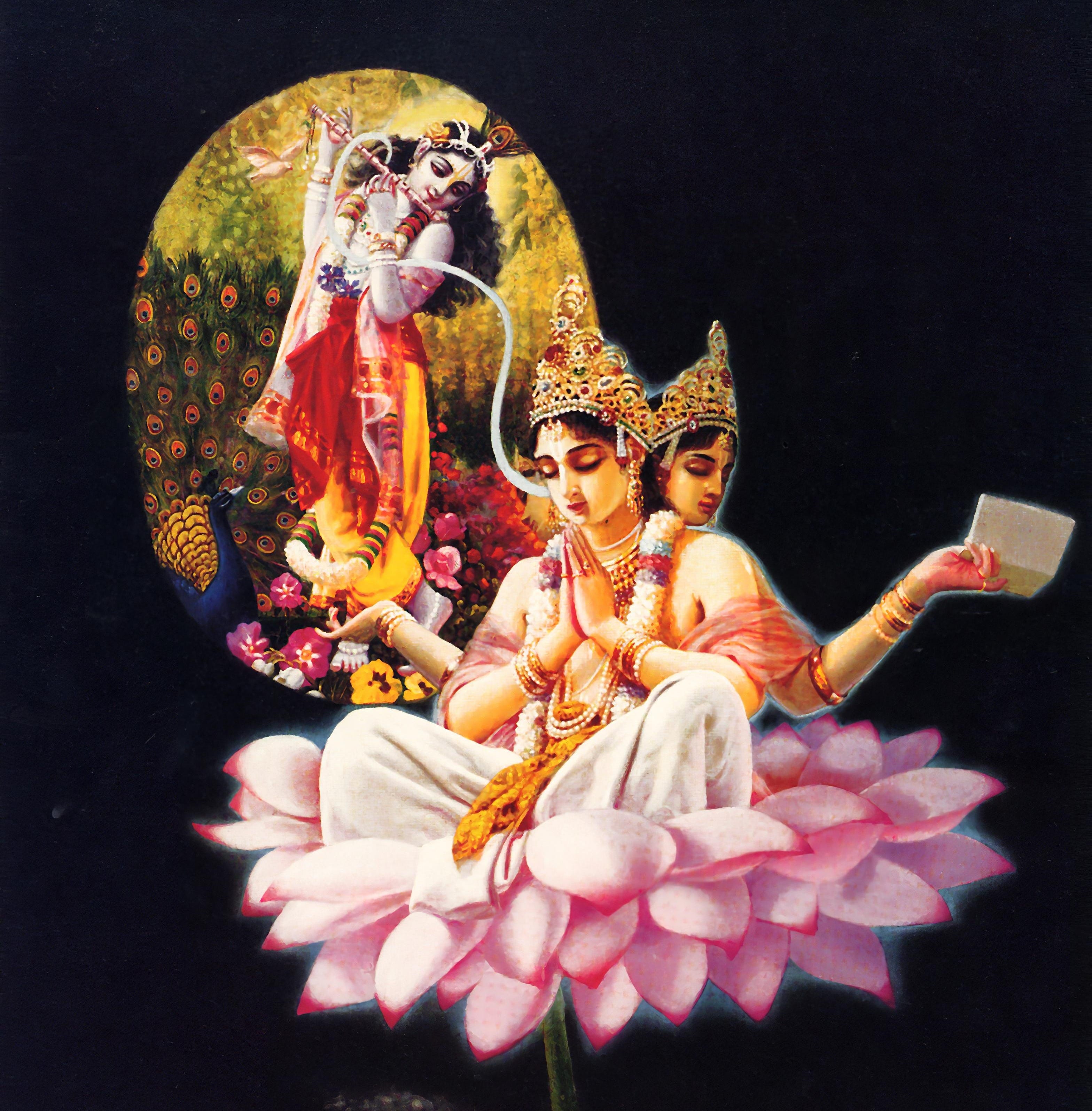
Topic 5: Jagad-vācitvādhikaraṇam - The creator of the world
The Puruṣa of the Kauṣītaki Upaniṣad is the Lord
jagad-vācitvāt, jīva-mukhya-prāṇa-lingān neti cet tad vyākhyātam, anyārthas tu jaiminiḥ praśna-vyākhyānābhyām api caivam eke
“Because the word “karma” [in the passage of the Kauṣītaki Upaniṣad] means the material creation, the subject is the Supreme Lord, not the jīva. If one argues that the passage does not refer to the Lord because of the references to the jīva and the chief prāna, I say it is not so. This has already been refuted [in Sūtra 1.1.31]. According to Jaimini, the discussion about the jīva has another purpose. The questions and answers make it clear that the jīva is different from Brahman. Another recension of the text also shows in this way.”
Sūtra 1.4.16 - The word karma means the universe, composed of matter and souls
jagad-vācitvāt
jagat: the world, the moving universe, creation; vācitvāt: because of designation by a word.
Because the word “karma” [in the passage of the Kauṣītaki Upaniṣad] means the material creation, the subject is the Supreme Lord, not the jīva.
Commentary: This topic deals with the refutation of yet another idea coming from the Sānkhya philosophy. It is centered around a passage from the Kauṣītaki Upaniṣad. Bālākī approaches king Ajātaśatru, offering to instruct him on Brahman, but due to a lack of higher understanding, ends up offering a pantheistic view, where sixteen deities are worshiped, including the sun-god, the moon-god, and others. Ajātaśatru rejects this explanation, telling him:
yo vai bālaka eteṣām puruṣāṇām kartā yasya caitat karma sa vai veditavya iti
“O Bālākī, He who is the creator of these sixteen puruṣas, He by whom this karma (universe) is made, he alone is to be known.” (Kauṣītaki Upaniṣad 4.18)
It may look clear that this passage speaks about the Supreme Lord being the master of all demigods, but in the Sānkhya philosophy, this passage is interpreted differently. They interpret the word “karma” in the verse as meaning “activity” and argue that the Brahman described in the passage is identified with experiencing the results of good and bad work, and therefore the Brahman described in the verse is not the Lord, but rather the jīva, the individual spirit soul who is trying to enjoy matter. The jīva is described in the scriptures as kṣetrajña, the enjoyer of the field of activities; therefore, their conclusion is that the presence of the word “karma” indicates that the passage speaks about the jīva. A Sānkhya philosopher would interpret this passage as “O Bālaka, he who is the cause of these puruṣas (the 16 deities mentioned by Bālākī, in the sense of their bodies), and to whom this work of creation belongs, he alone is to be known.”
To support this, they argue that later in the next passage it is mentioned that this self is sometimes sleeping (tau ha suptam puruṣam ājagmatuḥ), and is described as an enjoyer (yathā śreṣṭhīnaḥ svaiḥ [bhṛtyaiḥ]). They also interpret the word prāṇa (vital air) mentioned in the passage as reinforcing the idea that the passage speaks about the jīva and not the Lord, since the vital air is one of the components of the material body. In this way, this passage is used to again support the idea that there is no Supreme Personality of Godhead separate from the jīvas. Everything that exists is just a combination of matter and the individual spirit souls. The jīva is thus the controller of the material energy.
To this, Vyāsadeva answers: jagad-vācitvāt. The correct meaning is that the word karma indicates the material creation. The verse thus speaks about the Supreme Lord, and not about the jīva.
The word “karma” comes from the verb kṛ (to do, or to create). Ordinarily, the word karma is used in the sense of material activities, when we do or create things, or often concerning the results of such activities. We perform material activities, and thus we become entangled in karma. However, Vyāsa points out that in the context of the verse, the word “karma” can only be used in the sense of “that which is made” (kriyate), or, in other words, as jagat, or the universe itself. In this way, when the verse mentions “etat karma”, the meaning is not “this work” but “this universe composed of matter and souls”. The Lord created the entire universe, including the 16 deities (puruṣas) mentioned by Bālākī.
This conclusion is based on different subtleties of the passage. In his talk, Bālākī attributed the creation of the universe to the 16 puruṣas he described, while Ajātaśatru spoke of another being who is the creator of these sixteen persons. This is indicated in the passage by the words “yo vai bālaka eteṣām puruṣāṇām kartā“. Yaḥ is the nominative singular masculine (he who), while eteṣām is the genitive plural (of these) and puruṣāṇām is the genitive plural (of the persons). Kartā is nominative singular masculine (the maker, creator). Therefore, the passage speaks about one person, who is the creator of many others.
Sānkhya philosophers argue that this singular agent is the jīva, but this contradicts their own philosophy in two ways. The first is that there are many jīvas, or puruṣas, and not only one. Therefore, many jīvas can’t be, simultaneously, the single creator described in the verse.
The second contradiction is that the verse speaks about a kartā, or creator, and the Sānkhya-tantra does not support the idea that the jīva is the creator of the material manifestation. According to their own philosophy, the material manifestation is created by pradhāna, and the jīva (or puruṣa) just identifies with it. All scriptures insist that the soul is always aloof from matter, although one may identify with it under the influence of illusion. This further disqualifies the interpretation of the jīva being the creator.
Yet another argument is that in the passage, Bālākī offers a pantheistic philosophy that describes many different puruṣas as being the creators. King Ajātaśatru disagrees with this philosophy and then describes a single creator, who is the creator of all the puruṣas previously indicated by Bālākī. If we accept the argument that the passage spoken by Ajātaśatru describes the many jīvas as creators, this would suggest he was being dishonest in his speech, since in this case his philosophy would not be different from what was previously offered by Bālākī. In this case, the passage would sound nonsensical. Bālākī would describe his philosophy, Ajātaśatru would disagree, just to repeat the same ideas, and in the end, Bālākī would become his disciple.
The correct interpretation of the passage is that Ajātaśatru says: “You have described these persons as Brahman, but I will tell you about the real creator of all of them and everything else that exists.“ In this way, the verse reinforces that the Lord is the original cause. The idea that the jīva is the creator is a speculation that doesn’t find support either in this verse or in other passages of the Vedas, and not even in the Sānkhya philosophy itself.
Sūtra 1.4.17 - Prāna is also not the supreme cause
jīva-mukhya-prāṇa-lingān neti cet tad vyākhyātam
jīva: the individual soul; mukhya-prāṇa: the chief vital air; lingān: because of the indications or characteristics; na iti: not so; cet: if (argued, objected); tad: that; vyākhyātam: has been already refuted.
If one argues that the passage does not refer to the Lord because of the references to the jīva and the chief prāna, I say it is not so. This has already been refuted [in Sūtra 1.1.31].
Commentary: After the previous explanation, our opponent could raise another objection. The latter parts of the passage mention the jīva and also prāna; therefore, either of them could be the supreme cause pointed out by Ajātaśatru. One could put forward arguments to interpret the verse with one or the other as the creator.
To this, Vyāsadeva answers: jīva-mukhya-prāṇa-lingān neti cet tad vyākhyātam. This idea was already dismissed in sūtra 1.1.31, in the discussion of another passage from the Kauṣītaki Upaniṣad with the conversation between Indra and Patardana. There, it was already established that if a passage explicitly refers to the Supreme Lord in both the beginning and the end, the entire passage must be taken as referring to the Supreme Lord, even if in the middle some characteristics that apply to both the jīva and the Lord, or to prāna and the Lord are given.
This passage from the Kauṣītaki Upaniṣad being discussed begins with the words “brahma te bravani“ (Let me tell you about Brahman), and ends with the words “sarvāṇi bhūtāni apahatya, sarveṣāṃ ca bhūtānāṃ śraiṣṭhyaṃ svarājyaṃ ādhipatyaṃ paryeti, ya evaṃ veda, ya evaṃ veda“ (he who realizes this Supreme Self, overcomes and transcends all obstacles, attaining supremacy, sovereignty, and lordship over all). It’s thus clear that the whole passage speaks about the Supreme Lord.
When it is mentioned that “sa eṣa prāṇa eva prajñātmā idaṃ śarīram ātmānam anupraviśya ā lomabhya ā nakhebhyaḥ“, it is clear that the word “prāna” refers to the Supreme Lord, and not to the chief vital air, or mukhya-prāṇa. The passage can thus be correctly translated as “This prāna is the Supreme Lord, the Supreme Self, the source and indwelling principle of all knowledge and consciousness. He pervades the entire body, from the hair down to the nails.”
When the opponent argues that the passage refers to prāna or the jīva, he is simply trying to use a few words out of context to sustain his idea. This is another baseless argument, bluntly dismissed by Vyāsadeva.
Sūtra 1.4.18 - The jīva merges into prāna and again emerges from there
anyārthas tu jaiminiḥ praśna-vyākhyānābhyām api caivam eke
anyārtham: different meaning or purport; tu: but; jaiminiḥ: Jaimini; praśna: from the questions; vyākhyānābhyām: from the answers or explanations; api: also; ca: and; evam: in this way; eke: some (the Vājasaneya recension of the text).
According to Jaimini, the discussion about the jīva has another purpose. The questions and answers make it clear that the jīva is different from Brahman. Another recension of the text also shows in this way.
Commentary: Our opponent could insist that there are direct references to the jīva in the passage of the Kauṣītaki Upaniṣad that make it impossible to accept that Brahman is different from the jīva. It is the jīva who goes to sleep, and also the jīva who wakes up. In this way, one could insist that the passage speaks about the jīva, and try to again impose the idea that the word prāṇa in the verse refers to the jīva.
To this, Vyāsadeva answers: anyārthas tu jaiminiḥ praśna-vyākhyānābhyām api caivam eke. The discussion about the jīva inside the passage has a different purpose (anyārthas tu). From the questions and answers offered in the text, it can be understood that the jīva is different from Brahman. This opinion is propounded by Jaimini.
The passage in question here is the section with questions asked by Ajātaśatru to Bālākī about the sleep of the soul:
vaivai etad bālāka puruṣo ’śayiṣṭa kva etad bhūtaṃ kṛtaṃ kva etad gata iti
“O Bālākī, where does this person go to rest while he sleeps? From where does he return when he awakes?”
This passage clearly shows the difference between the jīva (who goes and returns) and Brahman. When entering into deep sleep, the jīva merges into prāṇa (Paramātmā, situated in the heart), and upon awakening, the jīva emerges from there, back into external consciousness. Since the jīva merges and emerges from prāṇa, the two must be different.
Prāṇa is consistently used as a name for the Lord in many other passages, therefore it is not surprising it is used here. When used as a name of the Supreme Lord, prāna means “that by which all live” or “the life-force of all”. Ordinary prāna is the life air that sustains each particular living entity, and the Lord is the supreme prāna, who sustains prāna itself.
The distinction between the jīva and the prāna mentioned in the passage is reinforced in the answer of Ajātaśatru, which is quoted by Śrīla Baladeva Vidyābhūṣaṇa:
yadā suptaḥ svapnam na kañcana paśyati tathāsmin prāṇa evaikadhā
“When a person is in dreamless sleep and perceives nothing, the jīva merges into that prāṇa.”
If we take the jīva and prāṇa as being one, the passage does not make sense. The word prāṇa thus does not apply to the vital air, but to the Lord as Paramātmā, who sustains all life. This becomes even more evident in the next passage:
evam etasmād ātmanaḥ prāṇāḥ yathāyatanaṃ vipratiṣṭhante, prāṇebhyo devāḥ, devebhyo lokāḥ
“From this Supreme Soul, prāna emanates. From prāna, come the devas, and from the devas the whole material creation sprouts.”
It’s not possible to say that the jīva is simultaneously the source of the vital air in all bodies, together with all demigods, and all planets. These qualities can be attributed only to the Lord. With this, it becomes impossible to further argue that the prāṇa mentioned in the text is not Paramātmā.
The passage also mentions the nāḍīs and the senses. The nāḍīs are just gateways used by the jīva to enter into the realm of sleep, and when the jīva enters into deep sleep, all functions of the senses (including the mind) stop.
Vyāsadeva also mentions api caivam eke: “Another recension of the text also shows in this way.” These words refer to the Vājasaneya recension (the version of the discussion found in the Bṛhad-āraṇyaka Upaniṣad), which shows another version of the same conversation described in the Kauṣītaki recension. There, the jīva is described as vijñānamaya (full of knowledge) and is again clearly distinguished from Brahman. There is a small difference in the answer to the question about where the jīva goes while sleeping, but the meaning is still the same. The answer given is ya eṣo ‘ntar hṛdaya ākāśas tasmin śete: “He rests in the sky within the heart.” This sky inside the heart is the same dahara that was explained in sūtra 1.3.14.
You can also donate using Buy Me a Coffee, PayPal, Wise, Revolut, or bank transfers. There is a separate page with all the links. This helps me enormously to have time to write instead of doing other things to make a living. Thanks!
« Vedānta-sūtra: The Govinda-bhāṣya of Baladeva Vidyābhūṣaṇa