


⤴️ There is a narration of the article in my voice. You have the option to hear it instead of reading.
You can receive new articles directly in your inbox. Subscription is free; donations are welcome.
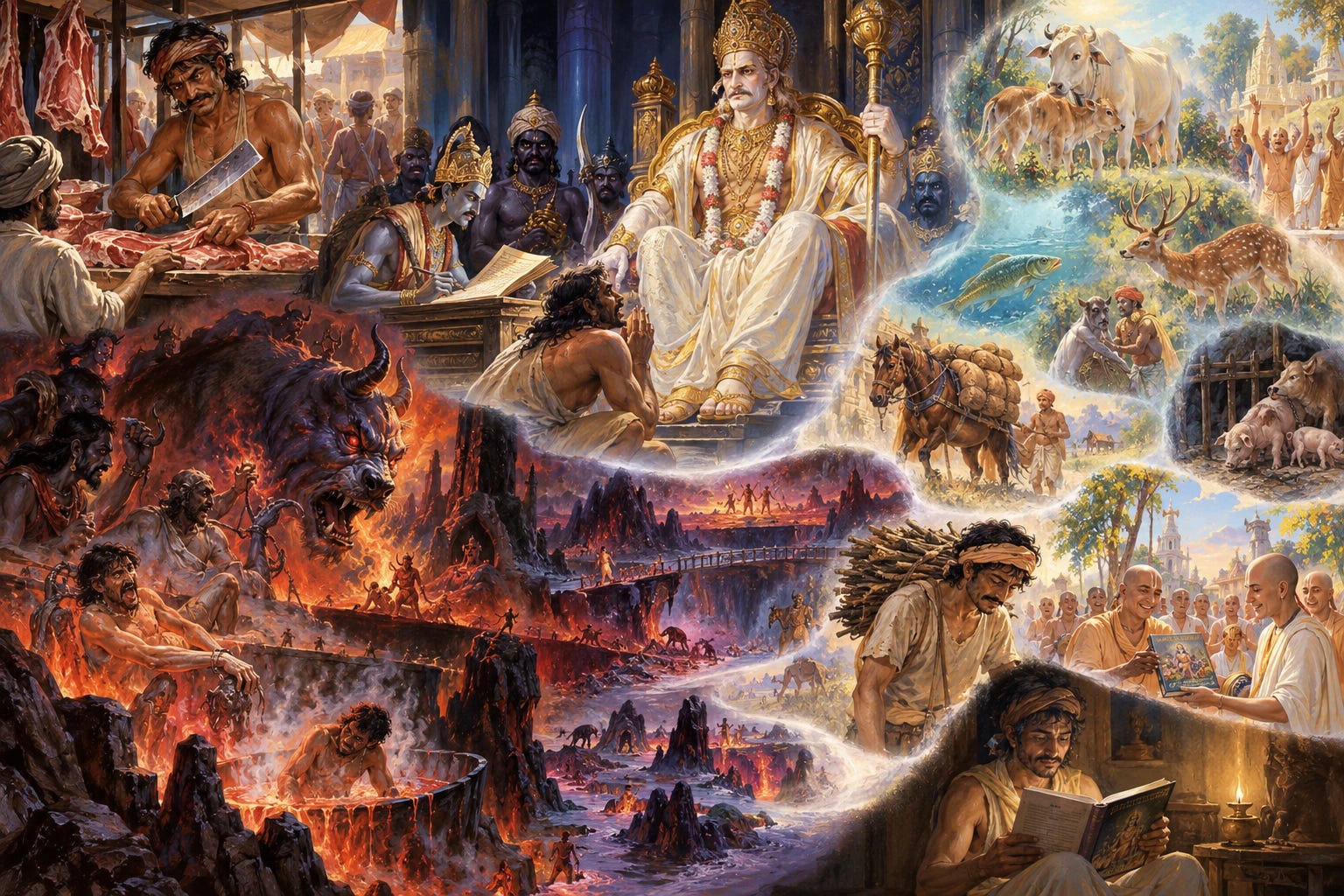
This is a small fictional story on the path of a sinful soul through hell according to the scriptures, especially the descriptions in the 5th canto of the Śrīmad-Bhāgavatam. We may read about the punishments a sinful person faces in hell, but it is difficult to understand the extension or the purpose of it.
Not everyone goes to hell, and among the ones who go, the sufferings they experience vary greatly according to what exact crimes they committed. However, there are some actions that are described as resulting in extraordinarily harsh punishments, especially the killing of animals and consumption of meat obtained through such means, as described in this passage, for example:
In this life, an envious person commits violent acts against many living entities. Therefore after his death, when he is taken to hell by Yamarāja, those living entities who were hurt by him appear as animals called rurus to inflict very severe pain upon him. Learned scholars call this hell Raurava. Not generally seen in this world, the ruru is more envious than a snake. Punishment in the hell called Mahāraurava is compulsory for a person who maintains his own body by hurting others. In this hell, ruru animals known as kravyāda torment him and eat his flesh. For the maintenance of their bodies and the satisfaction of their tongues, cruel persons cook poor animals and birds alive. Such persons are condemned even by man-eaters. In their next lives they are carried by the Yamadūtas to the hell known as Kumbhīpāka, where they are cooked in boiling oil.” (SB 5.26.11-13)
There are 8,400,000 different forms of life available in the material universe, and different souls cycle through these different forms in an unlimited cycle. It is easy to understand that souls now present in animal bodies are slowly evolving through these different species in the direction of the human form, but there is also the opposite path, in which a human being can fall back into the lower species and from there have to go again through this cycle. This is called sinful life.
Souls don’t appear from this this material world, all souls who are conditioned here come originally from a pure state of existence and as such started by taking birth in high positions, consistent with their original high level of consciousness. By taking the path of sensual enjoyment, however, these souls gradually glide down to lower species, gradually becoming human beings. Human life is the universal crossroads, where we are free to act as we desire but are forced to accept the results of such actions.
This is a tale about a cruel butcher who goes to hell and finds redemption after a long period of suffering resulting from his actions. It describes the real function of the hellish planets and life in the lower species: to create a path for sinful souls that, although filled with suffering, gives them a chance to change their ways.
Dushta the cruel
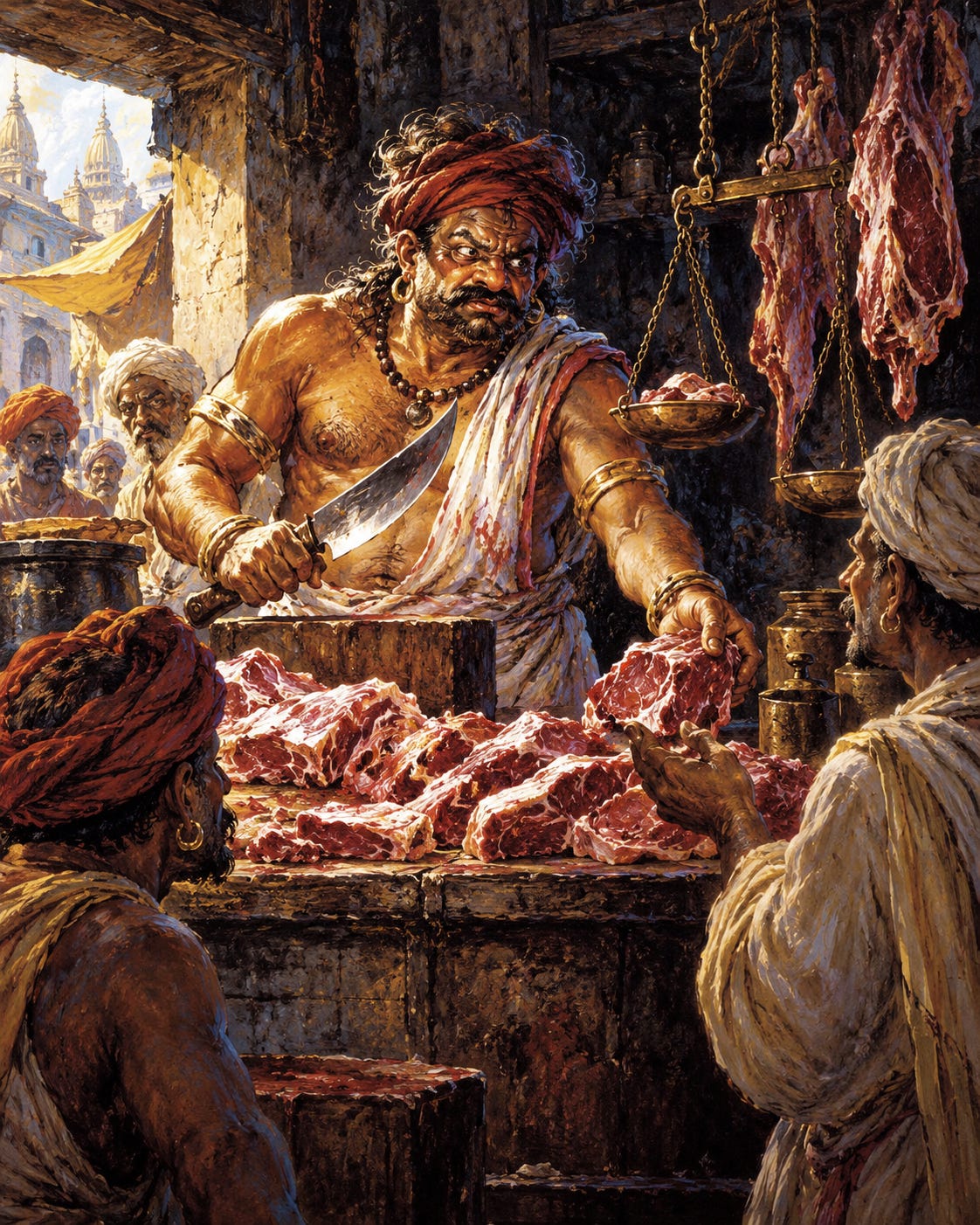
In a small town in India, at some point in a distant past, lived a butcher named Dushta. His shop was always busy. He was famous for his skill in killing and cutting animals, preparing meats of all kinds: goat, buffalo, chicken, fish, and whatnot. No creature escaped his blade.
For Dushta, that was not just a profession, it was something he enjoyed. That was a reflection of his inner heart. He used to feel some kind of dark pleasure in the suffering of animals. Torturing them, and then killing without mercy, gave him a sense of power. Despite his low position in the social sphere, inside his shop, he was like a god, having power over others destiny. Over the years his heart grew cold and he stopped feeling any compassion. Indeed, his heart became as cold as the lifeless meat he was handling daily.
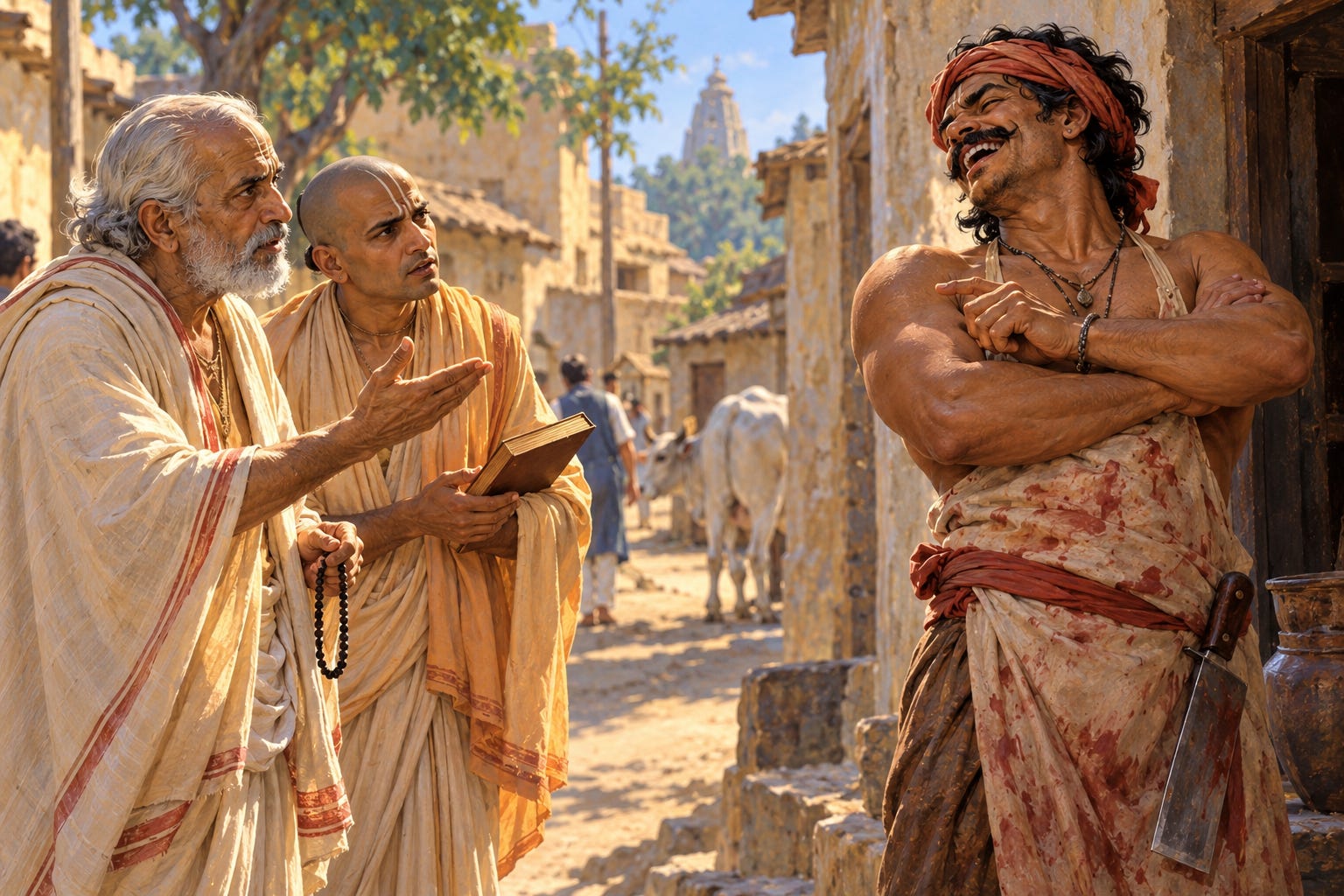
Sometimes, neighbors who knew something about dharma would speak to him about karma and the consequence of sinful deeds, like killing animals. But Dushta would give them a sarcastic smile and mock them. Internally, he was convinced he was beyond consequences. He defamed the scriptures and gave no attention to the teachings of previous saints. He laughed, thinking that he could do things as he pleased without facing any consequences.
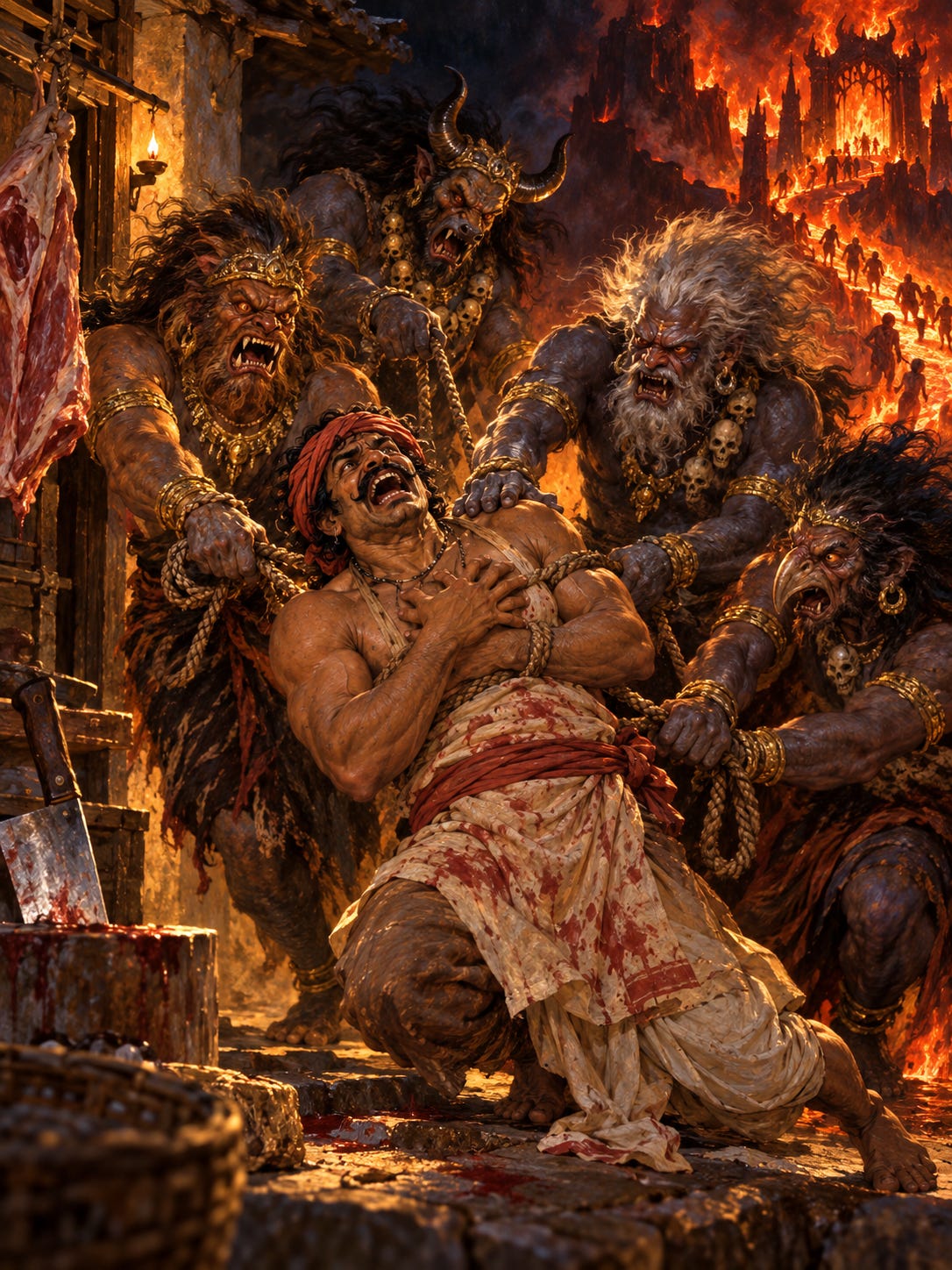
One night, however, as Dushta locked his shop at night, he felt a sharp pain in his heart. He staggered with both hands touching his chest. He did his best to remain on his feet, but in a few moments, he collapsed.
Just as he had ended the lives of many animals without warning, his life came to an abrupt end. As his vision faded, he found himself being bound by four ghastly creatures he could not comprehend. Their forms mixed human and animal characteristics and they looked furious. He screamed just like the animals he used to put on his butchering table, but they paid no attention. He was forced to move extremely quickly through a very long, blazing path. After this seemmingly endless march, he arrived in a great hall, still bound in ropes by these fierce creatures.
The meeting with Yamaraja
Before him was a great court, different from anything he had seen before. Dushta was taken in the presence of Yamaraja, the judge of sinful people. Yamaraja was gigantic in size. His presence was imposing and his gaze penetrating. The severity in his eyes revealed a transcendental wisdom that could perceive every truth. Dushta felt that he could see inside his mind and inside his soul.
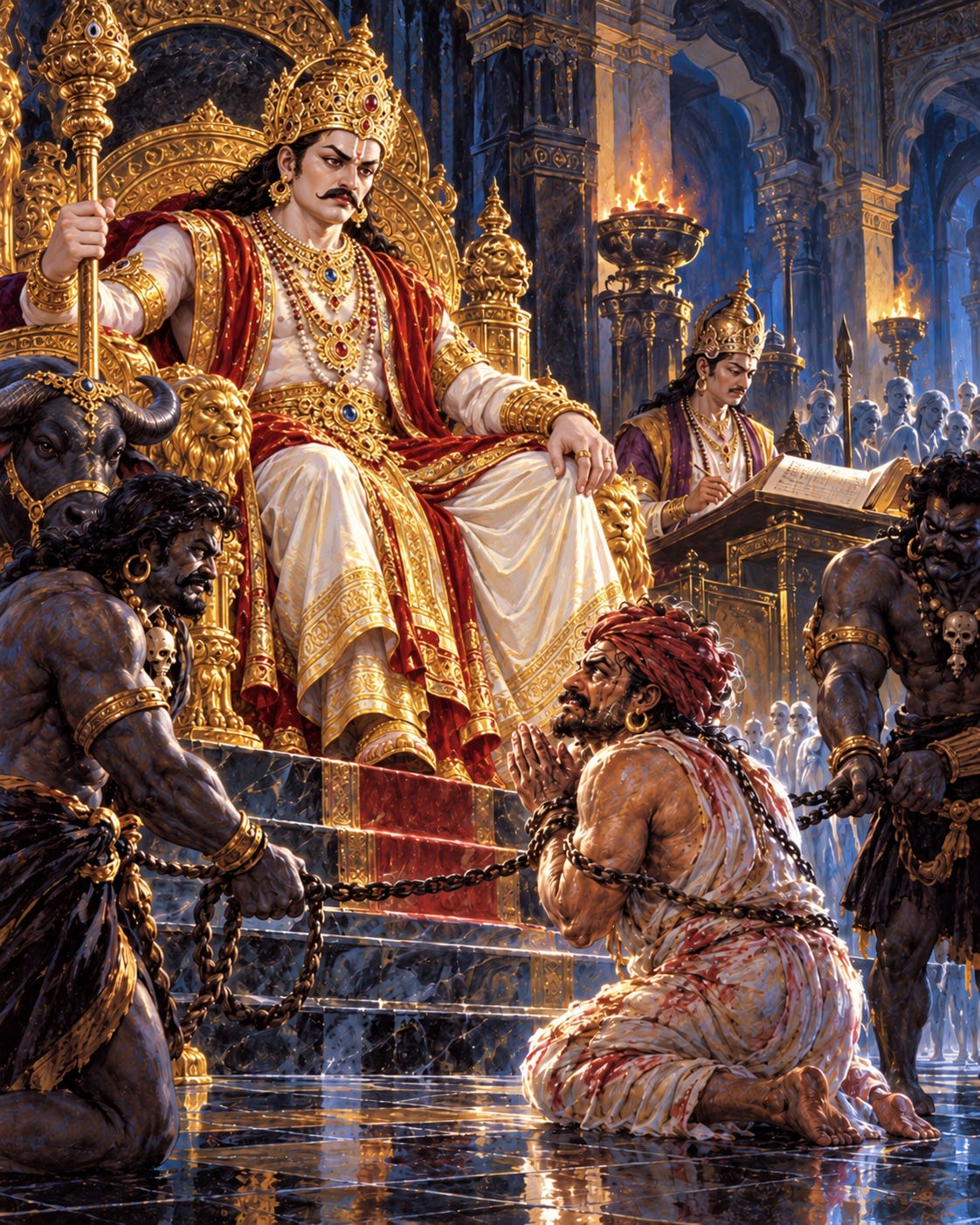
The hall remained completely silent as Citragupta read the detailed record of Dushta’s life. Each of his deeds where cataloged there. At the end he summarized:
“Butchery and unnecessary cruelty, countless lives taken without mercy, ridicule of scripture, and mockery of devotees!”
Dushta was now immersed in fear. The bravado he displayed during life was suddenly gone. Gathering some courage, he tried to defend himself: “in was only my work… I did what I needed to survive…” But Yamaraja’s penetrating gaze exposed every hidden cruelty, every ruthless thought, and every smirk he had shown toward the suffering of others.
Yamaraja simply looked at him, unmoved. After he finished his defense, Yamaraja spoke like thunder:
“It was not just a profession. You deliberately imposed pain on others. You enjoyed yourself as you indulged in such actions. Now, you must experience the results.”
Facing the results of his cruelty
After hearing his judgment, Dushna was again seized by the terrifying servants of Yamaraja, the Yamadutas, and led to the terrifying realms of the hellish planets to face the results of his actions.
Just like many other similar criminal souls before him, Dushta was imprisoned on many different hellish planets and in these places of suffering, he was forced to endure tortures that mirrored the pains he caused. The very animals he tortured appeared to him in huge, fearful forms to exact revenge for the pain he had caused them. As they were relieved of these revengeful feelings they had kept for so long, they rose upwards in the direction of their next births. Dushta, however, was forced to continue facing the long list of punishments his actions awarded him.
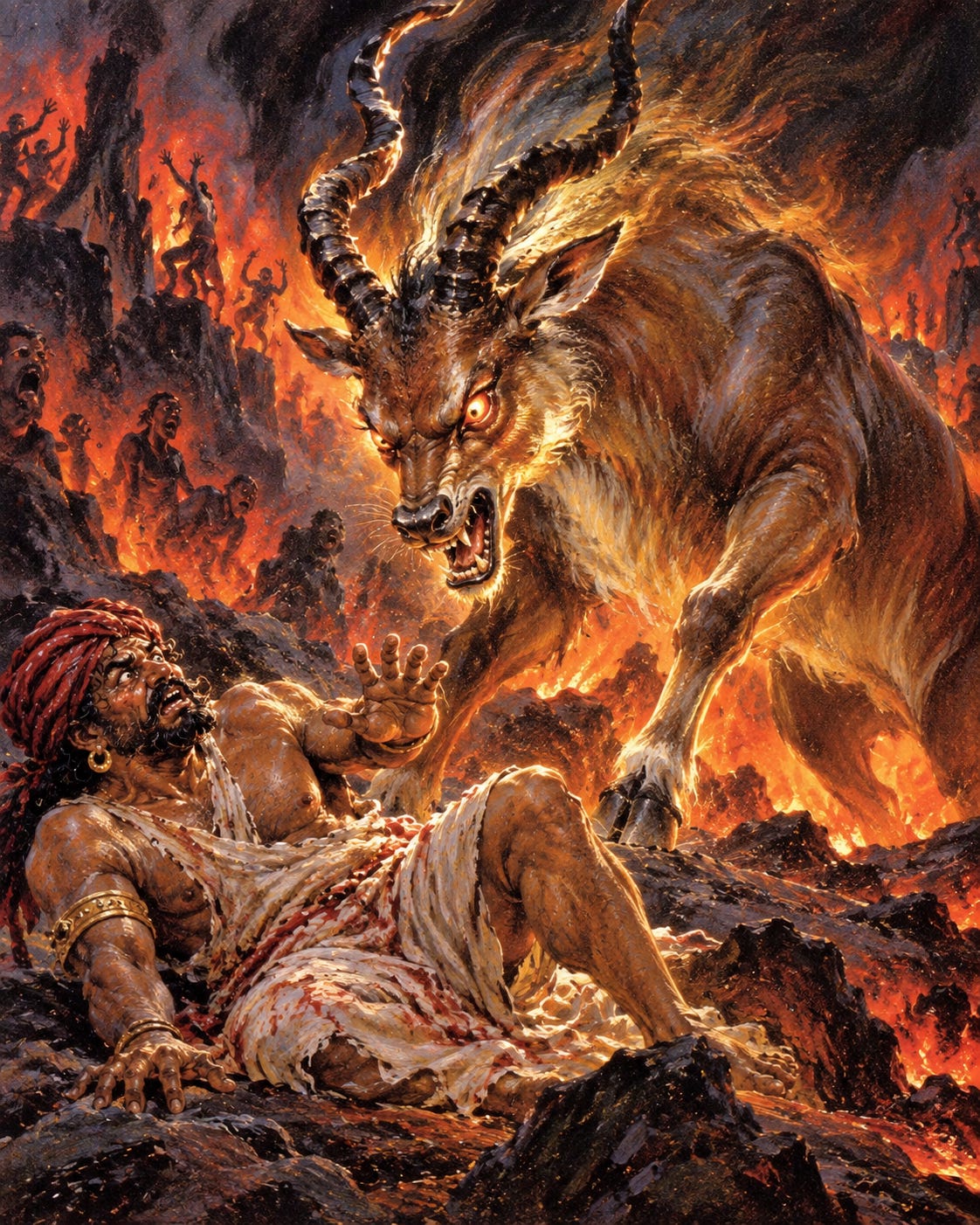
On the Raurava planet, Dushta felt constant fear, being pursued by fierce and angry beings. In this way, he faced the same terror he had instilled in the animals he captured. Through each step, the cries of countless souls echoed through him, reminding him of the lives he had taken without mercy.
On the Maharaurava planet, his body was pierced with enormous searing needles, making him feel a similar agony they had inflicted. In Tamisra, he was thrust into darkness, beaten and abandoned, feeling the desolation he had once imposed on the animals he tortured. His cries now went unheard and his pleas ignored, just as he had once ignored the cries of innocent creatures.
Each realm presented a new ordeal, each torment reflecting the pain he had caused in his lifetime. The punishments continued until the karmic scales began to balance, with each new experience imprinting in him the suffering he once felt satisfaction in causing.
Such punishments described in the scriptures may seem too harsh, but they illustrate the relentless nature of this material world. A devotee is personally protected by Kṛṣṇa, who protects him from the direct brunt of his karmic reactions, allowing him to experience only part of it, sufficient to make him learn his lessons and understand this material world is not such a good place. Even if not perfect, a devotee has some devotion to the Lord, and thus, Kṛṣṇa makes himself present in his life, gradually guiding him back home, back to Godhead.
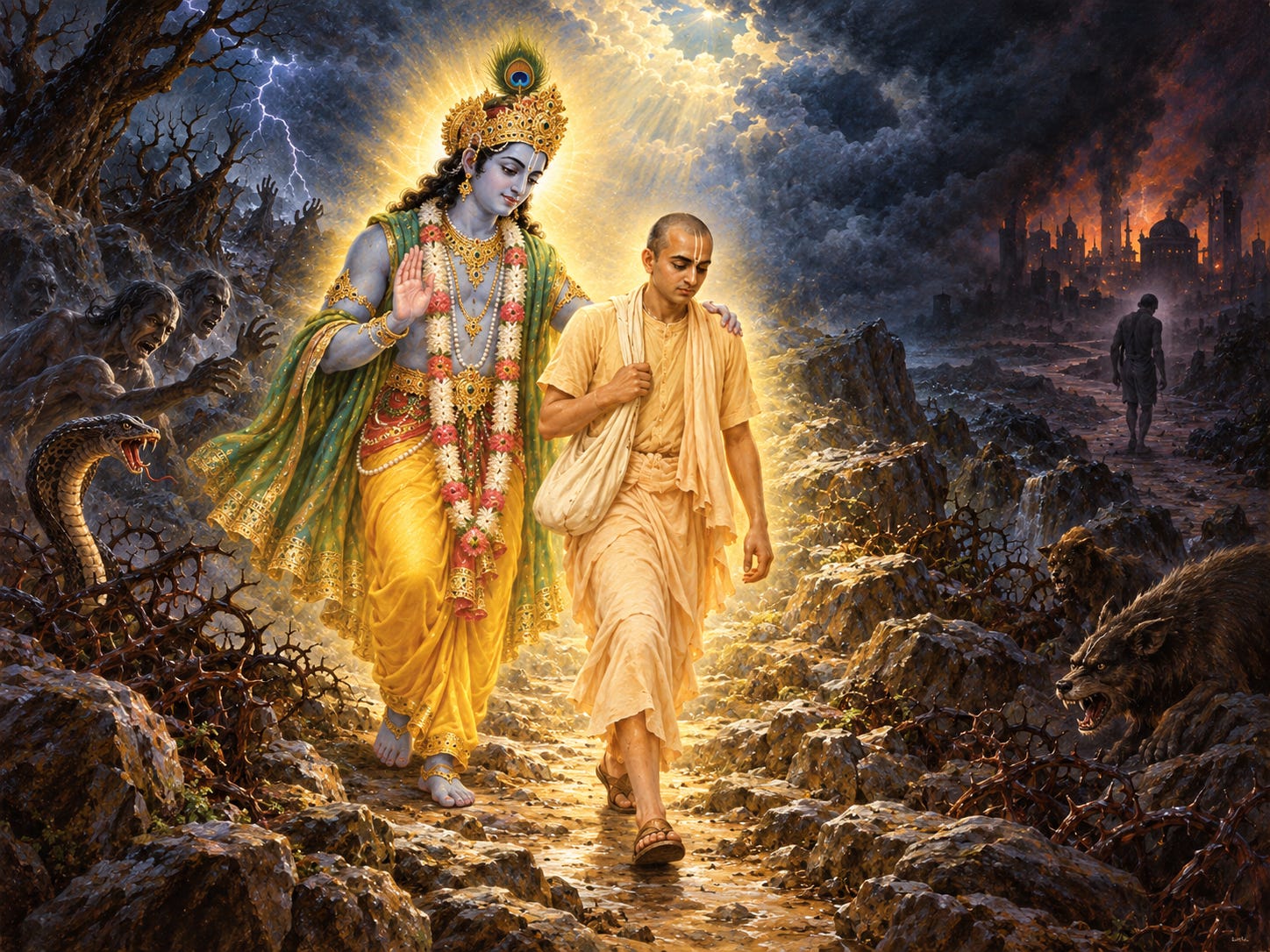
For an atheistic person like Dushta, however, there is no God, and therefore, the Lord reciprocates by becoming absent from his life. A sinful person has thus freedom to exert his free will, or misuse it, but one has to eventually face the karmic results. Because of their determination to deny the existence of God, they face the full brunt of the mechanical and indifferent karmic system. It’s very dangerous to be an atheist, especially a sinful one.
Redemption
As he went through his sentence in the hellish realms, Dushta’s former identity was gradually dissolved. His consciousness descended to the level of a lower creature, worn down by the conditioning imposed by Yamaraja’s servants. He forgot he was a butcher. Forgot his actions, gave up his cruel nature. His consciousness became similar to that of an innocent lower animal.
His journey continued on earth, as the residual effects of his karma made him to be born in a sussession of animal bodies. In some of these lives he lived happily, eating, growing, and taking care of cubs, but in others he was confined, endured slaughter, or was felt the anguish of the betrayal of a master he once trusted. Lifetime after lifetime, Dushta was born and died.
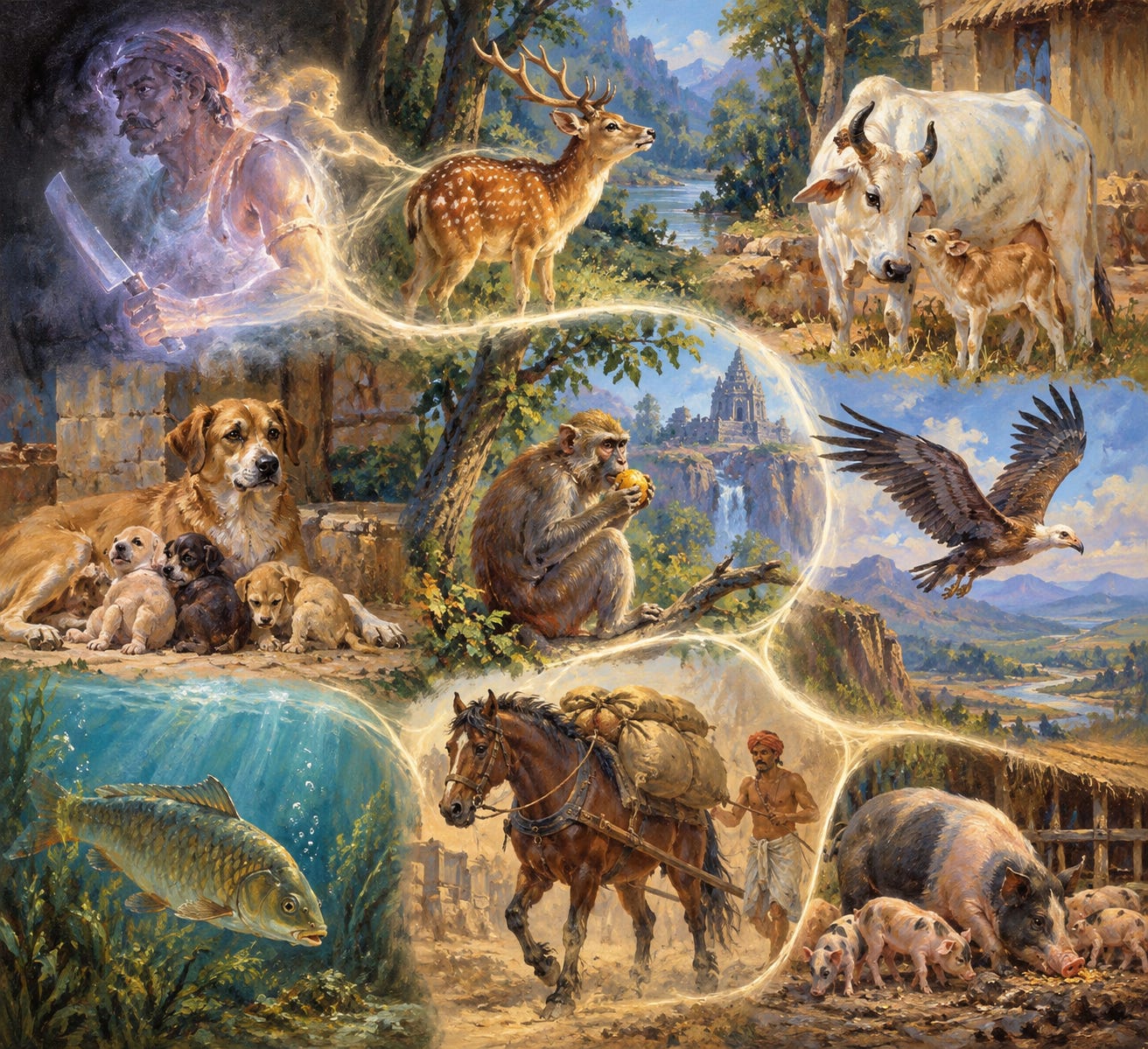
After what felt like ages on this path, he took birth as a human being again. By this time, his consciousness was molded into a new identity. Born from a poor single mother, he was called Jagadish. The countless lives of hardship had softened his heart. Now, he understood pain, and he could relate to the suffering of others.
As Jagadish grew, he showed gentleness and depth that was unusual for his age. He had no opportunity to study. His life was difficult, but he labored without complaining. His heart, softened by lifetimes of silent suffering, held a profound sense of empathy.
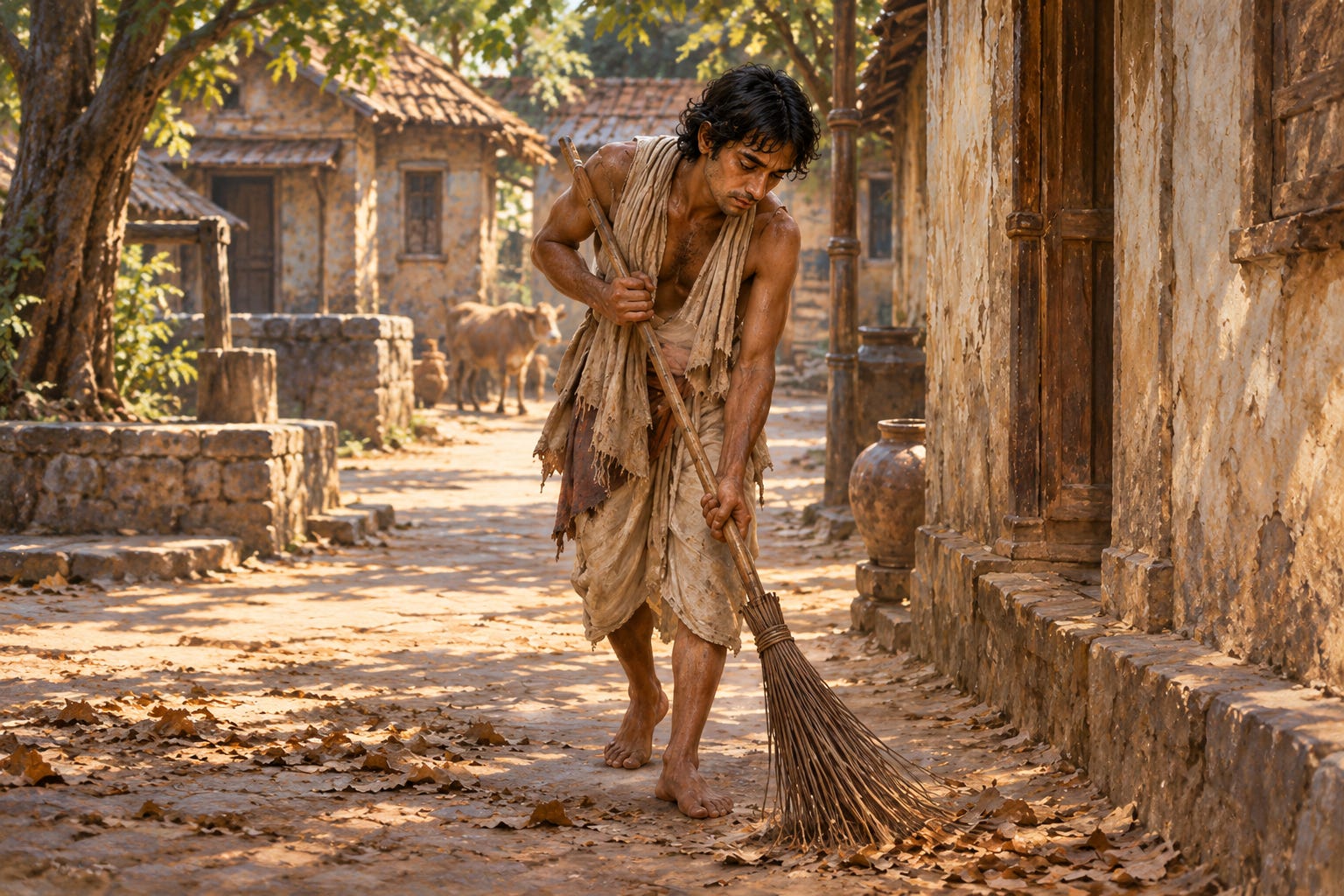
He learned how to read from an old man down the street and would sometimes read newspapers and books he could find.
One day, while carrying firewood to a market in a nearby town, Jagadish heard a sweet and rhythmic sound. He followed it and found a group of people, men, women and children, gathered in a lively kirtana. They sang and danced together while chanting: Hare Krishna, Hare Krishna, Krishna Krishna, Hare Hare, Hare Rama, Hare Rama, Rama Rama, Hare Hare.
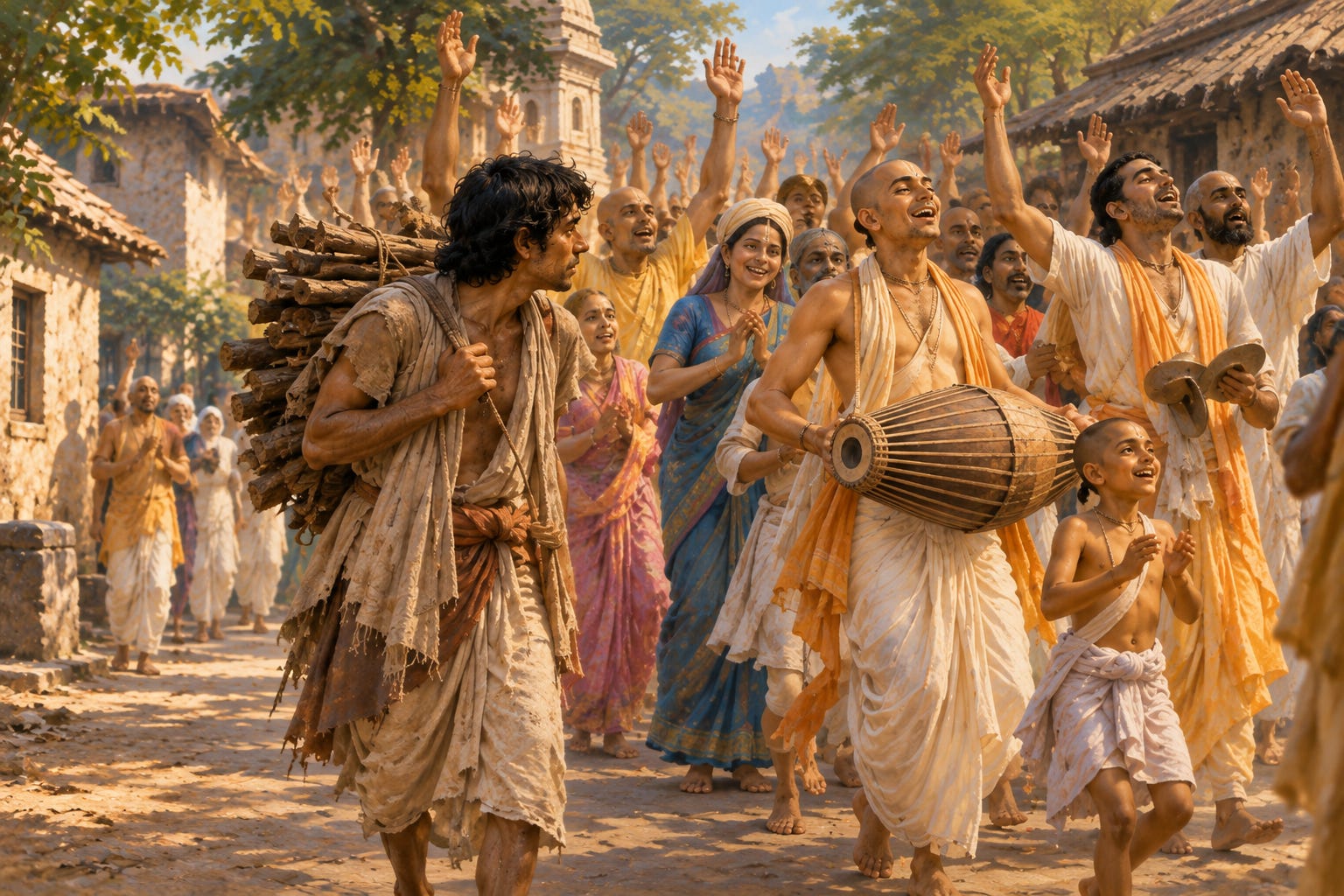
A devotee noticed Jagadish watching and approached him with a smile. He asked: “Do you know this song? It is from a different world, where there is no pain and no misery. Would you like to go there?”
Jagadish shook his head, mesmerized by the peace and joy radiating from this person. The devotee, Druva, then handed him a book, The Bhagavad-gītā As It Is.
“This book will answer all your questions about life and suffering,” he said gently.
Jagadish hesitated. “I cannot pay for this book. I have no money.”
Druva, however, reassured him: “You don’t have to pay. Someone sponsored a hundred books today. This one is yours.”
Taking the book, Jagadish felt a warmth in his hands, like it was something he had waited many lifetimes to find. He thanked the devotee and returned home. That night, he began to read the book under a small light.
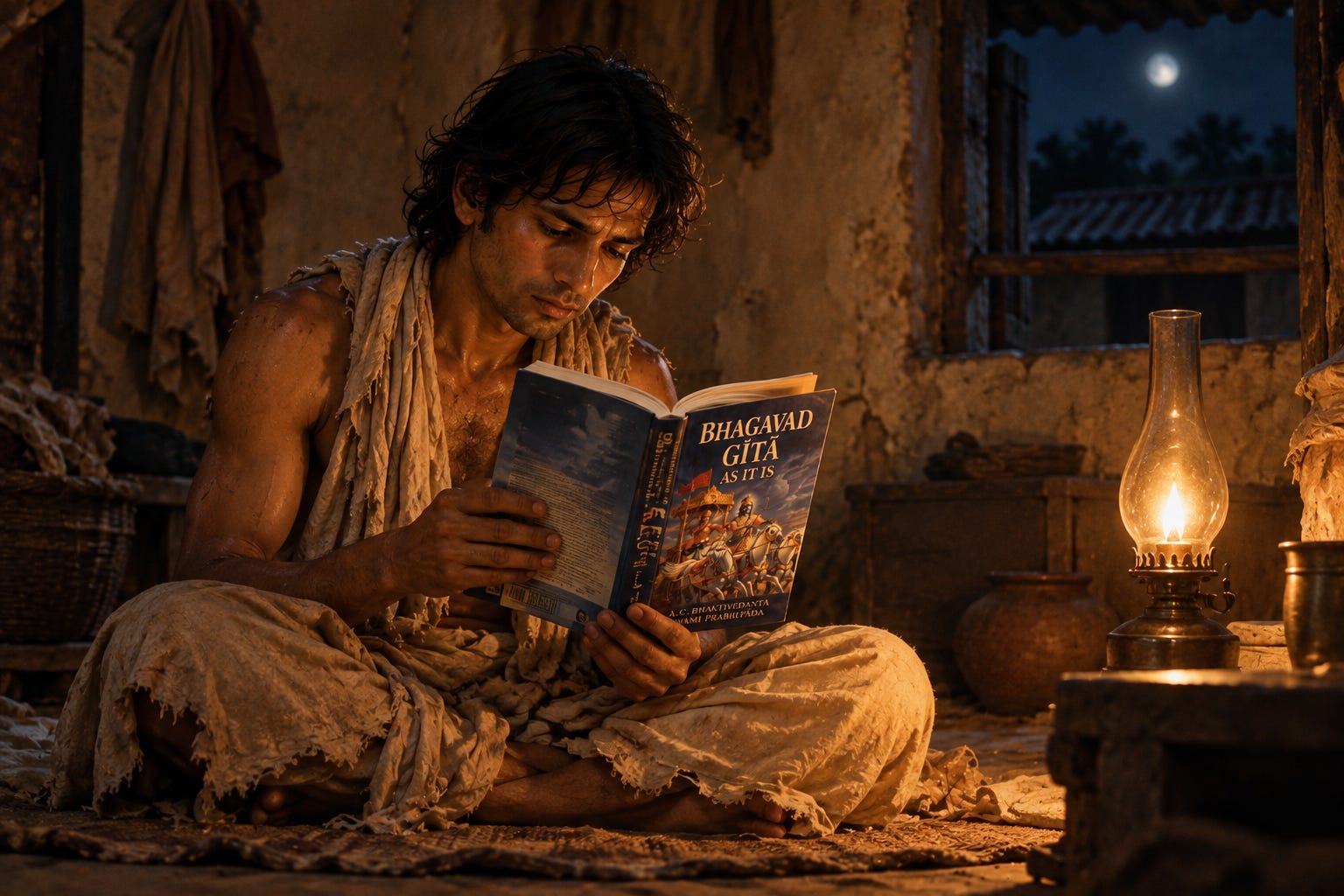
As he turned the pages, Jagadish learned many profound truths. He learned about the soul, the law of karma, about the cycle of birth and death. Each life stroke deep within him, connecting with unconscious memories he could not describe in words.
He learned about bhakti, the path of devotional service. He learned that this is the way to transcend suffering and revive our eternal, blissful nature.
In the following days, Jagadish immersed himself in the teachings of the Gītā. He did not go to work, forgot to eat. The bitterness he previously carried dissolved into a steady joy.
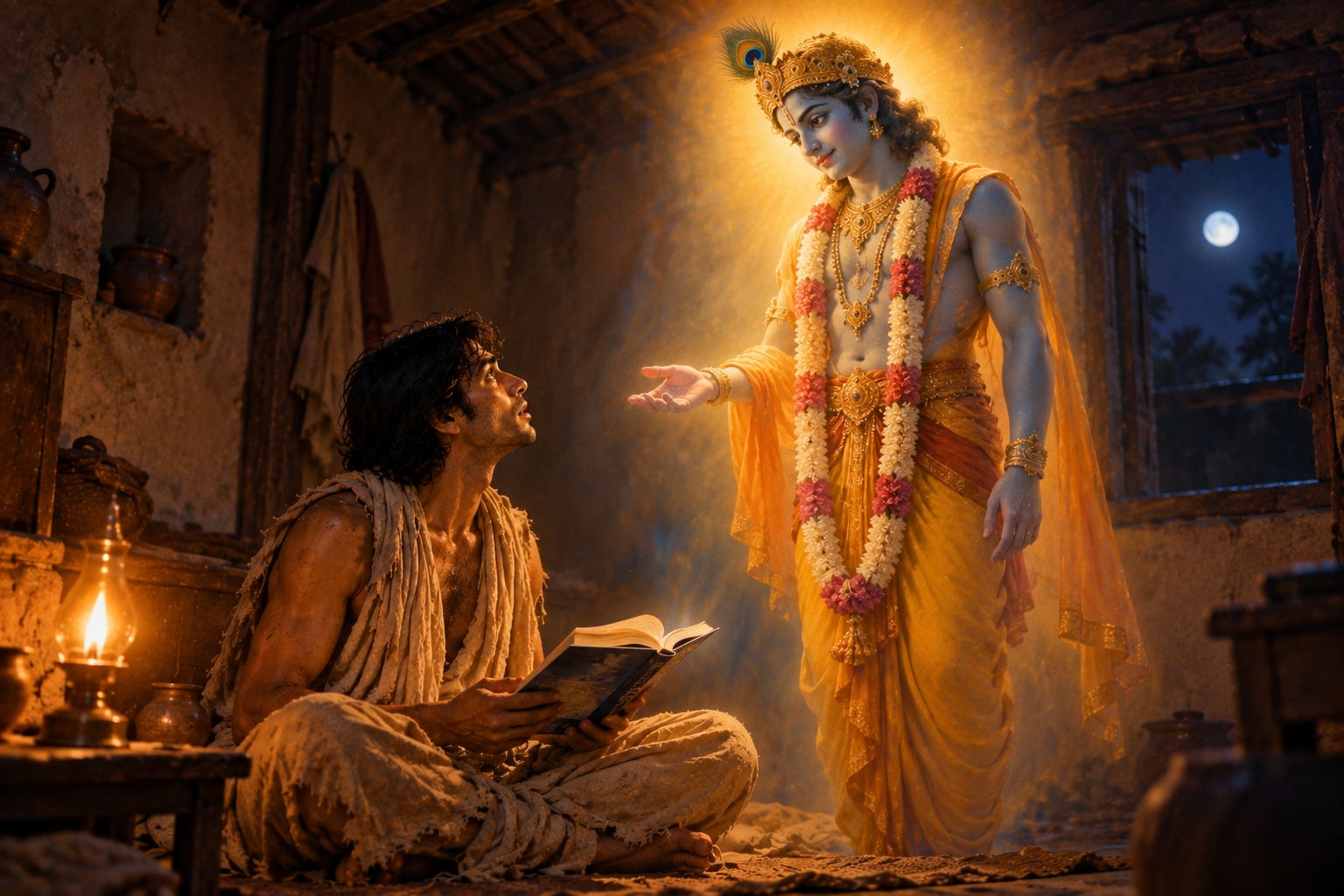
With time, Jagadish joined the devotees. He continued studying the Gītā and learning from them how to serve Kṛṣṇa. He was eating with them, worshipping with them, and singing with them. Every day he was bringing prasādam from the temple to his mother and speaking to her about the Gitā.
Soon he started going out with the devotees to chant and started sharing the Bhagavad-gītā with others, just like Druva had done for him.
In this way, his journey of countless lifetimes came to a conclusion. This time, he dedicated himself to the service of others, helping them find the same peace that he had discovered.
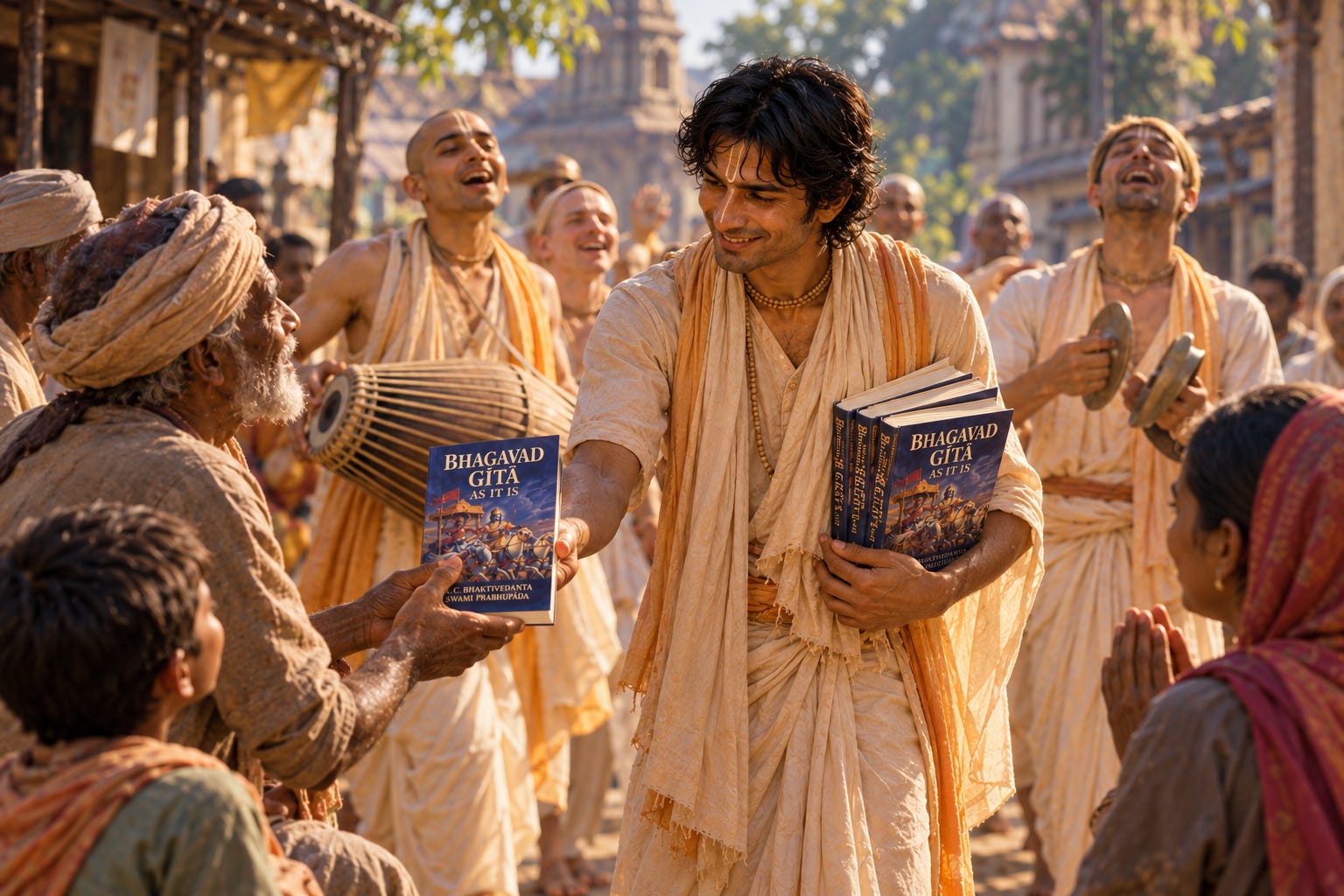
In this way, completely transformed by his journey, the cruel butcher Dushta finally found redemption. As Jagadish, he lived his life serving Kṛṣṇa and sharing what he had learned with others. In this way, he completed the circle of his long material journey.
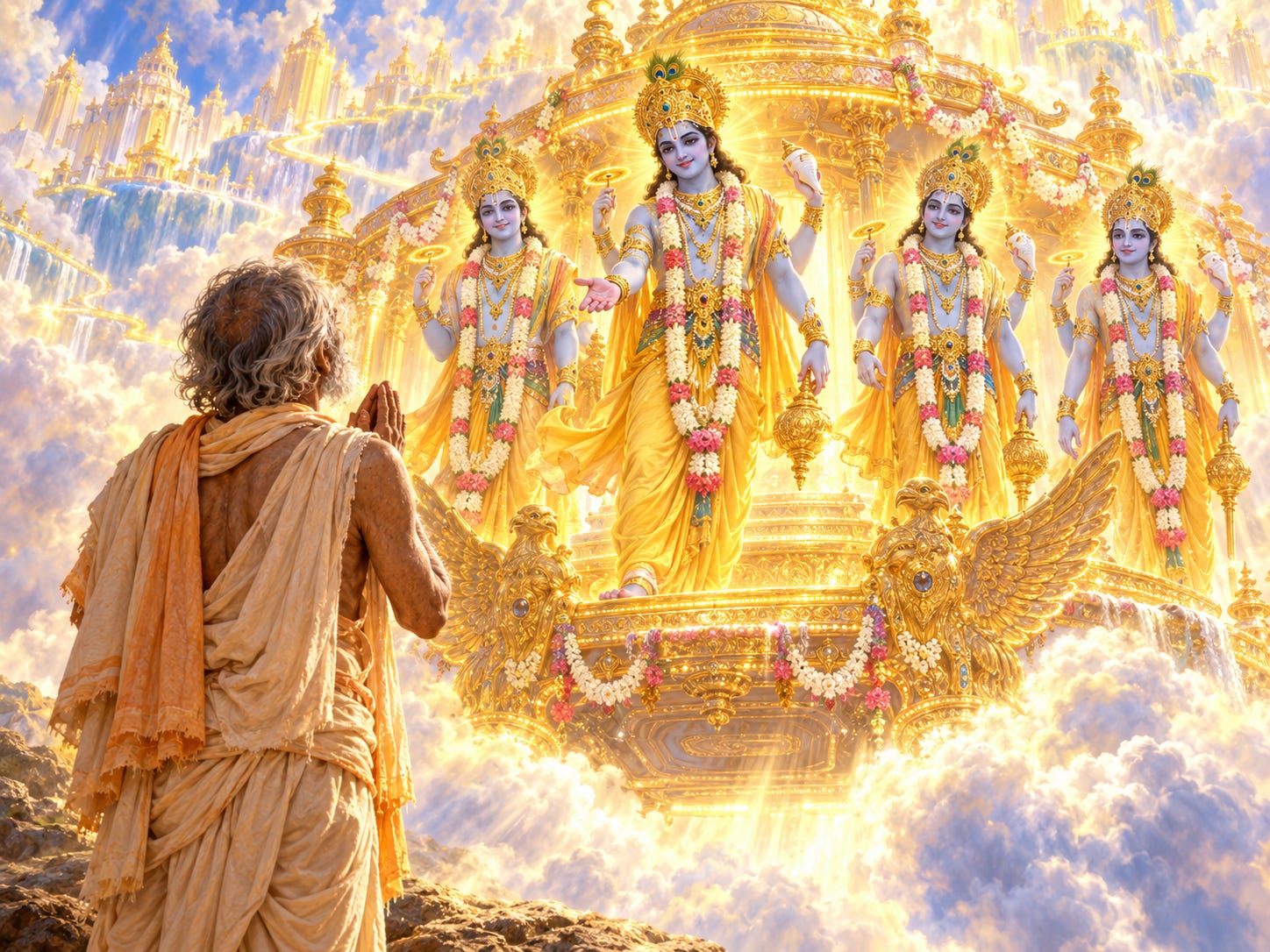
Years later, when his hair had already become white, he saw four beautiful, effulgent personalities coming towards him in a golden vimana. One of them extended him his hand, inviting him to come with them. Shyly, Jagadish boarded their airplane and disappeared with them. He never returned.
Read more:

This is a publication for thoughtful readers who want to go deeper into Kṛṣṇa consciousness. I publish daily, trying to offer high-quality spiritual content, and all posts are available to free subscribers. If you wish, you can support this work with a monthly contribution. When you subscribe, you can choose between a free subscription and a monthly contribution, and you can switch from a free subscriber to a supporter at any time.
You can also receive updates on WhatsApp or Telegram.
If you would like to contribute further, you can find the donation links here.