

Subscribe to receive new articles by e-mail. It’s free, but if you like, you can pledge a donation:
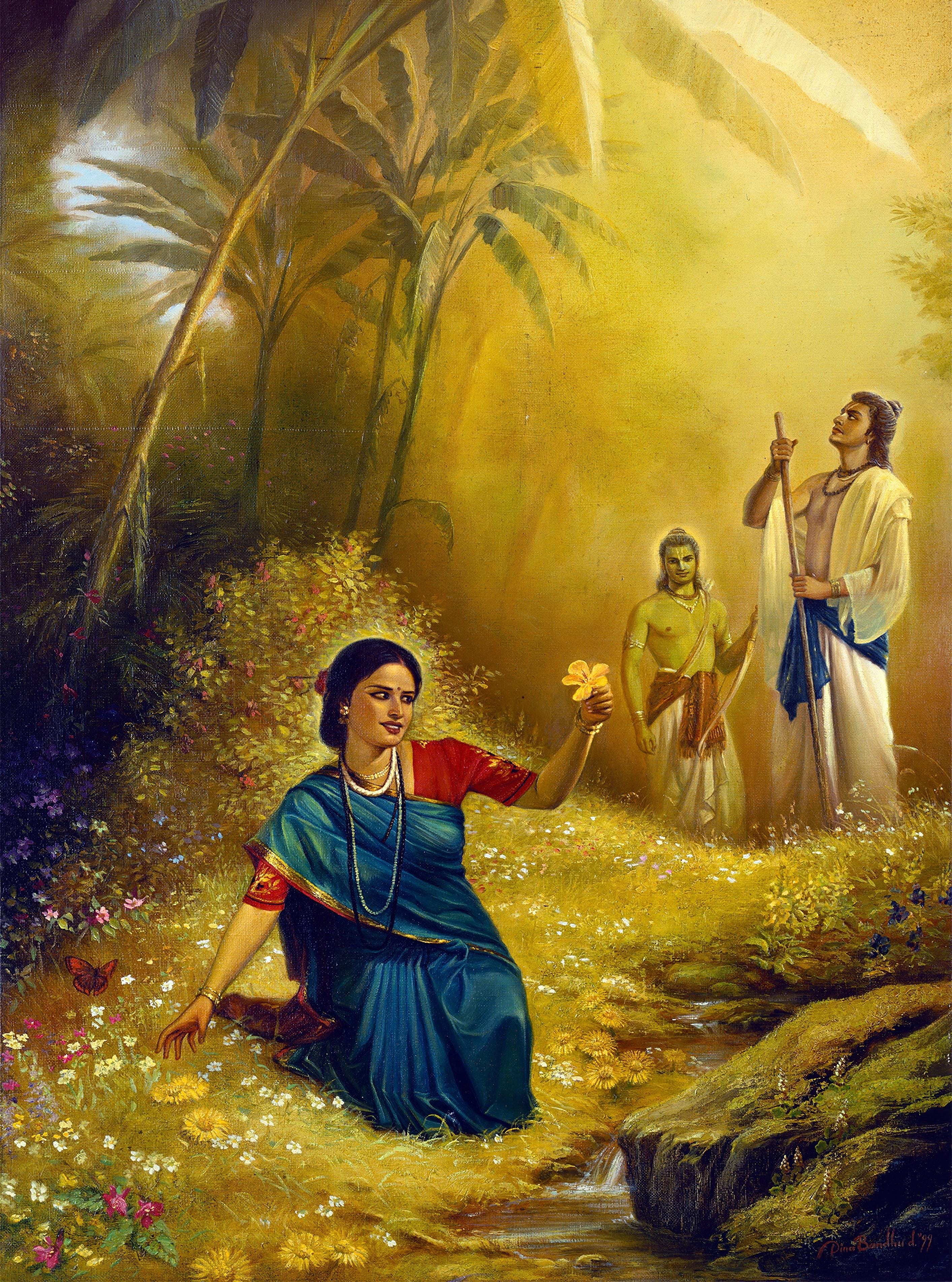
More than being just a historical description, the pastimes of Lord Rama crossing the ocean to fight Rāvaṇa and rescue Sītā carry a lot of philosophical meaning. In the Bhagavad-Gītā, Kṛṣṇa reveals that He comes as different incarnations not only to kill the demons but also to reestablish the principles of dharma. He does that not only by speaking philosophy, like in the case of the Bhagavad-Gita, but above all by His own example.
In the Rāmāyaṇa, the Lord shows the importance of being honest, of being faithful to one’s spouse, respectful to one’s parents, maintaining one’s word, giving a good example to others according to one’s social position, and so on. The Rāmāyaṇa also shows the shortcomings of materialistic life and where it leads us.
Materialist life is considered sinful because it’s based on stealing from Kṛṣṇa. Although He is the creator and proprietor of everything, He allows us to use these properties in His service and mercifully gives us back prasāda. When one cooks some nice preparation and offers it to Kṛṣṇa, for example, he doesn’t go without food. On the contrary, Kṛṣṇa accepts this mundane food and gives him back prasāda, which includes all the same nutrients, but adds a spiritual quality that was not originally there.
Similarly, when one offers clothes and other items, nothing disappears; everything is returned as prasāda. In the same way, one can offer his house, his family, or even his own life to Kṛṣṇa by using them in His service, and this will just make all these things better.
Although many pure devotees prefer to live in poverty to avoid any temptation, devotional service to Kṛṣṇa is not contradictory to an opulent life. One can live either as a pauper or a king. The point is not about how many material objects we have around us, but our mentality in accepting the Supremacy of the Lord and using things in His service. A minister lives almost as opulently as the King, and receives practically the same honour. The point is that he understands his position as a representative of the King, and as an instrument of his will. This loyalty is exactly what makes him qualified to occupy such an exalted position.
Materialists, however, don’t understand this concept. Instead of offering back the material energy to Kṛṣṇa, they want to kidnap, to separate it from Kṛṣṇa. This effort is exemplified in the example of Rāvaṇa trying to kidnap Sītā.
Rāvaṇa is the archetype of the demoniac qualities described by Kṛṣṇa in the Bhagavad-Gītā. He can be contrasted with Hanumān, who represents the pure devotee, always willing to bring back Sītā to Rāma:
“The Supreme Personality of Godhead said: Fearlessness; purification of one’s existence; cultivation of spiritual knowledge; charity; self-control; performance of sacrifice; study of the Vedas; austerity; simplicity; nonviolence; truthfulness; freedom from anger; renunciation; tranquillity; aversion to faultfinding; compassion for all living entities; freedom from covetousness; gentleness; modesty; steady determination; vigor; forgiveness; fortitude; cleanliness; and freedom from envy and from the passion for honor – these transcendental qualities, O son of Bharata, belong to godly men endowed with divine nature.
Pride, arrogance, conceit, anger, harshness and ignorance – these qualities belong to those of demoniac nature, O son of Pṛthā.
The transcendental qualities are conducive to liberation, whereas the demoniac qualities make for bondage. Do not worry, O son of Pāṇḍu, for you are born with the divine qualities.” (Bg 16.1-5)
By his goodly qualities, Hanumān became the most exalted servant of Lord Rāma. In reality, the Lord does not need help; He is perfectly capable of achieving everything He desires through His different potencies. However, he creates this material world as an opportunity for us to revive our eternal spiritual nature. Rāvaṇa, on the other hand, misused the opportunity, trying to steal from the Lord instead of engaging things in His service.
What was the result? The first problem is that Rāvaṇa could not take the real Sītā. As soon as he touched her, the real Sītā disappeared, and in her place, he took an illusory representation, composed of material elements, an illusory Sītā, or Māyā-Sītā. Similarly, material objects may appear very glittering at a distance, but they don’t appear so attractive once we acquire them. The same applies to other people. One may see a beautiful woman or a handsome man and become attracted, but when we come close enough, we realize it’s not like we imagined. We fall into this mistake every time we fail to see things and people in connection with Kṛṣṇa.
The second problem Rāvaṇa faced was that, because of a previous curse, he could not even enjoy the illusory Sītā. He was keeping her in his palace and having some false sense of proprietorship, but he couldn’t really get any pleasure from her association. This is also similar to our position when we try to enjoy material objects and people separated from Kṛṣṇa: because our material senses are so limited, we can’t really enjoy much. There is a lot of hankering and anticipation, but when we finally get the things we desire, the enjoyment finishes very quickly.
The main problem for Rāvaṇa, however, was that soon Lord Rama came to Lanka, defeated all his soldiers, and chastised him for his mischief by killing him and taking Sītā back. This illustrates the ultimate fate of all materialists: death.
One who doesn’t want to accept Kṛṣṇa in one of His beautiful forms during his life is forced to accept him in His terrible form as death. Death is also a representative of Kṛṣṇa, and that’s the form He appears to the materialists who are envious of Him. Death defeats all one’s soldiers, in the form of medical treatments, insurance, and so on, and ultimately takes everything from him.
Everything is energy of Kṛṣṇa: money, material properties, house and family, as well as our own senses, intelligence, words, thoughts, and so on. This leads us to the profound realization that all of these should be used for Him. It may sound very difficult in the beginning, but if we keep in mind the example of Rāvaṇa and Hanumān, one kidnapping Sītā and the other bringing her to Rāma, we can gradually learn how to use all these material assets, moment after moment, for Kṛṣṇa.
The Rāmāyaṇa thus presents the two sides. On the one hand, it encourages the devotee. If we serve the Lord like Hanumān, or surrender to Him like Vibhīṣaṇa, He will surely protect us. If, on the other hand, we try to steal Sītā, just like Rāvaṇa, then death, as Kṛṣṇa’s representative, will take away everything.
These points are explained by Śrīla Prabhupāda in his purport to SB 5.14.24:
“Lakṣmī was carried away by the materialistic Rāvaṇa. Rāvaṇa kidnapped Sītā, the goddess of fortune belonging to Lord Rāma. As a result, Rāvaṇa’s entire family, opulence and kingdom were smashed, and Sītā, the goddess of fortune, was recovered from his clutches and reunited with Lord Rāma.”
“We collect money from various sources, but that money does not belong to anyone but Rādhā and Kṛṣṇa (Lakṣmī-Nārāyaṇa). If money is utilized in the service of Lakṣmī-Nārāyaṇa, the devotee automatically lives in an opulent way. However, if one wants to enjoy Lakṣmī the way Rāvaṇa did, he will be vanquished by the laws of nature, and whatever few possessions he has will be taken away. Finally death will take everything away, and death is the representative of Kṛṣṇa.”
You can also donate using Buy Me a Coffee, PayPal, Wise, Revolut, or bank transfers. There is a separate page with all the links. This helps me enormously to have time to write instead of doing other things to make a living. Thanks!
Dandavat pranam pabhuji.
The article is very helpful for us.
Could you please, continue sharing Ramayana teachings too? This is my request pls prabhu, i hope you do if Possible 🙏🙇♀️.
Thank you for your teachings,blessings for us and service to devotees. Hare krsna. Jaya Srila prabhupada