


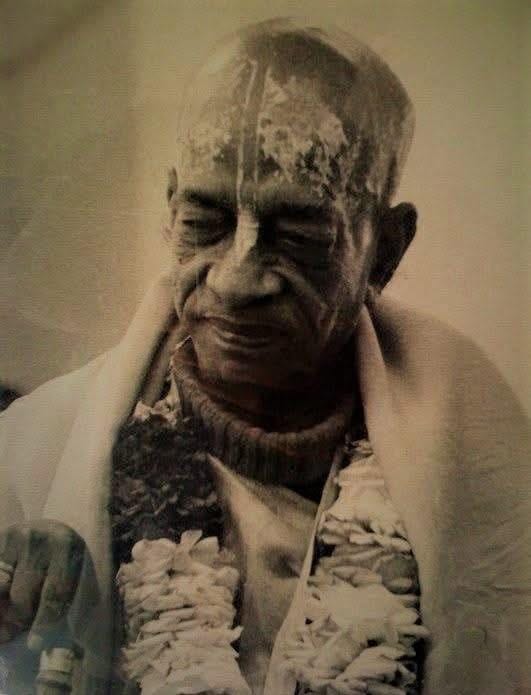
In 1916, Śrīla Prabhupāda entered the Scottish Churches’ College, a prestigious Christian school run by Scottish priests. This was the place where Prabhupāda received most of his material education, deepened his understanding of the English language, and sharpened many of the skills he would later use in the service of Kṛṣṇa. He graduated in 1920, but refused to accept a diploma as a protest against British rule, just as many others at that time.
A little later, in 1922, Śrīla Prabhupāda had his first meeting with Śrīla Bhaktisiddhānta Sarasvatī Ṭhākura in Kolkata, which convinced him to change the direction of his whole life, dedicating himself to the propagation of Kṛṣṇa consciousness. He would meet just a handful of times more with him, but that was all that was necessary to give Prabhupāda the instructions and realization that would push him in the direction of fulfilling his mission of spreading Kṛṣṇa consciousness in the western countries.
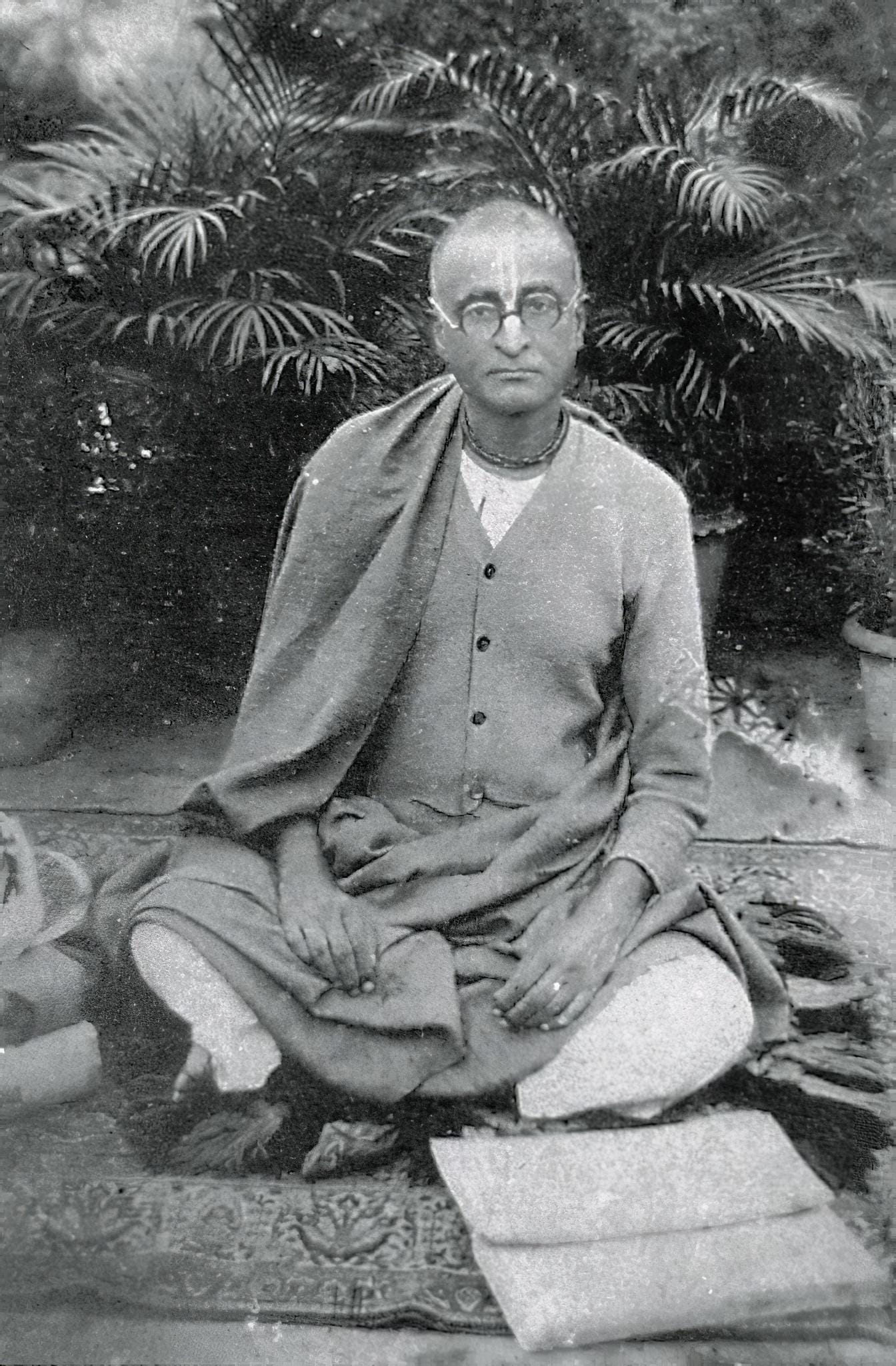
This is how the events leading to this first meeting are described in the Śrīla Prabhupāda Lilamrta:
ABHAY’S FRIEND NARENDRANATH Mullik was insistent. He wanted Abhay to see a sādhu from Māyāpur. Naren and some of his friends had already met the sādhu at his nearby āśrama on Ultadanga Junction Road, and now they wanted Abhay’s opinion. Everyone within their circle of friends considered Abhay the leader, so if Naren could tell the others that Abhay also had a high regard for the sādhu, then that would confirm their own estimations. Abhay was reluctant to go, but Naren pressed him.
They stood talking amidst the passersby on the crowded early-evening street, as the traffic of horse-drawn hackneys, oxcarts, and occasional auto taxis and motor buses moved noisily on the road. Naren put his hand firmly around his friend’s arm, trying to drag him forward, while Abhay smiled but stubbornly pulled the other way. Naren argued that since they were only a few blocks away, they should at least pay a short visit. Abhay laughed and asked to be excused. People could see that the two young men were friends, but it was a curious sight, the handsome young man dressed in white khādī kurtā and dhotī being pulled along by his friend.
Naren explained that the sādhu, Śrīla Bhaktisiddhānta Sarasvatī, was a Vaiṣṇava and a great devotee of Lord Caitanya Mahāprabhu. One of his disciples, a sannyāsī, had visited the Mullik house and had invited them to meet Śrīla Bhaktisiddhānta. A few of the Mulliks had gone to see him and had been very much impressed.
But Abhay remained skeptical. “Oh, no! I know all these sādhus,” he said. “I’m not going.” Abhay had seen many sādhus in his childhood; every day his father had entertained at least three or four in his home. Some of them were no more than beggars, and some even smoked gāñjā. Gour Mohan had been very liberal in allowing anyone who wore the saffron robes of a sannyāsī to come. But did it mean that though a man was no more than a beggar or gāñjā smoker, he had to be considered saintly just because he dressed as a sannyāsī or was collecting funds in the name of building a monastery or could influence people with his speech?
Naren argued that he felt that this particular sādhu was a very learned scholar and that Abhay should at least meet him and judge for himself. Abhay wished that Naren would not behave this way, but finally he could no longer refuse his friend. Together they walked past the Parsnath Jain Temple to 1 Ultadanga, with its sign, Bhaktivinod Asana, announcing it to be the quarters of the Gaudiya Math.
Śrīla Prabhupāda had grown up observing his father receive many so-called sadhus in their house. However, he could notice the blatant discrepancies in their habits and behaviour with the descriptions of a sadhu from the scriptures. His father was very liberal in honoring everyone, but Prabhupāda could see that most of the so-called sadhus were not really very saintly. When his friend Narendranarth insisted for his to visit this sadhu from Kolkata with him, his first reaction was to presume he was just another of them. This impression, however, was quickly dispelled during their meeting:
Sitting with his back very straight, Śrīla Bhaktisiddhānta Sarasvatī appeared tall. He was slender, his arms were long, and his complexion was fair and golden. He wore round bifocals with simple frames. His nose was sharp, his forehead broad, and his expression was very scholarly yet not at all timid. The vertical markings of Vaiṣṇava tilaka on his forehead were familiar to Abhay, as were the simple sannyāsa robes that draped over his right shoulder, leaving the other shoulder and half his chest bare. He wore tulasī neck beads, and the clay Vaiṣṇava markings of tilaka were visible at his throat, shoulder, and upper arms. A clean white brahminical thread was looped around his neck and draped across his chest. Abhay and Naren, having both been raised in Vaiṣṇava families, immediately offered prostrated obeisances at the sight of the revered sannyāsī.
While the two young men were still rising and preparing to sit, before any preliminary formalities of conversation had begun, Śrīla Bhaktisiddhānta immediately said to them, “You are educated young men. Why don’t you preach Lord Caitanya Mahāprabhu’s message throughout the whole world?”
Abhay could hardly believe what he had just heard. They had not even exchanged views, yet this sādhu was telling them what they should do. Sitting face to face with Śrīla Bhaktisiddhānta Sarasvatī, Abhay was gathering his wits and trying to gain a comprehensible impression, but this person had already told them to become preachers and go all over the world!
Drawn irresistibly into discussion, Abhay spoke up in answer to the words Śrīla Bhaktisiddhānta had so tersely spoken in the first seconds of their meeting. “Who will hear your Caitanya’s message?” Abhay queried. “We are a dependent country. First India must become independent. How can we spread Indian culture if we are under British rule?”
Abhay had not asked haughtily, just to be provocative, yet his question was clearly a challenge. If he were to take this sādhu’s remark to them as a serious one – and there was nothing in Śrīla Bhaktisiddhānta’s demeanor to indicate that he had not been serious – Abhay felt compelled to question how he could propose such a thing while India was still dependent.
Śrīla Bhaktisiddhānta replied in a quiet, deep voice that Kṛṣṇa consciousness didn’t have to wait for a change in Indian politics, nor was it dependent on who ruled. Kṛṣṇa consciousness was so important – so exclusively important – that it could not wait.
Śrīla Bhaktisiddhānta continued: Whether one power or another ruled was a temporary situation; but the eternal reality is Kṛṣṇa consciousness, and the real self is the spirit soul. No man-made political system, therefore, could actually help humanity. This was the verdict of the Vedic scriptures and the line of spiritual masters. Although everyone is an eternal servant of God, when one takes himself to be the temporary body and regards the nation of his birth as worshipable, he comes under illusion. The leaders and followers of the world’s political movements, including the movement for svarāj, were simply cultivating this illusion. Real welfare work, whether individual, social, or political, should help prepare a person for his next life and help him reestablish his eternal relationship with the Supreme.
He felt himself defeated. But he liked it. He suddenly realized that he had never before been defeated. But this defeat was not a loss. It was an immense gain.
Śrīla Prabhupāda: I was from a Vaiṣṇava family, so I could appreciate what he was preaching. Of course, he was speaking to everyone, but he found something in me. And I was convinced about his argument and mode of presentation. I was so much struck with wonder. I could understand: Here is the proper person who can give a real religious idea.
Walking away from the āśrama, Naren turned to his friend: “So, Abhay, what was your impression? What do you think of him?”
“He’s wonderful!” replied Abhay. “The message of Lord Caitanya is in the hands of a very expert person.”
Śrīla Prabhupāda: I accepted him as my spiritual master immediately. Not officially, but in my heart. I was thinking that I had met a very nice saintly person.
A few newly discovered pictures shed some new light on these events. This is Narendranath Mullik, the friend who brought Śrīla Prabhupāda to the meeting:
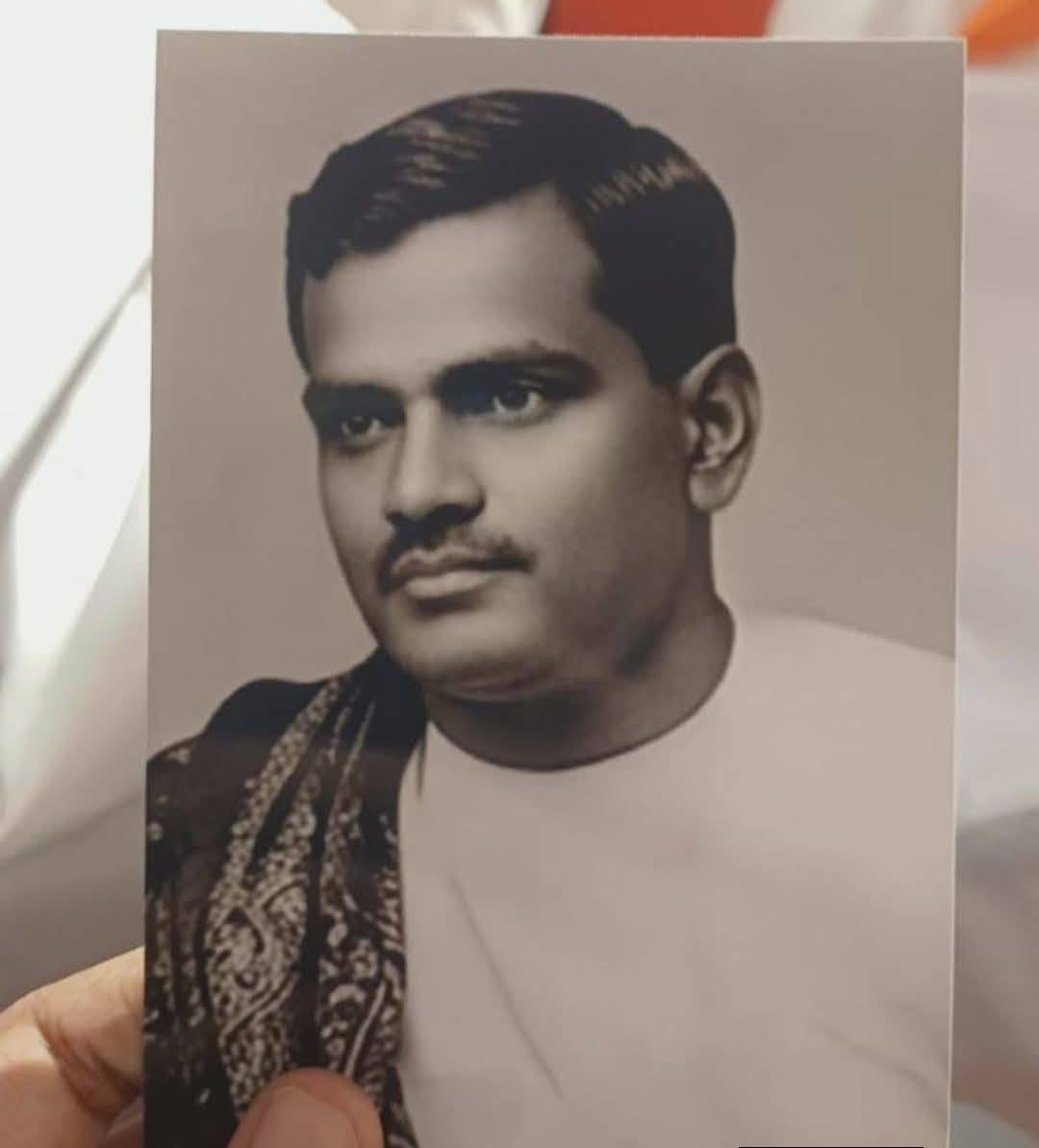
Despite his enthusiasm, he didn’t become a follower of Śrīla Bhaktisiddhānta Sarasvatī Ṭhākura, but his contribution was already made. These photos were revealed by his grandson, who found the photos in the family album.
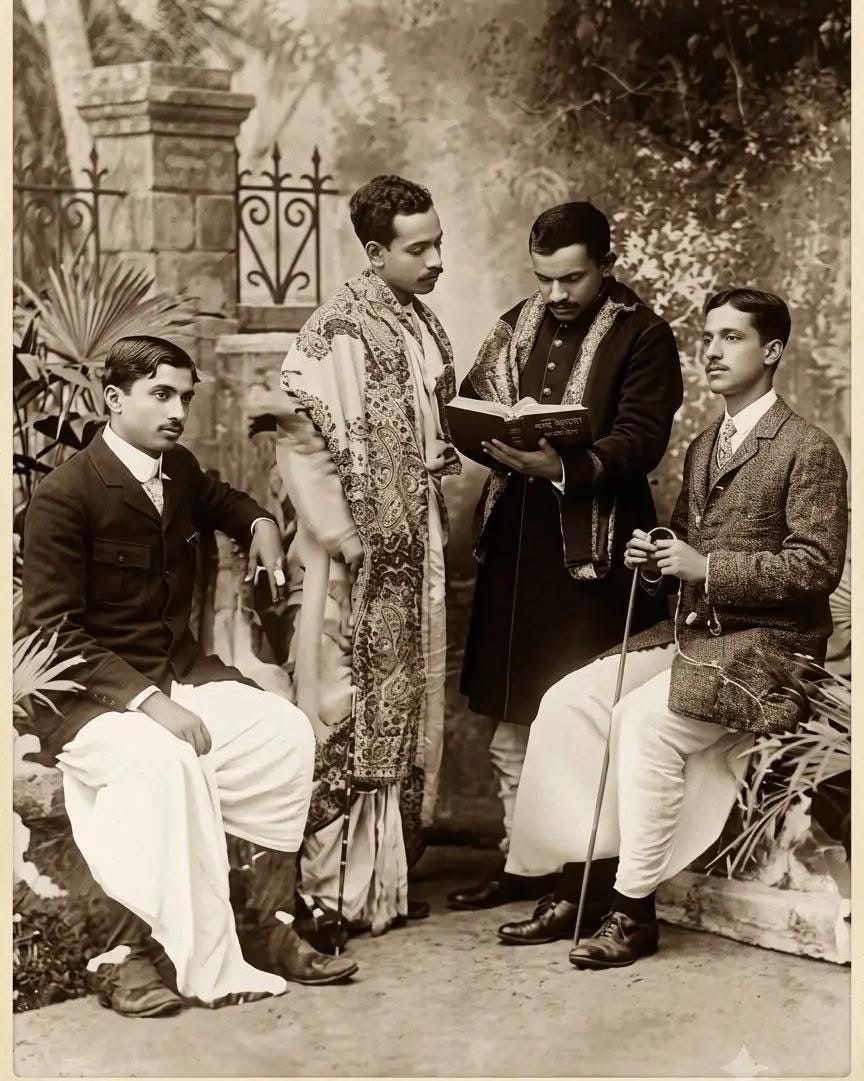
This is another photo that shows him discussing a book with Śrīla Prabhupāda, prior to the meeting. It appears to have been captured in an old tripod-mounted bellows camera, on dry film; therefore, the quality is not the best:
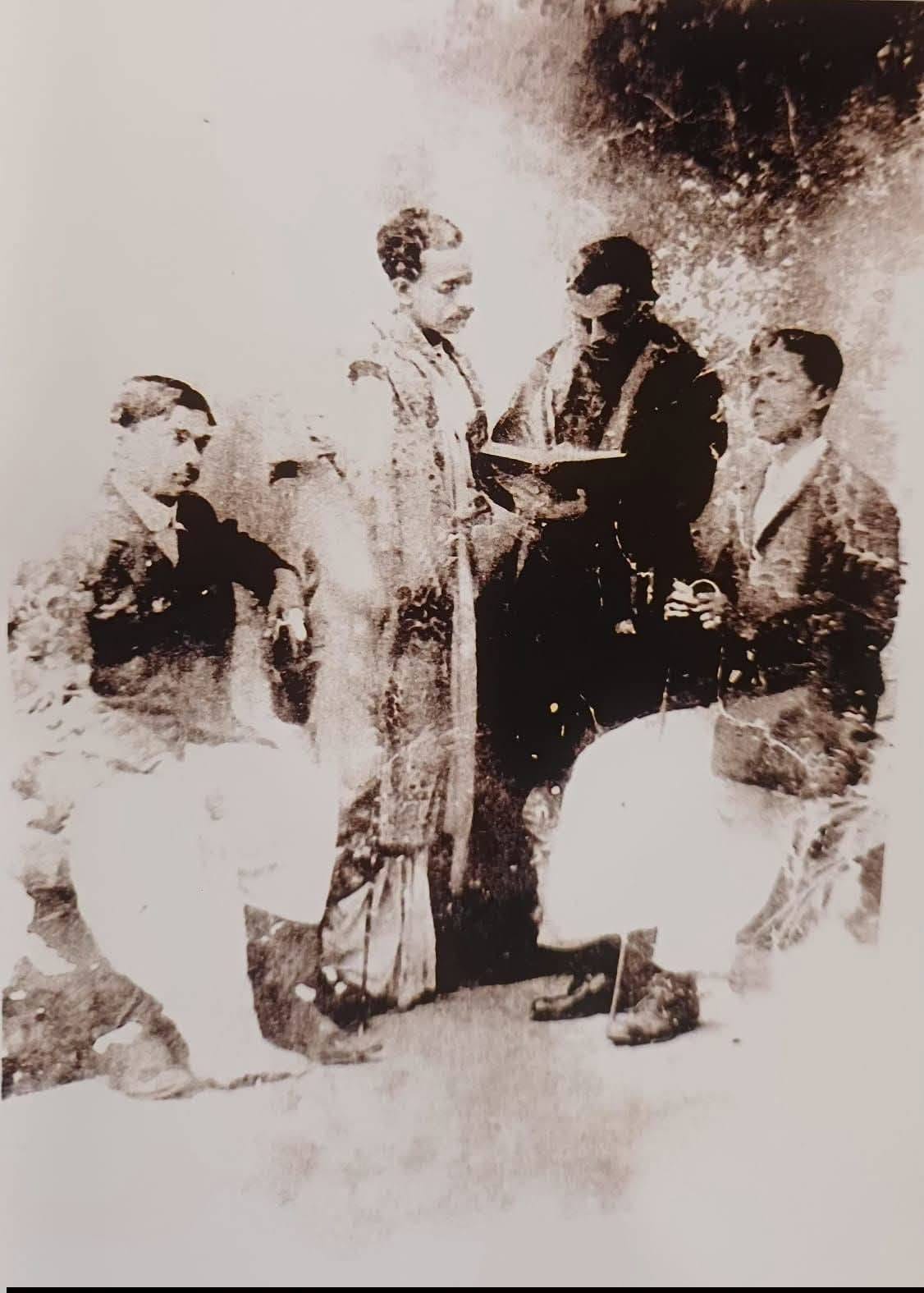
This is a reconstructed version of the same photo using AI. Sharper, but probably not right on the details:
This is a publication for thoughtful readers who want to go deeper into Kṛṣṇa consciousness. I publish daily, trying to offer high-quality spiritual content, and all posts are available to free subscribers. If you wish, you can also choose a paid subscription to support this work.
You can also receive the updates on WhatsApp or Telegram.
If you would like to contribute further, you can find the donation links here.
Dear Devotees, please be aware that this image is not a genuine historical photograph, but an AI-generated rendering. Careful visual inspection reveals classic artificial intelligence rendering failures: severe anatomical deformations in the hands and fingers, lower limbs unnaturally melting into the clothing, and the central book physically blending into the chest of the standing figure. Additionally, the vintage "damage" is merely a uniform digital noise filter applied to simulate emulsion degradation, rather than authentic chemical aging. Therefore, we kindly request you not to post this image as an original artifact and to help prevent the spread of misinformation. Please rely on verified historical archives.
Run a Reverse Search: Right-click the image and use Google Lens or TinEye to track its original source and earliest upload date.
Inspect the Details: Zoom in and look closely at the hands, eyes, and background textures. AI models often struggle with rendering realistic fingers, symmetrical jewelry, and sharp boundaries between objects.
Use AI Detectors: Upload the file to free online verification tools like Hive Moderation, Illuminarty, or Is It AI to check the probability of synthetic generation.