

You can receive new articles directly in your inbox. Subscription is free; donations are welcome.
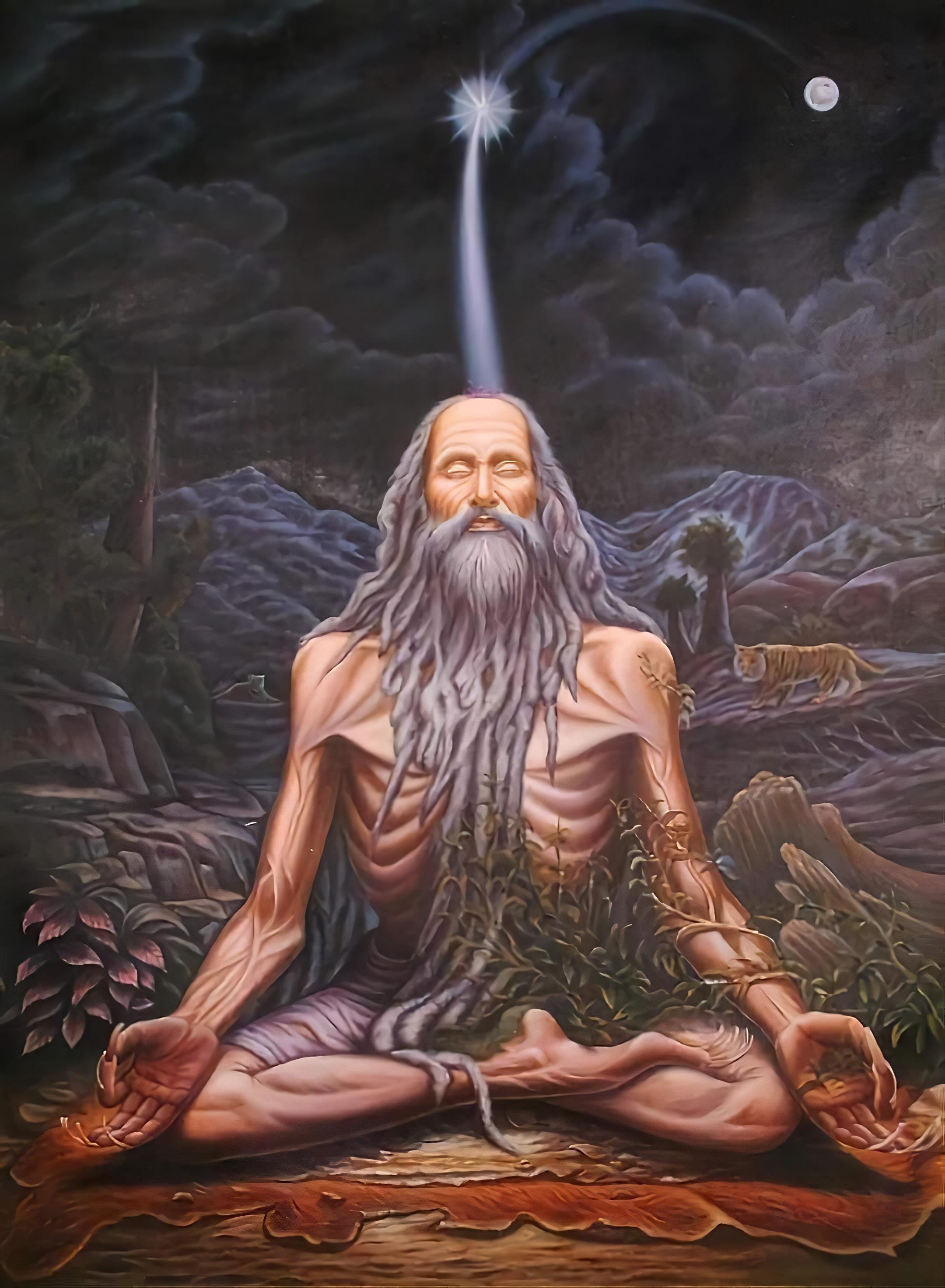
One frequent misunderstanding about spiritual life is to think that to walk through the spiritual path means to completely deny one’s senses and emotions: to stop eating palatable foods, to not travel anywhere, to suppress one’s feelings, and so on. We can see this idea permeating some branches of Buddhism and Christianity, for example.
However, not only is this a very difficult process, but also one could question the practical result. To not eat, not feel, and not move seems more like the existence of a lifeless stone than of a Kṛṣṇa’s associate.
If we study the Bhagavad-gītā, we find that this process of mechanical sense control is described in the sixth chapter as part of the teachings about aṣṭāṅga-yoga. We can see that Arjuna flatly rejects this process, arguing that it would be easier to stop the wind. This process may be attempted by yogis and ascetics, but if even Arjuna, who is so qualified in so many ways, rejected it, what is the hope for us?
Kṛṣṇa then describes the process of bhakti-yoga, which is not based on artificially denying one’s mind and senses but on engaging them in Kṛṣṇa-conscious activities.
That’s exactly the main difference between the process of bhakti-yoga and different processes of impersonal self-realization. Currently, we have two problems:
a) We have a material body, which includes both the gross body and the subtle mind and intelligence. Because we identify with it, we are forced to continuously transmigrate between different material forms, life after life.
b) We have currently forgotten about our eternal relationship with Kṛṣṇa. Prabhupāda comments that we have a spiritual body even now, but due to our current situation, this spiritual body is undeveloped and covered by the material body.
Just denying one’s senses, desires, and emotions can help one to become free from the material body, but it is a negative process that doesn’t help us to regain our eternal position as associates of Kṛṣṇa. It can help to solve the first problem, but it does little to solve the second. Only when we apply the positive process of Kṛṣṇa Consciousness can we solve both problems simultaneously and finally attain our eternal position as associates of Kṛṣṇa.
The bhakti process is not so much based on stopping one’s activities but on connecting them with Kṛṣṇa. In the Bhagavad-gītā, Arjuna is not encouraged to change his occupation but instead to apply his natural tendencies in the service of Kṛṣṇa. This is what makes the Gītā such an inclusive book: if Arjuna could advance spiritually even while fighting in a war, we can surely advance in any other circumstance.
In the bhakti process, one doesn’t have to stop eating palatable foods: he just needs to offer it to Kṛṣṇa. He doesn’t have to stop working; he just needs to work for Kṛṣṇa. One doesn’t have to leave his family; he just has to connect his family life with Kṛṣṇa. Once we acquire this devotional attitude and start following the rules and regulations of the devotional process, all undesirable habits and activities automatically stop.
One may be attached to eating untouchable things like meat and eggs, but as soon as he understands that these things can’t be offered to Kṛṣṇa, he may be able to easily stop and instead start using more sattvic ingredients.
People do eat palatable food in the spiritual world; the only difference is that food there is spiritual. If one eats prasāda, which is spiritualized food, while living on this plane, seeing it as the mercy of the Lord, what’s the difference? His eating is already perfect. Similarly, if one wants to travel and see different places and different people, he may travel to all holy places and meet all the saintly people who live there. In this way, he can satisfy his desire to travel and, at the same time, progress in the spiritual path.
Even one’s sexual desire can be used in Kṛṣṇa’s service by starting a family and begetting a few children who can be educated to be devotees of Kṛṣṇa.
Of course, there is always a danger that one may start to just unrestrictedly enjoy his senses, cynically avoiding the rules and regulations, but as long as one is sincere, the process works.
Often we may think that to be a devotee means to follow a specific culture and specific codes of dress and behavior. While there are indeed habits and codes of behavior that are more favorable to our practice, these are secondary. The process of bhakti is not something limited to a specific culture but is a universal process that can be easily applied to all cultures and ways of life.
This is a publication for thoughtful readers who want to go deeper into Kṛṣṇa consciousness. I publish daily, trying to offer high-quality spiritual content, and all posts are available to free subscribers. If you wish, you can also choose a paid subscription to support this work.
You can also receive the updates on WhatsApp or Telegram.
If you would like to contribute further, you can find the donation links here.
Wonderful article - A beautifully uplifting reminder that true freedom comes not just from renunciation, but from embracing a higher, loving connection. It highlights how positive spiritual engagement brings deeper fulfillment and purpose.