


You can receive new articles directly in your inbox. Subscription is free; donations are welcome.
What is the view of the scriptures on terminating one’s life in cases of terminal diseases? Can a doctor abbreviate a patient's suffering, so to speak, or assist him or her in doing so? What do the Vedas say about this?
Surprisingly, not much. It appears that this was not a common idea in old times. The natural instinct for all living beings, including human beings, is to continue living, not to end one’s life prematurely. The scriptures suggest that in a healthy state of consciousness, a person will try to extend his life and not shorten it. They thus focus on helping us accept the idea of death and prepare for it by severing one’s attachments and fixing one’s consciousness on God and not on discussing unnatural ways to prematurely go.
Dying before one’s time, and especially killing one’s own body, is not considered a good idea. We are all allocated a certain amount of time in this world, and our experience here is tailored by our previous karma, which offers us a set of challenges that can help us gradually improve our consciousness. Material nature can be very hard, and we often face tough challenges, but ultimately, these experiences teach us different lessons and gradually change our consciousness. If everything were always perfect, there would not be any impetus for change. Just like we accept happy experiences when they come, we must also accept pain and suffering when they come, as part of the package. When suffering comes, we should try to see it as an opportunity to remember Kṛṣṇa and focus on our spiritual practice, and this is especially true at the time of death. We may get distracted by so many material things during our lives, but at the time of death, no matter how difficult it may be, it is the time to get serious and focus on our spiritual practice, embracing the opportunity to change our consciousness and reach a higher destination after our passage. It can be an extremely hard experience, but we all have to go through it.
The idea that one can just die peacefully without any pain or discomfort is a myth. There is no painless death. Death always involves suffering. It’s not possible to leave one’s body without pain. It’s always a traumatic experience. A doctor may give some drugs to make a patient unconscious, but this just numbs the external senses and makes people around think that one is at peace; internally, the individual is still suffering. The center of pain and pleasure is not the external body, but the mind, and no drug can stop the work of the mind. Everything it does is to put one in a comatose state, where one can’t properly concentrate on the task of properly leaving one's body. Instead of being conscious of the whole experience and having a certain degree of control over it, one just dies like an animal, without any higher consciousness and without any control over where one is going next.
All suffering is due to karma, and therefore, the only way to reduce or eliminate suffering is to attack the root of the problem by destroying karma. In the scriptures, we learn that karma can’t be destroyed by mechanical means, or even by pious material activities. Karma can be destroyed only through the process of devotional service, and especially by chanting the holy names, and thus the only process that can save us from a painful death is to practice devotional service while we are in sound health. Even if one is already on his deathbed, just the chanting or remembrance of the Lord will bring him to a better destination, or even to the spiritual world, where there is no suffering.
Conversely, any attempt to artificially shorten one’s life will just bring more karma, and thus more suffering. That’s why the different forms of euthanasia, or assisted suicide, are very dangerous. They do nothing to solve the real problem, and instead just create more suffering for the soul.
So, there is no other way out, apart from agonizing until our last breath? Actually, there is, but it’s a lot different from what most people do.
We frequently hear stories of Vaiṣnava devotees who, attacked by terminal diseases, decide to fast until death. I had the opportunity of staying close to a devotee in this situation, and I was amazed by her serenity when she was leaving, in contrast to the misery that death usually entails. I heard other similar accounts from devotees who witnessed similar cases.
What exactly is this process of fasting until death? Is it genuine? What makes it different from just dying in the hospital? How does it feel?
The process of leaving one’s body by fasting until the end is called prāyopaveśa. It’s actually considered a pious act. In the Vishnu Purana, it’s mentioned that one who leaves the body in this way does not take another birth. In other words, he or she attains liberation.
The scriptures, however, alert that it should be attempted only by a person who has no desire or ambition left. It’s normally done when death becomes imminent, due to a terminal illness or other factors. The main point about prāyopaveśa is not to shorten one’s life, but to change one’s attitude towards death, accepting and preparing for it. An ordinary materialistic person is attached and thus tries to delay death by all means. A devotee performing prayopavesa accepts that death is inevitable and instead focuses on his or her next destination.
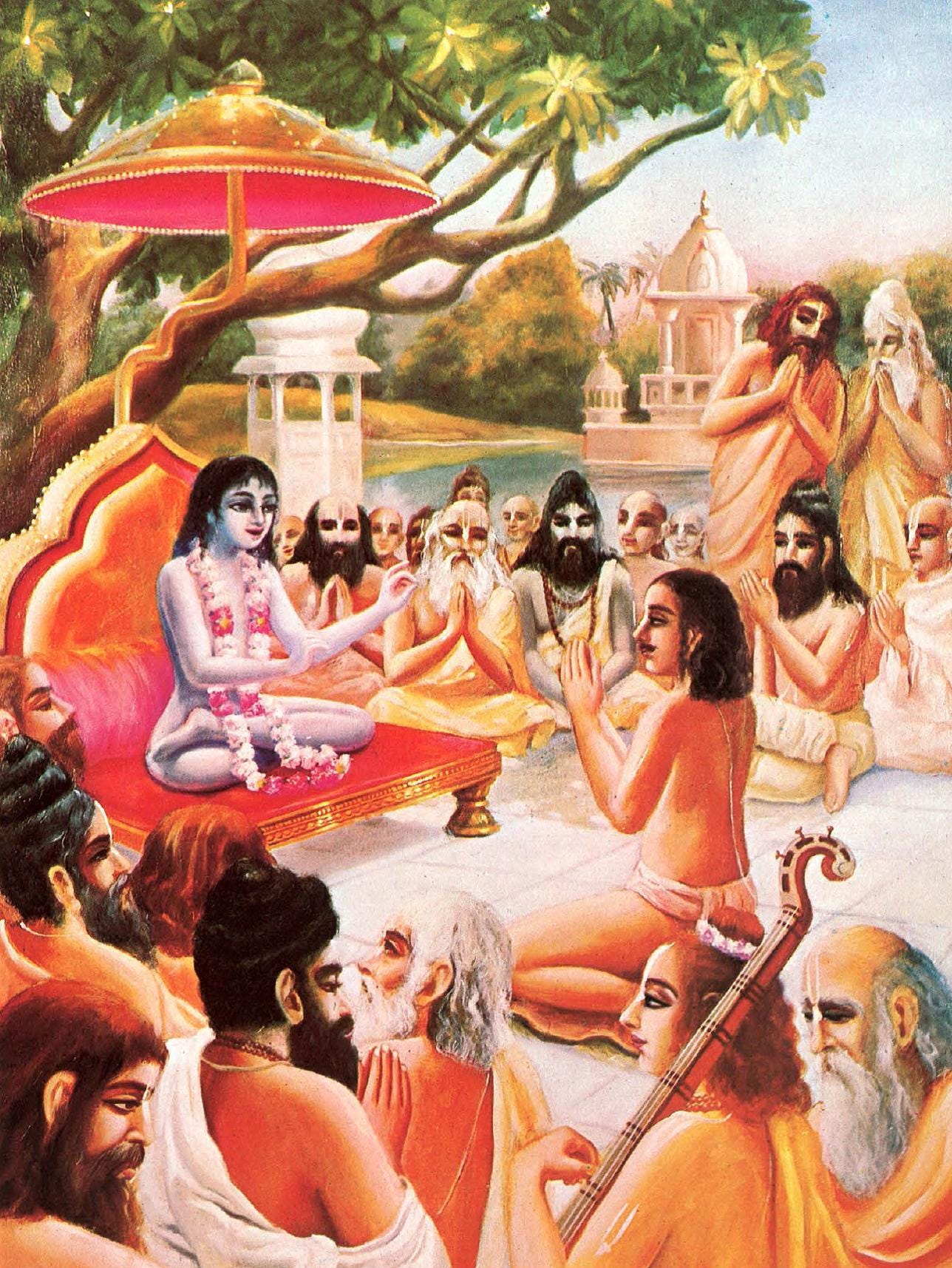
The most famous example is, of course, the story of King Parīkṣit, who decided to perform prāyopaveśa after getting notice that he would die in seven days, bitten by a snake. His death was already a consummated case. Instead of trying to avoid it, he spent his last days hearing the Śrīmad-Bhāgavatam from Śukadeva Gosvāmī. In this way, he attained freedom from birth and death, and their conversation led to the appearance of the greatest scripture, from which we all derive benefit.
One may consider prāyopaveśa when all hopes of recovery are exhausted. In such cases, fasting until the end is a dignified way to leave on one’s terms, in auspicious circumstances, in a holy place, surrounded by devotees, instead of fighting a painful and hopeless fight in a hospital bed.
To leave one’s body voluntarily by fasting is thus very different from assisted suicide, which is still just a glorified word for suicide. In any type of suicide, there is always an unnatural, abrupt end to one’s life, caused by feelings of frustration, fear, anger, and so on, which usually leads one to become a ghost. Prāyopaveśa, on the other hand, is a non-violent process that is offered in the scriptures, giving one the opportunity and time to prepare himself and others around him for his demise.
Prāyopaveśa is not a private affair. One should announce publicly one’s intention of leaving one’s body, giving opportunity for family members and others to also prepare for his or her demise. Usually, sadhus came to visit and give him instructions and blessings, which is, of course, extremely auspicious. We can see that in the case of Maharaja Parīkṣit, the greatest sages of his time went to the banks of the Ganges to support him in his intent.
One point to consider, however, is that many countries have laws that prevent one from leaving in this way, equating it with suicide. This can cause problems for friends and relatives who knew about it. One may also have problems with “well-wishers” trying to move him to the hospital. These are all obstacles that should be considered. In India, at least, this is still respected, even by ordinary persons.
Prayopavesa is also a long process that demands very strong will. It takes a long time, and of course one may at any moment change one’s mind and stop the fasting. That’s the great advantage of this process: if there is any regret, one can stop it at any moment. Practically speaking, only truly prepared people will go to the end.
The physical experience of dying can vary greatly according to one’s disease, age, bodily condition, and other factors, but, in general, one who completely stops eating or both eating and drinking water will not die of starvation, but rather due to the lack of electrolytes or other essential nutrients. Electrolytes are minerals like sodium, potassium, and magnesium that regulate bodily functions and are necessary for the transmission of the electrical signals that activate muscles, including the heart. Lack of these electrolytes leads to dehydration (the body can’t hold the liquid, even if one is drinking a lot of water) and eventually to organ failure. In most cases, one will die of a heart attack when the low levels of electrolytes compromise the normal working of the heart muscles. Someone who completely stops drinking water, as well as food, will usually leave in about two weeks. One who decides to continue drinking water will typically live much longer, up to 40 days, or a little more. During this time, one would prepare his consciousness to leave, chanting, hearing about Kṛṣṇa, asking forgiveness for whomever he may have offended in his life, getting blessings from saintly persons, and so on. This concentration can allow one to tolerate the hunger and thirst of the final days, as well as other bodily discomforts. Let’s have no illusions: death is always a difficult process, regardless of the situation, and it is thus essential that one gets all the help one can.
Extended fasting, if performed in the right mindset, has the power to dramatically increase one’s focus and elevate one’s consciousness, awakening a feeling of detachment and indifference to the material body and everything connected to it. By carefully maintaining the body, we develop attachment to it, and conversely, by neglecting the most basic need of the body, eating, this attachment is gradually broken. This is surely desirable for one who is facing the ultimate test.
We can also notice that the scriptures prescribe a great number of fastings, including extended fastings during the Bhisma Panchaka and other dates. This can be taken as an opportunity to start on this process of becoming detached from the body, gradually preparing ourselves to accept death as a natural process, without excessive attachment.
From the spiritual perspective, the essential question is not how the body dies, but where our consciousness is fixed when death comes. This is the main point about Mahārāja Parīkṣit’s final days. The important point in his example was not the physical process of fasting itself but the complete absorption of his consciousness in the Lord. Prayopavesa can help to create an auspicious situation for one’s leaving, but the main point is still our personal effort in remembering Kṛṣṇa at the time of death.
Read more:

This is a publication for thoughtful readers who want to go deeper into Kṛṣṇa consciousness. I publish daily, trying to offer high-quality spiritual content, and all posts are available to free subscribers. If you wish, you can support this work with a monthly contribution. When you subscribe, you can choose between a free subscription and a monthly contribution, and you can switch from a free subscriber to a supporter at any time.
You can also receive updates on WhatsApp or Telegram.
If you would like to contribute further, you can find the donation links here.
Incredible! Thank You So Much Oh Wise Devotee Caitanya Chandra Dāsa! Hare Kṛṣṇa Hare Rāma
Hare Krishna. Very interesting. I read SB 8.2, 8.3 and 8.4 chapters ( Gajendra Moksha ) everyday. And I did read in 8.1.33 prayopvishten, but I got the clear meaning today after reading this article. King Parikshit was prayopvishten and totally in Krishna Consciousness, in the presence of pure and advanced devotees. What a glorious way to leave the body. Now, I can visualize so many devotees have left the world in this way including our dear Srila Prabhupada, his guru Srila Bhakti Sidhhanta Saraswati Swami Maharaj, Bhishma Pitamah in SB and it continues in the Vaishnava Sampradaya till today. Thank you very much. Hare Krishna 🙏