

Subscribe to receive all new articles directly by e-mail. It’s free, but if you like, you can pledge a monthly or annual donation to support my work:
Histories from the Puranas and other scriptures are actually historical facts. To emphasize this point, Prabhupāda usually uses the word “histories” and not “stories”, like in “the history of Ajamila”.
They are, however, not just dry historical facts. They also have lots of symbolic meanings that teach us different lessons. As always, Kṛṣṇa fulfills many different goals with each of His activities, performing wonderful pastimes, and at the same time teaching us valuable lessons.
At the time of Bhaktivinoda Thākura, for example, there was great aversion to the idea of taking histories from the Puranas as historical facts, and therefore, he emphasized more the symbolic meanings in many of his works. Both meanings are there.
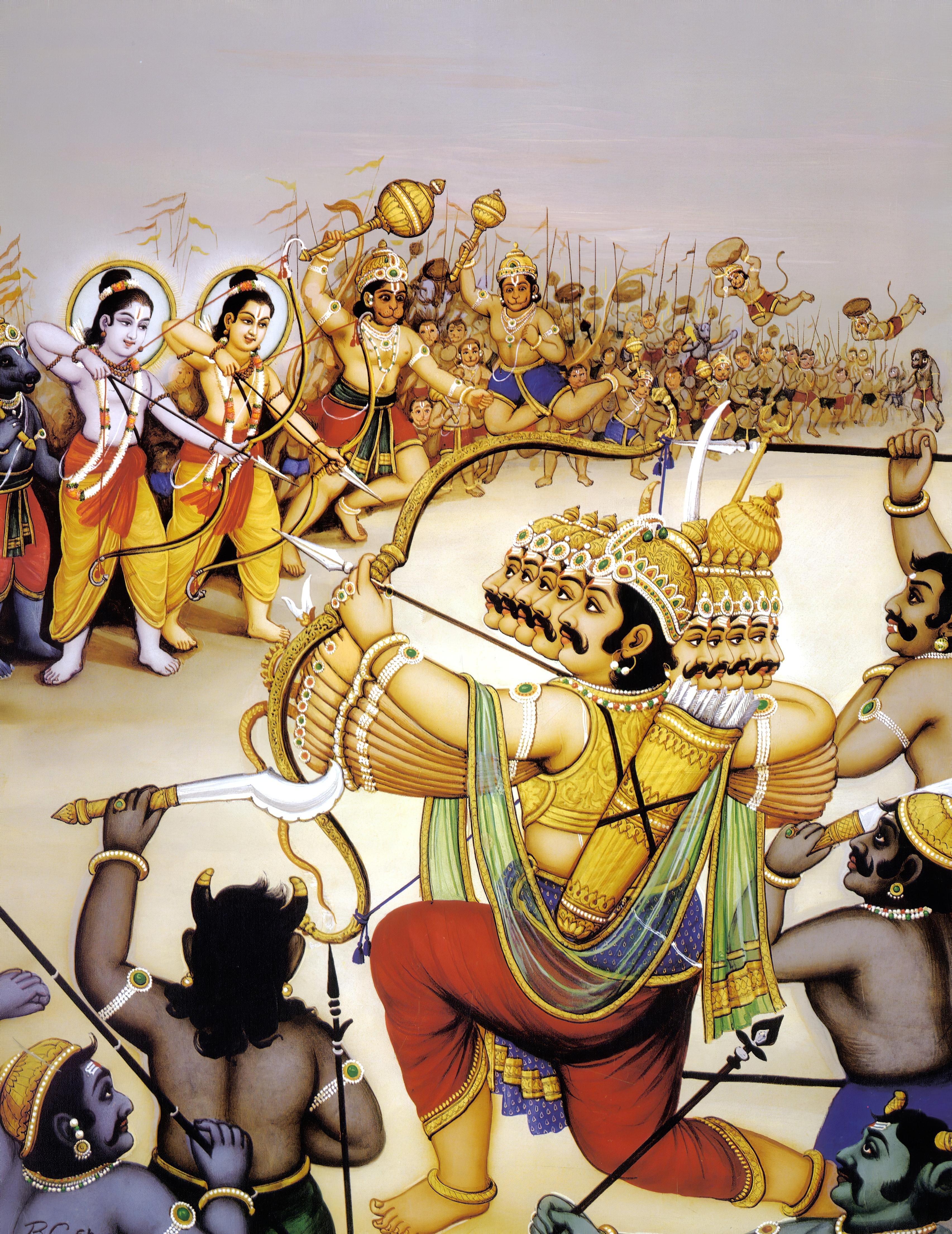
In the Ramayana, for example, we have the history of Rāvana kidnapping Sītā, the consort of Lord Rama. At first, it may appear to be just the setup for the adventures narrated in the Ramayana, with Lord Rama making an alliance with the monkeys and crossing the ocean to fight with Rāvana and rescue his beloved wife. However, the meaning goes well beyond this.
On SB 4.25.28, for example, Śrila Prabhupāda writes: “The material world cannot be enjoyed by any living entity. If one so desires to enjoy it, he immediately becomes a demon like Rāvaṇa, Hiraṇyakaśipu, or Kaṁsa. Because Rāvaṇa wanted to enjoy the goddess of fortune, Sītādevī, he was vanquished with all his family, wealth, and opulence. One can, however, enjoy that māyā bestowed upon the living entity by Lord Viṣṇu. The satisfaction of one’s senses and desires means enjoying māyā, not the goddess of fortune.”
This adds a completely new dimension to the pastime. More than just an adventure that shows us the heroism of Lord Rama and Hanumān, the story of Rāvana kidnapping Sītā speaks about a mistake all conditioned souls make, that is to try to enjoy the material energy separated from the Lord.
Just as Sītā is the eternal consort of Lord Rama, the material energy is Kṛṣṇa’s external potency, a transformation of His internal potency (that manifests itself in the form of Sītā, Laksmi, and all His consorts). There is no possibility of a jīva trying to enjoy the Lord’s internal potency, but the material energy exists to give such souls an illusory representation they can try to capture. When we use something for Kṛṣṇa, it becomes spiritual, but when we try to separate it from Kṛṣṇa, it becomes material, illusory.
The moment Rāvana touched Sītā, the real Sītā disappeared, and in her place appeared an illusory representation made of material energy. Because of the curse he was under, Rāvana couldn’t even enjoy this illusory form (he had to content himself with keeping her captive in his palace), and in the end, he was vanquished by Lord Rama, together with all his armies and opulences.
This pastime illustrates the life of all materialistic men and women, who try to kidnap different opulences of Kṛṣṇa (in the form of different material objects, attractive people, and so on) and thus end up being cheated by different illusory material representations that they can’t even properly enjoy. In the end, they are vanquished by the Lord in the form of death, along with all the defenses they may create to try to avoid or delay it.
Pure devotees like Hanumān and Sugrīva, on the other hand, work to reunite Rama with Sītā. This illustrates the attitude of devotees in using everything for Kṛṣṇa, properly using the energy of the Lord to give satisfaction to the Lord. When a materialistic man sees a beautiful flower, he picks it out and smells it, or gives it to his girlfriend, but when a pure devotee sees the same flower, he or she thinks about offering it to Kṛṣṇa.
When we become absorbed in this mentality, we start to see how everything in this material world is actually the energy of Kṛṣṇa and should be used in His service. We start to see them as objects of sense gratification, such as food, flowers, clothes, and other attractive objects, as paraphernalia that we can use to give pleasure to Kṛṣṇa. Instead of thinking about how we can enjoy these things, we start to think about how much pleasure they can give to Kṛṣṇa. The same applies to people. A materialistic man sees his wife as someone who is there to satisfy his desires, just as a materialistic woman sees her husband as a tool to obtain satisfaction. However, a pure devotee sees the wife or husband as a servant of Kṛṣṇa and tries to engage him or her in His service.
Most of us are in the middle. We are not demons, but are also not pure devotees yet. The challenge for us is to gradually evolve from an exploitative mentality to a service mentality, gradually learning to use everything for Kṛṣṇa. This is the very essence of the process of Bhakti.
You can also donate using Buy Me a Coffee, PayPal, Wise, Revolut, or bank transfers. There is a separate page with all the links.
If you prefer, you can also receive the updates on Telegram.