

Aśvatthāmā is one of the popular characters of the Mahabharata. The curse he received from Kṛṣṇa tends to capture people’s imagination, and many wonder if he is still roaming around today. For some, he is just a vain villain who killed innocent children in their sleep, while for others he is a great hero. However, if we hear the opinion of the scriptures, his character is much more nuanced.
Aśvatthāmā was born as the son of Droṇācārya after he and his wife performed penances for many years. Just like Droṇācārya was originally a brāhmana but later became a kṣatriya, Aśvatthāmā is also originally a brāhmana, who was acting like a kṣatriya. Not only was he born with a natural jewel in his head, that gave him powers to resist hunger, thirst, and other difficulties, giving him the power to execute great austerities, but he was also blessed to live “eternally,” until the end of creation, just like Paraśurāma, Vyāsa, and other great sages.
However, although being such an exalted personality, Aśvatthāmā committed a sequence of grave crimes, starting with the killing of the five teenage sons of the Pandavas during their sleep as a way to avenge the death of his father during the battle of Kurukṣetra.
The history of his killing the sons of the Pandavas in their sleep and him being captured and punished by Arjuna is described both in the Śrīmad-Bhāgavatam and the Mahābhārata.
In the Śrīmad-Bhāgavatam, Sūta Goswami describes that:
“When the respective warriors of both camps, namely the Kauravas and the Pāṇḍavas, were killed on the Battlefield of Kurukṣetra and the dead warriors obtained their deserved destinations, and when the son of Dhṛtarāṣṭra fell down lamenting, his spine broken, being beaten by the club of Bhīmasena, the son of Droṇācārya [Aśvatthāmā] beheaded the five sleeping sons of Draupadī and delivered the heads as a prize to his master, foolishly thinking that he would be pleased. Duryodhana, however, disapproved of the heinous act, and he was not pleased in the least.”
Seeing Draupadī crying in distress due to the loss of her sons, Arjuna made a solemn promise to her: “O gentle lady, when I present you with the head of that brāhmaṇa, after beheading him with arrows from my Gāṇḍīva bow, I shall then wipe the tears from your eyes and pacify you. Then, after burning your sons’ bodies, you can take your bath standing on his head.”
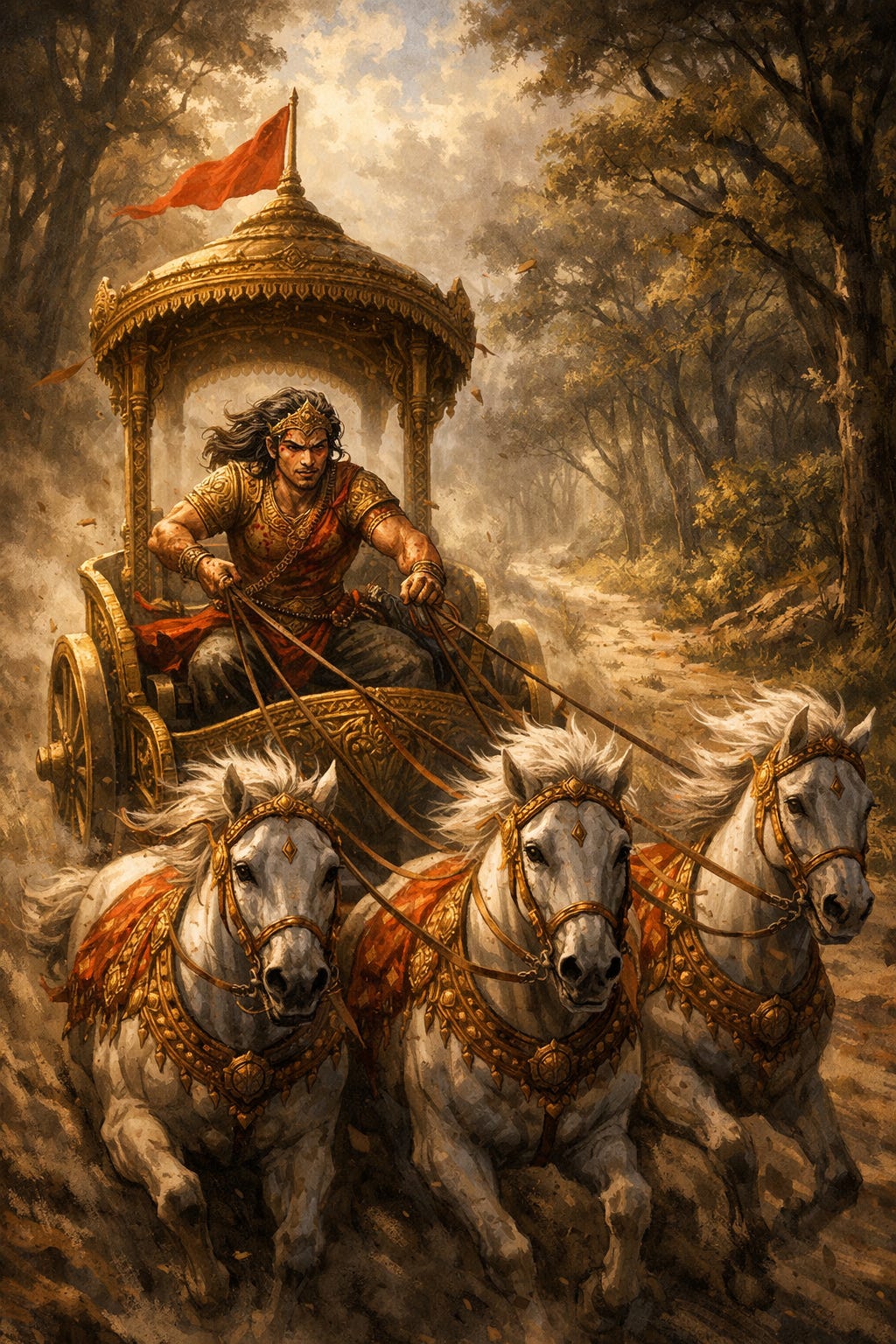
When Aśvatthāmā saw Arjuna approaching him at great speed in his chariot, Aśvatthāmā was in a panic. He tried to escape, but when he saw the horses were tired, he tried, in desperation, a last resort measure, shooting a brahmāstra to try to save himself, even though he didn’t know how to retract the weapon. The brahmāstra is the Vedic equivalent of an atomic weapon. The difference is that in the case of a brahmāstra, the atomic explosion continues indefinitely until retreated. Throwing the weapon was the easiest part; the difficulty was retreating it by timely pronouncing the mantra that retreated the weapon, containing the explosion to the desired area.
This created an extremely dangerous situation because unless the weapon is retracted timely, the explosion of a brahmāstra can expand unlimitedly and destroy the whole universe. This catastrophe was avoided only because Arjuna, following the guidance of Kṛṣṇa, was able to neutralize the explosion by throwing his own brahmāstra and then simultaneously retracting both weapons.
After defeating Aśvatthāmā, Arjuna bound him with ropes and brought him to their camp to discuss what to do with him with the other Pandavas. Draupadī, as well as King Yudhiṣṭhira and others, was in favor of pardoning him since he was originally a brāhmana and the son of their guru. However, Bhima argued strongly that he should be killed for his crimes. Arjuna had also promised to kill him, and for a kṣatriya, a promise like that is a serious thing.
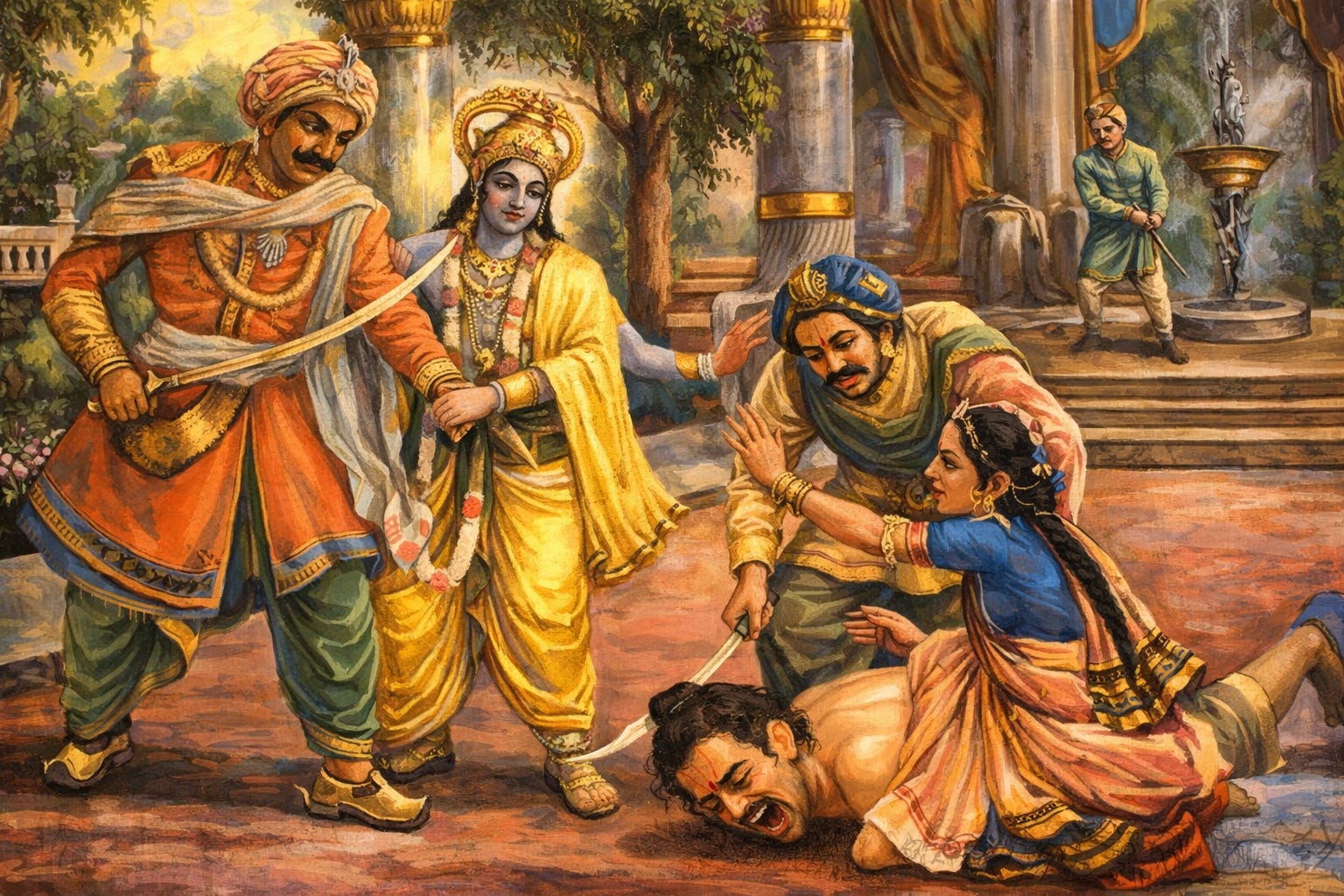
Kṛṣṇa summarized the situation in his iconic instruction to Arjuna:
“A friend of a brāhmaṇa is not to be killed, but if he is an aggressor he must be killed. All these rulings are in the scriptures, and you should act accordingly. You have to fulfill your promise to your wife, and you must also act to the satisfaction of Bhīmasena and Me.”
Understanding Kṛṣṇa’s mysterious instruction, Arjuna severed the hair and the natural jewel Aśvatthāmā had in his head and sent him away. Suta Goswami supported this decision, commenting that “Cutting the hair from his head, depriving him of his wealth, and driving him from his residence are the prescribed punishments for the relative of a brāhmaṇa. There is no injunction for killing the body.”
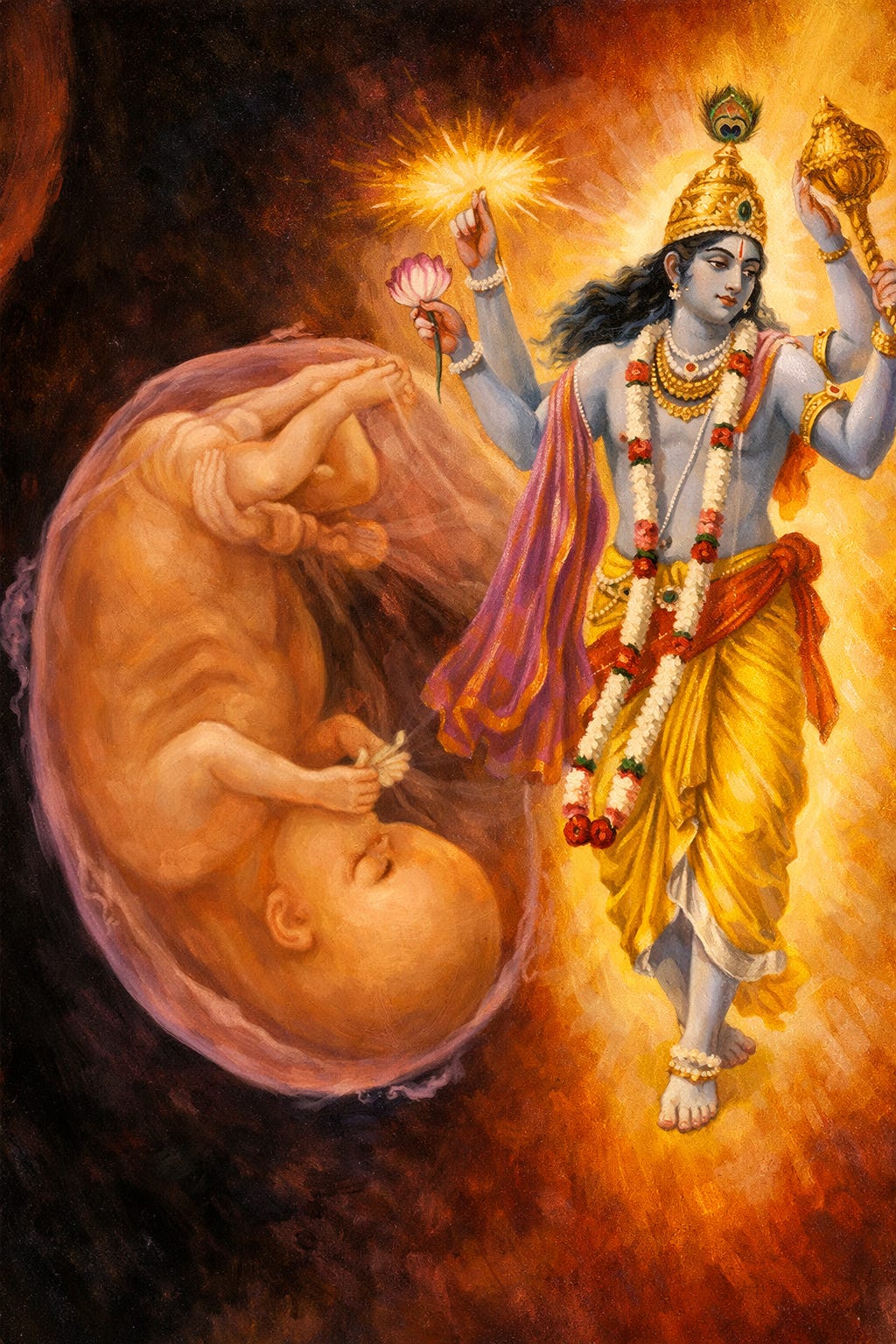
However, this didn’t stop Aśvatthāmā, who, after being freed, released another brahmāstra, this time at Uttara, to kill Parīkṣit, the last descendant of the Pandavas, while he was still in the womb. This led Kṛṣṇa to personally intervene to save the life of his pure devotee. Because of this incident, Parīkṣit could have a brief darśana of the Lord, which created a deep impression on him. The name Parīkṣit means “examiner” because he was constantly examining everyone he saw, searching for the personality he could briefly see while in the womb.
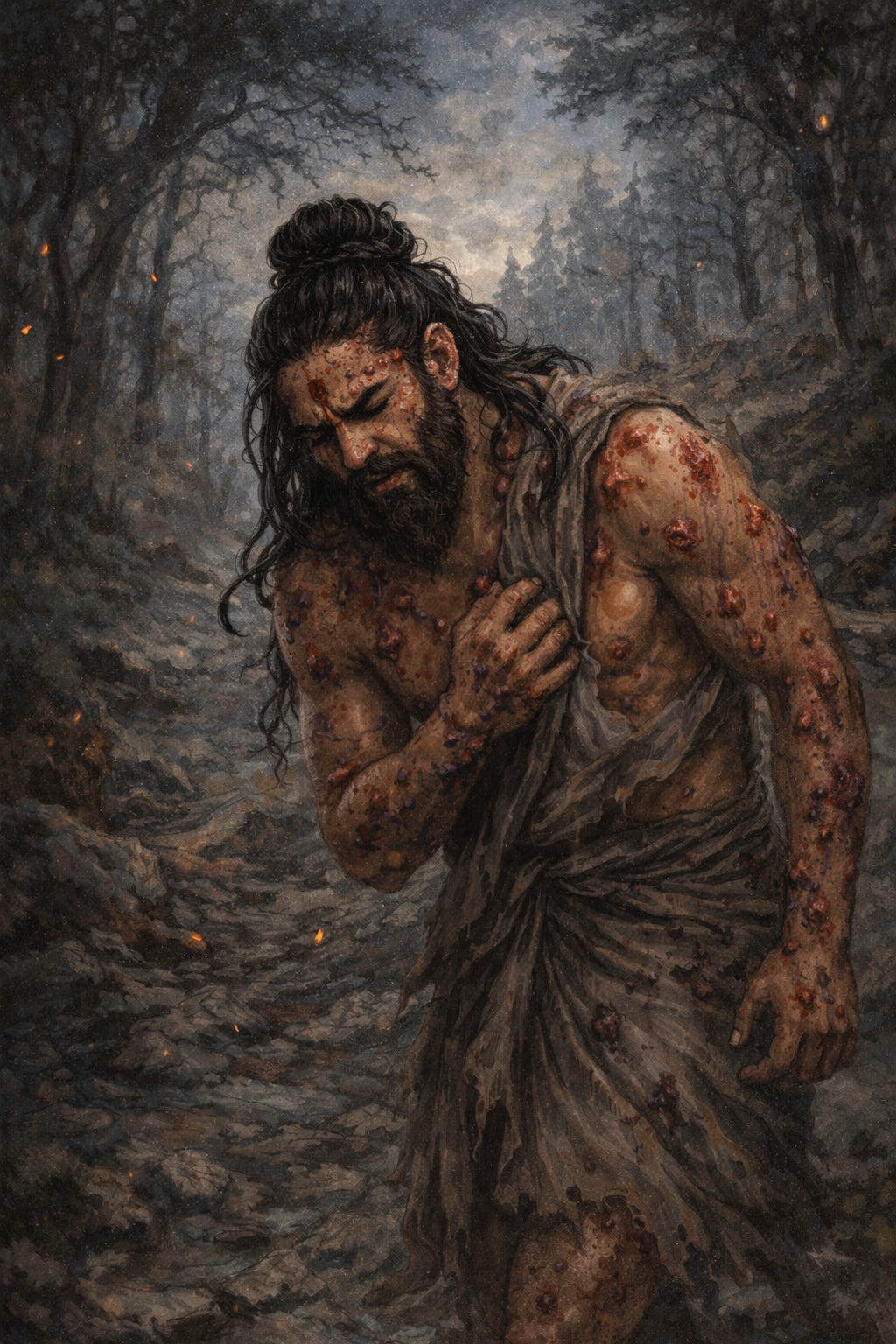
Due to all these mistakes, Kṛṣṇa personally cursed Aśvatthāmā to wander alone for three thousand years during the initial centuries of Kali-Yuga, suffering alone as an indigent. Affected by incurable diseases, with sores all over his body and the wound caused by the removal of the jewel from his forehead never healing, he would wander without being able to find shelter or sympathy from the people.
This is how the event is described in the Mahābhārata - Retold by Kṛṣṇa Dharma dasa:
“Arjuna looked at Kṛṣṇa, who appeared to have four arms as He stood holding Bhīma at bay and comforting Draupadī. He could understand Kṛṣṇa’s equivocal instructions. Aśvatthāmā should both be killed and not killed. Taking out his razor-edged sword, he grabbed hold of Aśvatthāmā’s top-knot and severed the hair along with the shining jewel that bound it. The jewel was the repository of Aśvatthāmā’s mystic power, and as it was removed, he shriveled and collapsed.
Presenting the jewel to Draupadī, Arjuna said, “Here is the gem you desired, O beautiful lady. Aśvatthāmā is now as good as dead, for to cut off the hair of a powerful warrior is equal to killing him. Indeed, the Vedas also prescribe such punishment for fallen Brahmins, but they never sanction killing the body.”
Bhīma praised Arjuna for his intelligent act which had satisfied everyone. He led Draupadī to a nearby couch and sat her down as Kṛṣṇa spoke to Aśvatthāmā. “O son of Droṇa, all wise men will know you as a coward and a wretch from now on. You will have to endure the fruits of your sinful acts. For three thousand years you will wander the earth, afflicted by disease and completely alone, unable to speak to anyone. Wretched and foul-smelling, you will dwell in deep forests and dreary wastelands. At the end of this period, purified at last of your sins, you will ascend to the higher regions. Go now, O wicked man.”
Arjuna and Bhīma dragged Aśvatthāmā to his feet and, unbinding him, drove him from the camp. Deprived of his jewel and cursed by Kṛṣṇa, his power was gone and he disappeared into the woods to begin his lonely exile.”
The situation of Aśvatthāmā is unique. If he was just an ordinary demon or just an ordinary supporter of Duryodhana, Kṛṣṇa would have just organized for him to be killed during the battle of Kurukṣetra, and he would thus have achieved impersonal liberation like the others. However, because he was originally a brāhmana, not just by birth, but also by qualification, Kṛṣṇa didn’t want to have him killed since Kṛṣṇa is always favorable to the brāhmanas. Despite all the mistakes committed by Aśvatthāmā, Kṛṣṇa was still not prepared to get rid of him.
Why then did Kṛṣṇa curse him? The point is that curses, when uttered by Kṛṣṇa or his pure devotees, have the goal of correcting one’s mentality so a blessing can be received. When Nārada Muni cursed Nalakūvara and Maṇigrīva to become trees, he did so to correct their consciousness so they could have the blessing of having the personal darśana of Kṛṣṇa later on. Similarly, the curse of Kṛṣṇa had the goal of purifying Aśvatthāmā, allowing him to go back to his good consciousness and thus continue his path of service and purification. After cursing him, Kṛṣṇa gave him the blessing of becoming one of the seven sages in the next Manvantara.
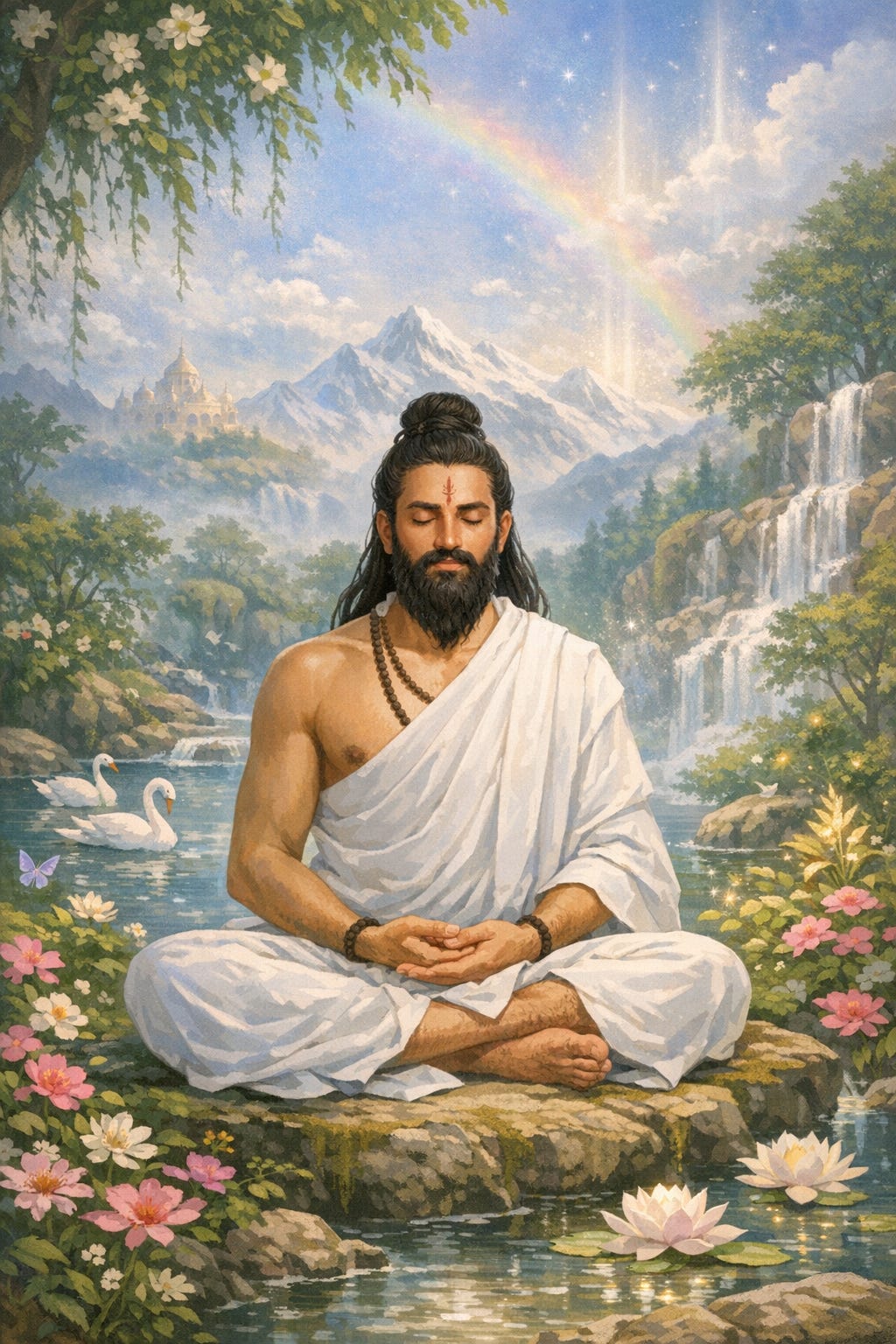
After the 3000 years of the curse of Kṛṣṇa expired, Aśvatthāmā recovered his original form and went to live in Badarīkāśrama, along with Śrila Vyāsadeva and other sages, where he is still living, waiting for the end of the current manvantara to assume his allotted position as one of the seven great sages of the universe. He will then have the opportunity to work for the upliftment of all souls and thus use his abilities as a brāhmana for a good cause.
On SB 8.13.15-16 it's mentioned:
“O King, during the eighth manvantara, the great personalities Gālava, Dīptimān, Paraśurāma, Aśvatthāmā, Kṛpācārya, Ṛṣyaśṛṅga and our father, Vyāsadeva, the incarnation of Nārāyaṇa, will be the seven sages. For the present, they are all residing in their respective āśramas.”
On SB 9.12.6, Śrila Prabhupāda comments that, “Sometimes we hear from the Vedic literature that some personalities from the Vedic age, such as Vyāsadeva and Aśvatthāmā, are still living. Here we understand that Maru is also still living. We are sometimes surprised that a mortal body can live for such a long time. The explanation of this longevity is given here by the word yoga-siddha. If one becomes perfect in the practice of yoga, he can live as long as he likes. The demonstration of some trifling yoga-siddha does not constitute perfection. Here is a factual example of perfection: a yoga-siddha can live as long as he likes.”
There are many legends connected with Aśvatthāmā. Many believe that he was treated by a doctor in Madhya Pradesh and that he currently lives with tribes at the foothills of the Himalayas, with some going as far as claiming to have spoken with him. However, if we accept the account of the Śrīmad-Bhāgavatam, these legends are proved false. It’s true that Aśvatthāmā is still alive, but he is now far from the curious eyes of Kali-yuga people, living in a subtle form in Badarīkāśrama, together with Vyāsa and other great sages.
Just like the celestial planets, the gardens of Kuvera, and other places described in the Vedas, Badarīkāśrama exists on a subtle level of reality that is accessible only to great sages and demigods. It’s believed that Madhvācārya went there and got personally instructed by Vyāsadeva, but surely that’s not the case with ordinary people. One can go to Badarīkāśrama in North India, but it doesn’t mean one will automatically gain access to the subtle dimension where Vyāsadeva lives.
This is a publication for thoughtful readers who want to go deeper into Kṛṣṇa consciousness. I publish daily, trying to offer high-quality spiritual content, and all posts are available to free subscribers. If you wish, you can also choose a paid subscription to support this work.
You can also receive the updates on WhatsApp or Telegram.
If you would like to contribute further, you can find the donation links here.
Good to know about Mahabharata period event.
What is the brief description of time passed away from the event of Sri Krishna cursed Ashwatthama?
3000 years already passed?
What is Manvantara ? How many years it will take time to complete this Manvantara current epoch to this Kaliyug? I like to know that from you.
Is it also true, Kaliyug started right after the death of King Parikshit.. ?