

You can receive new articles directly in your inbox. Subscription is free; donations are welcome.
During our youth, we are usually strongly influenced by the mode of passion. We want to change the world, fight injustice, improve society, or simply change things to our liking. Youths are a transforming force in any society, which can lead to positive or negative changes, depending on how they’re directed.
When Prabhupada came to the West, the youth were very much dissatisfied with the materialistic culture of their parents, which led to the counterculture and the hippie movement. These were certainly transformative, but in a negative way, strongly connected with the mode of ignorance.
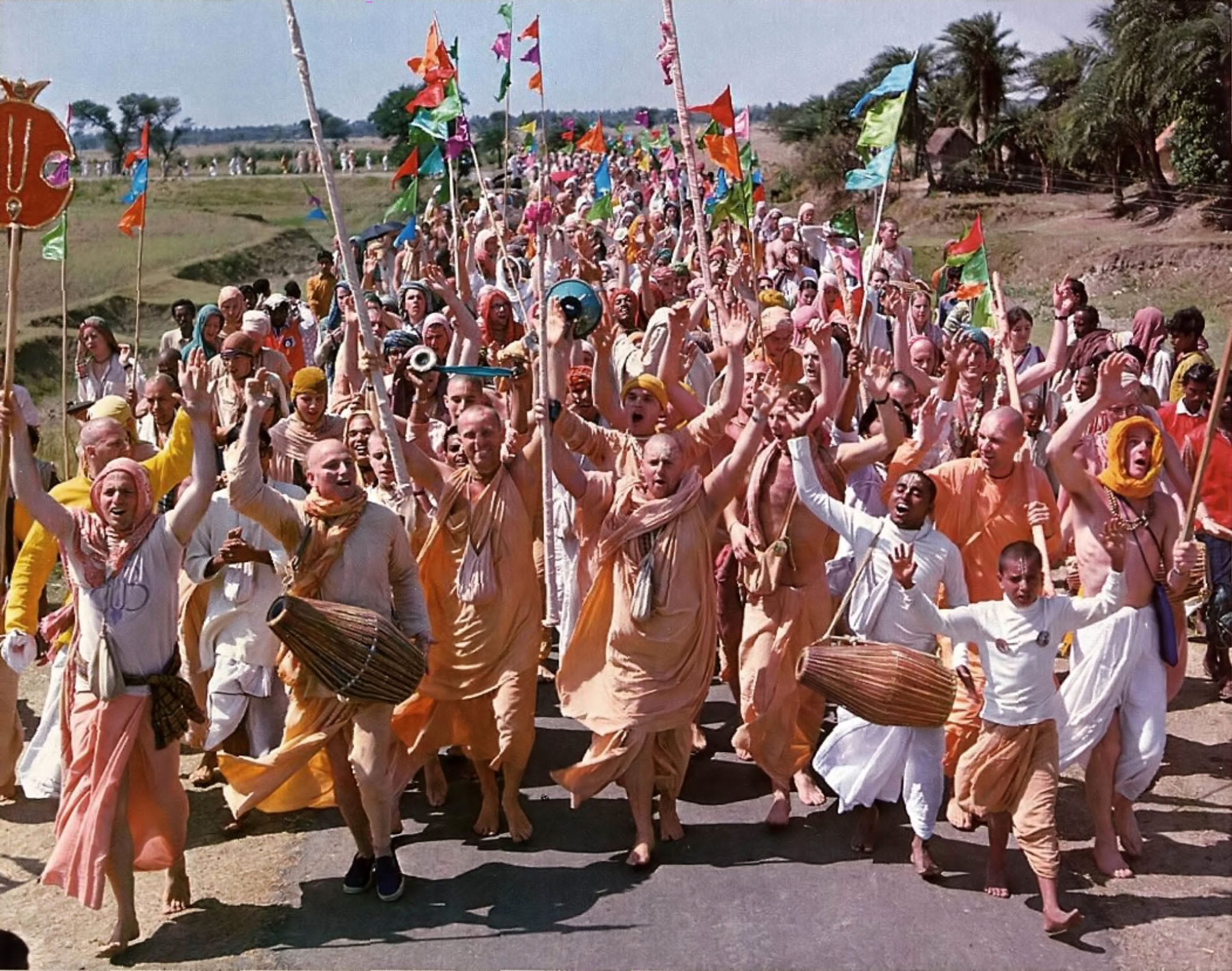
Śrila Prabhupada expertly directed this transformative force and used it to create the Krsna Conscious movement, which brought significant positive changes to society. Suddenly, instead of just breaking social norms and looking for an escape through intoxication, young people started to reform themselves and enthusiastically transform society by energetically broadcasting Krsna consciousness through book distribution and other means. In this example, we can see how the same force, when properly directed, can lead to an entirely different result.
This same tendency can be noticed today, but in the other direction. The younger generation in our movement has the same transforming force; they are dissatisfied with the status quo and want change. However, in many cases, this energy is not being properly used. As a result, some go outside and just join the materialistic society, while others become a destructive force inside our movement, trying to destroy what is in place without having a clear idea of what to build instead.
This is one point that represents a risk for our movement. Our movement started as a revolutionary society that rebelled against the status quo, aiming for a life different from the materialistic lifestyle pursued by the general people. Over time, however, we became more lax, and the revolutionary roots were largely lost in most parts of the world. Instead of an alternative, our movement became the established culture, the status quo that people want to fight against.
Although we collectively evolved in many aspects, we became largely part of mainstream society again. We now mainly offer a pious version of the same materialistic lifestyle that everyone else is living, based on maintaining the status quo. In one sense, this sense of stability is good and necessary, but on the other hand, it’s far from ideal and is largely not very attractive for the new generation, who need something to fight for.
The ideal would be to somehow combine maturity and stability with dynamism, offering a real alternative to materialistic society, something we would be inspired to not only practice ourselves but also go out and offer to others.
In this situation, intelligent and charismatic devotees, who can cultivate the youth and use their transformative energy for good causes, are desperately needed. Śrila Bhakti Tirtha Swami, for example, was, at his time, propagating the concept of “Spiritual Warrior,” the idea of going deep into spiritual life, trying to first reform ourselves, and then going out to offer the same transformative process to others. His idea was not based on confrontation (raja-guna) but on peaceful transformation (goodness). This is one example of an idea that can allow us to combine maturity and stability with a revolutionary pursuit that can engage our new generation in positive transformational ways, as well as take the elders out of their comfort zone and make them enthusiastic about spiritual cultivation again.
We can’t expect that the young generation will be happy just chanting their rounds and spending their days peacefully worshiping the deities. They need a cause, a revolution to fight for. Their energy can be used to do kīrtana, embrace digital activism, save the cows, feed the hungry, or simply try to make the whole world Krsna conscious. If a higher cause is not offered, however, their energy may manifest in negative ways, and this can, in the worst case, lead to a collapse in our movement in the following decades.
We can see that the success Aindra Prabhu obtained, for example, was large based on directing this revolutionary force to a higher cause, inspiring the younger generation to pursue excellence in the performance of kīrtana by his own example. Other leaders may inspire others in different directions, according to what they personally are practicing, but this goal-oriented ministry is needed to attract and engage younger devotees. Without this, they start looking at their parents putting on their best clothes and going to the temple on Sunday to pretend to be something they are not the rest of the time in the same light as the teenagers in the 1960s and 1970s were observing their parents going to church.
This is a publication for thoughtful readers who want to go deeper into Kṛṣṇa consciousness. I publish daily, trying to offer high-quality spiritual content, and all posts are available to free subscribers. If you wish, you can also choose a paid subscription to support this work.
You can also receive the updates on WhatsApp or Telegram.
If you would like to contribute further, you can find the donation links here.
what about the changes going on in India and Hindu society right now becoming more assertive and making many changes especially in India and even West Bengal ? I believe it could be a combination of ISKCON and the RSS promoting a hindu resurgence