

Sambandha, Abhidheya, and Prayojana
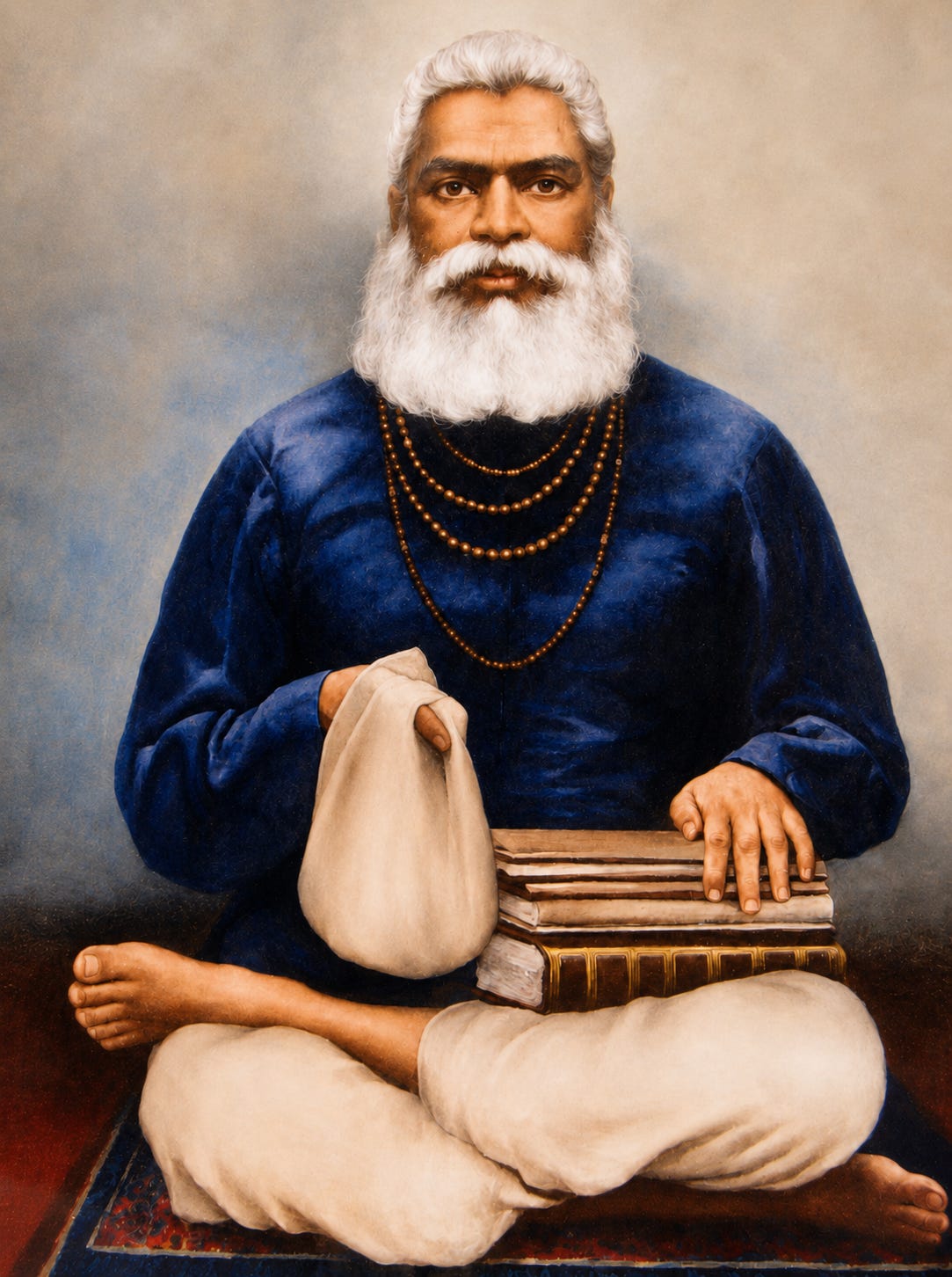
One point that Śrila Bhaktivinoda Thākura emphasizes in his teachings is the process of sambandha, abhidheya, and prayojana. What are these three phases?

You can receive new articles directly in your inbox. Subscription is free; donations are welcome.
One point that Śrila Bhaktivinoda Thākura emphasizes in his teachings is the process of sambandha, abhidheya, and prayojana. You probably heard these three terms.
Sambandha means the philosophical understanding we need to follow the spiritual process. To be able to chant with the proper mentality, for example, one needs to understand that Kṛṣṇa is a person and that we have an eternal relationship with Him. If one thinks that God is impersonal, or that there are many gods, or that we are all one, or that he himself is God, chanting the holy names inoffensively will be impossible.
Abhidheya is the process itself. What exactly does it mean to practice spiritual life? What rules and regulations should we follow, what kind of sādhana we should practice, and so on. Without understanding abhidheya, one may go for the wrong process, accepting siddha-praṇālī from some sahajiyā babaji, for example.
Finally, there is prayojana, which is the ultimate goal we aim to achieve. As Vaiṣnavas, we usually understand that the ultimate goal is to achieve love for Kṛṣṇa and serve Him eternally in a personal relationship, but we can see that Māyāvādis, as well as other groups, have different ideas. Many of the apasampradāyas mentioned by Śrila Bhaktivinoda Thākura in his works, such as the Ativādis, for example, had the understanding that they were serving Kṛṣṇa with the ultimate goal of merging with Him. Sakhī-Bekīs would often imagine they were serving one of the Gopis with the idea of ultimately merging with her, and so on. These are examples of wrong understandings of prayojana.
One important point about sambandha, abhidheya, and prayojana is that these are not three separate processes, but rather three essential components of our path back to Godhead, just like the three legs of a tripod. One has to simultaneously understand these three topics to successfully practice spiritual life. If one of the three points is misunderstood, one’s spiritual life can completely collapse.
Thanks to Śrila Prabhupāda’s books, we all usually have a basic understanding of prayojana. We understand that the ultimate goal is to cultivate a personal relationship of service to Kṛṣṇa. However, we may have problems with the other two components.
If one doesn’t properly understand sambandha, he may become a Sahajiyā or even a Māyavadi, for example, without ever being able to properly understand what to do or what not to do. One may still see oneself as the center, instead of seeing Kṛṣṇa as the center, and thus use spiritual life as a means to reinforce his’s ego, attract attention, attain some position in society, and so on. When Śrila Prabhupāda was initiating his first disciples, he used to ask them two questions: who are you, and who is Kṛṣṇa? It’s difficult to underestimate the effect a deep understanding of these two basic questions can have on our lives. Even though we theoretically understand that Kṛṣṇa is God and we are His servants, we may still have trouble applying this concept at a practical level.
Conversely, if one has problems in his understanding of abhidheya, he will not be able to properly practice the spiritual process, and as a result, his advancement will be very slow. This can lead to frustration, giving one the impression that the process itself doesn’t work, since he or she has been practicing it for many years without achieving much real advancement. In other words, without a solid understanding of abhidheya, we may be able to understand who we are and where we want to go, but we will become stuck, without being able to reach our destination.
This often led devotees to take shelter in cheap gurus, accepting so-called siddha-praṇālī from some sahajiyā, for example, or starting to follow some caste goswami who just speaks some sugar-coated philosophy, making him believe that whatever he is doing is fine.
There is something called siddha-praṇālī in our line, but this can be revealed only by a truly liberated guru to a disciple who is already completely free from the influence of the three modes, and thus ready to start cultivating his eternal relationship with Kṛṣṇa. The practice we often hear about, where a sahajiyā babaji gives a piece of paper to a neophyte, supposedly revealing his eternal form in exchange for a donation, is just a mockery of the process. Just imagining one is a gopī or a peacock in Goloka will not help one to progress spiritually. This is one of many examples of the incorrect application of abhidheya.
Historically, this is one of the greatest problems Vaiṣnavas have been encountering throughout the centuries. People would go to Vṛndāvana with a desire to serve Kṛṣṇa, but without a clear understanding, would fall victim to many misunderstandings and irregular practices. That’s one of the reasons Śrila Bhaktivinoda Thākura, followed by Śrila Bhaktisiddhānta Sarasvatī Thākura and Śrila Prabhupāda, had to come and fight these misconceptions. For many centuries, most of the Vaiṣnava literature available was books written by sahajiyās, caste goswamis, gauranga-nagarīs, ativadīs, baulas, and so on, that were systematically suffocating the saṅkīrtana movement of Mahāprabhu. Only from the times of Bhaktivinoda Thākura did the proper teachings start to surface again, thanks to the systematic way he organized our movement.
To find the right application of the different rules and regulations in spiritual life, reconciling different principles, is probably the most common challenge we face since the spiritual path is composed of many apparently contradictory principles, and it’s hard for one to understand what the proper measurement is for everything. Usually, only devotees who have a very serious understanding of the philosophy in Prabhupāda’s books and good guidance from the spiritual master or other qualified seniors can avoid this problem and continue to progress at a steady pace. These are the ones who go back to Godhead at the end of their lives.
This is a publication for thoughtful readers who want to go deeper into Kṛṣṇa consciousness. I publish daily, trying to offer high-quality spiritual content, and all posts are available to free subscribers. If you wish, you can also choose a paid subscription to support this work.
You can also receive the updates on WhatsApp or Telegram.
If you would like to contribute further, you can find the donation links here.