

Subscribe to receive new articles by e-mail. It’s free, but if you like, you can pledge a donation:
Join the Telegram group if you would like to join the live lessons. This course is maintained with your donations. Click here to donate.
💬 Text of the lesson
The nine divisions of Jambūdvīpa and how they relate to our planet
“Among the nine varṣas, the tract of land known as Bhārata-varṣa is understood to be the field of fruitive activities. Learned scholars and saintly persons declare the other eight varṣas to be meant for very highly elevated pious persons. After returning from the heavenly planets, they enjoy the remaining results of their pious activities in these eight earthly varṣas.” (SB 5.17.11)
There are three divisions of heavens in the universe: divya-svarga, bhauma-svarga, and bila-svarga.
Divya-svarga means the celestial planets that compose Svargaloka, where the demigods live, while bila-svarga refers to the subterranean heavens in the lower planets, where pious demons live. The expression “pious demon” may sound contradictory, but it is important to notice that demigods and demons appeared from Diti and Aditi, two wives of Kaśyapa Muni. In other words, they are two branches of the same family. The word “demon” (asura) is used to describe all kinds of atheists, who are not devotees of Viṣnu, but many of these atheists follow Vedic culture, worship the brāhmanas, etc. These are the materially pious demons who live in the bila-svarga and sometimes fight the demigods.
Bhauma-svarga, on the other hand, describes the earthly heavens of Bhū-mandala, where pious human beings live. The natural Vedic sequence is that human beings who have a desire for material enjoyment have the opportunity of practicing varnāśrama while living on Earth, performing pious activities, and thus being elevated to Svargaloka at the end of life. There, they can live for 10,000 years of the demigods. When their pious merits are almost exhausted, they take a last birth in heavenly circumstances in one of the eight celestial varṣas in Bhū-Mandala for another life of 10,000 years, in still comfortable conditions. After their pious merits are finally completely exhausted, they take birth again on earth, where, having their material desires satisfied, they can finally dedicate themselves to the practice of devotional service.
Although the Vedas recommend this path for ordinary people in the karma-kanda section, the scriptures also alert for the ultimate futility of this process. Why waste time going up and down an uncertain path, just to come back to the same point? Better to solve the problem once and for all.
Coming to the path of devotional service, however, means coming in contact with a genuine representative of the Lord. In the second part of his purport to this verse, Prabhupāda describes the qualifications of a bona fide spiritual master. The main qualification is to be a genuine representative of the paramparā, distributing the instructions of Kṛṣṇa without any change, the way he received from his own spiritual master. Birth and social position are irrelevant. As Prabhupāda mentions, “a Vaiṣṇava, a bona fide representative of the Supreme Personality of Godhead, Viṣṇu, can become a guru even if he is śva-paca, a member of a family of dog-eaters.”
In his purport, Prabhupāda also mentions that sometimes Kashmir is considered a heavenly place, since it offers good facilities for material sense enjoyment. Similarly, other passages also connect other places in the globe with celestial places from Jambūdvīpa. In his research, Sadaputa Prabhu found that one of the meanings of the description of Jambūdvīpa is as a simplified description of the geography of our planet. We then have the higher-dimensional Jambūdvīpa, with all the varṣas described in Śrīmad-Bhāgavatam, and our gross earth, which manifests as some kind of microcosm of it.
Prabhupāda describes our planet in this context in his purport to SB 1.16.12, where he mentions:
“This earth planet is divided into seven parts, and according to others it is divided into nine parts. This earth is called Jambūdvīpa and is divided into nine varṣas. Bhārata-varṣa is one of the above mentioned nine varṣas. Such varṣas are known as continents in the modern geographical context. Ketumāla is described as one of the above varṣas. It is said that in this varṣa, women are the most beautiful. This varṣa was conquered by Arjuna also. A description of this part of the world is available in the Mahābhārata (Sabhā Parva 286.32-33). It is said that this part of the world is situated on the western side of the Meru Parvata, and the inhabitants of this province used to live up to ten thousands of years (Bhīṣma Parva 6.16.31-32). Human beings living in this part of the globe are of golden color, and the women resemble the angels of heaven. The inhabitants are free from all kinds of diseases and grief.”
Somehow, these two manifestations exist simultaneously. There is the higher-dimensional Jambūdvīpa, with the celestial varṣas and the geographical features that are described in the Śrīmad Bhāgavatam, where the inhabitants are almost like demigods and live for 10,000 years, and there is our planet, which is some kind of gross representation of it, offering a geography that remembers Jambūdvīpa in some aspects (with India, the Himalayas, etc.) but in a much smaller scale.
Something similar can be noted in the case of the moon, which is described in the Śrīmad Bhāgavatam as a celestial planet, the abode of Soma, which is higher than the sun in the hierarchy of the planets and is further away than it. The same moon, when represented in our gross reality, however, appears as the rocky sphere that is close to our planet. When we look to the sky, the moon we see is simultaneously both. However, when we try to reach the moon using a spacecraft, we reach this gross moon, which appears to be uninhabited.
In other words, the true moon is a celestial planet, but it is represented in our gross reality as close to our planet. As in other situations, both exist simultaneously.
Vedic sages like Śukadeva Goswami used to walk from one side of India to the other, and knew very well mathematical formulas to calculate the earth’s circumference, the moon’s circumference, the distance to the moon, and other details. They were not ignorant of the geography of our planet and solar system. At the same time, however, they had access to a higher-dimensional reality that is shared in the descriptions offered in the Śrīmad Bhāgavatam and other Puranas.
The celestial standard of living in the other eight varṣas
“In these eight varṣas, or tracts of land, human beings live ten thousand years according to earthly calculations. All the inhabitants are almost like demigods. They have the bodily strength of ten thousand elephants. Indeed, their bodies are as sturdy as thunderbolts. The youthful duration of their lives is very pleasing, and both men and women enjoy sexual union with great pleasure for a long time. After years of sensual pleasure — when a balance of one year of life remains — the wife conceives a child. Thus the standard of pleasure for the residents of these heavenly regions is exactly like that of the human beings who lived during Tretā-yuga.” (SB 5.17.12)
The cycles of Satya-yuga, Treta-yuga, Dvāpara-yuga, and Kali-yuga happen only in Bhārata-varsa, accommodating souls of different levels of consciousness that need to take birth here. The other eight varṣas of Jambūdvīpa are places of enjoyment reserved for pious souls who are receiving the results of their past work. In all of these varṣas, they have a quality of life similar to Treta-yuga, living for 10,000 years with many opportunities for sense enjoyment. No one becomes old, and couples can enjoy sex life freely, with pregnancy happening only once close to the end of one’s life.
From this description, we can see that most of the population of the universe actually lives in quite comfortable situations by material standards. People in the higher planetary systems (starting from Maharloka), as well as in Svargaloka, obviously live comfortably, and even demons live comfortably in the Bila-svarga. As Prabhupāda mentions in his purport, even on this planet, people live most of the time comfortably. Only in Kali-yuga do people experience acute suffering:
“There are four yugas: Satya-yuga, Tretā-yuga, Dvāpara-yuga and Kali-yuga. During the first yuga, Satya-yuga, people were very pious. Everyone practiced the mystic yoga system for spiritual understanding and realization of God. Because everyone was always absorbed in samādhi, no one was interested in material sense enjoyment. During Tretā-yuga, people enjoyed sense pleasure without tribulations. Material miseries began in Dvāpara-yuga, but they were not very stringent. Stringent material miseries really began from the advent of Kali-yuga.”
We live now in difficult conditions because we have exhausted the results of our past karma, and we are now in the test room preparing a new set of karma, which we will either enjoy in the heavenly realms or suffer in hell and in the animal species. Even if one has no desire to go back to Godhead in this life, it makes sense to at least live piously, so one can escape this difficult condition we live now.
We can see that if people were properly educated in the cosmological model of the Vedas, understanding these different abodes and how our actions lead to one or another, they would undoubtedly become more inclined to practice Kṛṣṇa Consciousness, or at least live a pious life. It is thus not surprising that Prabhupāda put so much emphasis in the construction of the temple of the Vedic Planetarium, which can serve as a vehicle for the dissemination of this knowledge. Understanding it is in people’s own self-interest.
“In each of those tracts of land, there are many gardens filled with flowers and fruits according to the season, and there are beautifully decorated hermitages as well. Between the great mountains demarcating the borders of those lands lie enormous lakes of clear water filled with newly grown lotus flowers. Aquatic birds such as swans, ducks, water chickens, and cranes become greatly excited by the fragrance of lotus flowers, and the charming sound of bumblebees fills the air. The inhabitants of those lands are important leaders among the demigods. Always attended by their respective servants, they enjoy life in gardens alongside the lakes. In this pleasing situation, the wives of the demigods smile playfully at their husbands and look upon them with lusty desires. All the demigods and their wives are constantly supplied with sandalwood pulp and flower garlands by their servants. In this way, all the residents of the eight heavenly varṣas enjoy, attracted by the activities of the opposite sex.
To show mercy to His devotees in each of these nine tracts of land, the Supreme Personality of Godhead known as Nārāyaṇa expands Himself in His quadruple principles of Vāsudeva, Saṅkarṣaṇa, Pradyumna and Aniruddha. In this way He remains near His devotees to accept their service.” (SB 5.17.13-14)
All the inhabitants of these heavenly varṣas in Jambūdvīpa are devotees. They enjoy an elevated standard of sense gratification and at the same time have the opportunity of worshiping the Lord, who is present in all these eight varṣas in His deity form. Prabhupāda explains this point in his purport to text 14:
“In this connection, Viśvanātha Cakravartī Ṭhākura informs us that the demigods worship the Supreme Lord in His various Deity forms (arcā-vigraha) because except in the spiritual world, the Supreme Personality of Godhead cannot be directly worshiped in person. In the material world, the Lord is always worshiped as the arcā-vigraha, or Deity in the temple. There is no difference between the arcā-vigraha and the original person, and therefore those who are engaged in worshiping the Deity in the temple in full opulence, even on this planet, should be understood to be directly in touch with the Supreme Personality of Godhead without a doubt.”
As long as we are not free from material desires, we are forced to accept material bodies, and thus we are not able to directly serve the Lord in His spiritual form. He thus mercifully appears to us in a form we can see and touch, so we can perfect our devotional service and return to Him. This is the situation both here and in the heavenly varṣas of Jambūdvīpa.
In general, devotees avoid the path of sense gratification, since their goal is to decrease their attraction to this material world and increase their attachment to Kṛṣṇa. However, if one has the desire to enjoy this world and, at the same time, practice devotional service to a certain degree, this is also possible. One just has to follow the regulative principles while worshiping the Lord during this life, and let this mixture of devotional practice and material desires elevate him or her to the heavenly abodes of Jambūdvīpa or to Svargaloka in the next life.
The Lord is not against His devotees living in comfortable material conditions if they so desire. He, however, reserves this position for devotees who are sufficiently advanced not to give up their spiritual practice while living a life of material enjoyment. Right now, we are in a very delicate position, where we need to learn to control our senses.
As Prabhupāda explains,
“The inhabitants of this earth also desire such heavenly enjoyment, but when they somehow or other achieve imitation pleasures like sex and intoxication, they completely forget the service of the Supreme Lord. In the heavenly planets, however, although the residents enjoy superior sense gratification, they never forget their positions as eternal servants of the Supreme Being.”
When we are not fixed in piety, sense gratification (in special unlawful sense gratification, obtained through sinful activities) is very dangerous, because it makes us forget about the service to Kṛṣṇa. That’s why we are forced to live under strict rules on this planet. However, if we can restrain from sinful activities during this lifetime, and become fixed in devotional service, we can receive the opportunity, if we so desire, to enjoy without such restrictions in the next life, be it in one of the earthly heavens of Jambūdvīpa, or in another situation where this will not jeopardize our devotional service. Certainly, this is much better than forgetting Kṛṣṇa and ending up going to hell under a load of sins.
Another important detail is that the text also describes hermitages, which are inhabited by great sages. Kardama Muni himself was living in one of these hermitages when practicing his austerities on the banks of the Bindu-sarovara lake. This shows that, just as on our planet, some use the facilities for sense enjoyment, while others use them for spiritual realization. Great sages are also present in Svargaloka. The problem is that these places have many distractions. That’s why Earth is considered the ideal place for practicing self-realization.
The prayers of the inhabitants of Jambūdvīpa
A large portion of the Fifth Canto is dedicated to the prayers of the inhabitants of Jambūdvīpa to the different forms of the Lord present in their abodes. This description starts on text 5.17.15 and goes all the way to the end of chapter 5.19.
If our main goal in studying the Fifth Canto is to understand Vedic Cosmology, these prayers may appear out of place, but it’s precisely the opposite: they are the most important part of the narration. The whole purpose of the description of the universe included in the Fifth Canto is to elevate our consciousness. This process of elevation of consciousness is what allows us to understand the model and ultimately to experience the higher levels of reality described in the Śrīmad Bhāgavatam. By studying the prayers of the inhabitants of these different varṣas of Jambūdvīpa we can get a glimpse in their consciousness, and understand what they have of more valuable, which is their process of worship and their understanding of the difference of material and spiritual, and the purpose of our existence.
In other words, Vedic Cosmology is not about a dry description of the distances and physical laws as we study in material science, but a study of the potencies of the Lord and how they interact. As we understand more about the Lord and His potencies, we start to understand and appreciate His creation. In the other hand, when we try to study the creation separated from the creator, it becomes impossible to understand. This empirical study of the universe is precisely the mistake committed by modern researchers.
When we look to the sky, we use our material eyes to see visible light that reaches our planet. Whatever exists that don’t emit light in the particular wavelengths detected by our eyes, can’t be seen by us. We may use different instruments to see further, such as telescopes, and to detect other forms of signals apart from light, or even use computers to help with calculations and interpretation of these signals, but the same fundamental limitations remain. All these instruments are made of the same gross type of matter as out eyes, and are capable of detecting only a small part of what exists. All this data that reaches our senses then converted into electrical signals that reach the brain. These signals pass then by the emotional filter of the mind and are then interpreted by the imperfect material intelligence. We may call it “reality”, but what reality really is?
Physicists conclude that most of our universe is composed of dark matter and dark energy. Most estimates put the total at about 85 to 95%, which means only 15% or less of the universe is composed of forms of matter and energy that are observable to us. All the rest, we can only speculate about.
From this small percentage of observable matter, all we see when we look into the sky is the observable light emitted by stars and other luminous objects. From these dots of light, we try to infer the existence of planets, measure distances, and so on, and create theories to try to explain how this universe came to be. However, without understanding the source, the purpose and different divine energies that compose the cosmos, this process results in incorrect and misleading conclusions. We conclude thus that the universe we live in was created by chance and is governed by mechanical physical laws, without any higher purpose.
A low status of consciousness results in gross senses and gross intelligence. With such tools, no amount of speculation can give us an accurate view of reality, just as no amount of education can make an ant understand nuclear physics. The only way to properly understand it is to purify and expand our consciousness. Only this can provide us with a higher understanding of reality. The only practical process for that, in the age we live, is the process of devotional service, and that’s precisely what these prayers of the inhabitants of Jambūdvīpa describe.
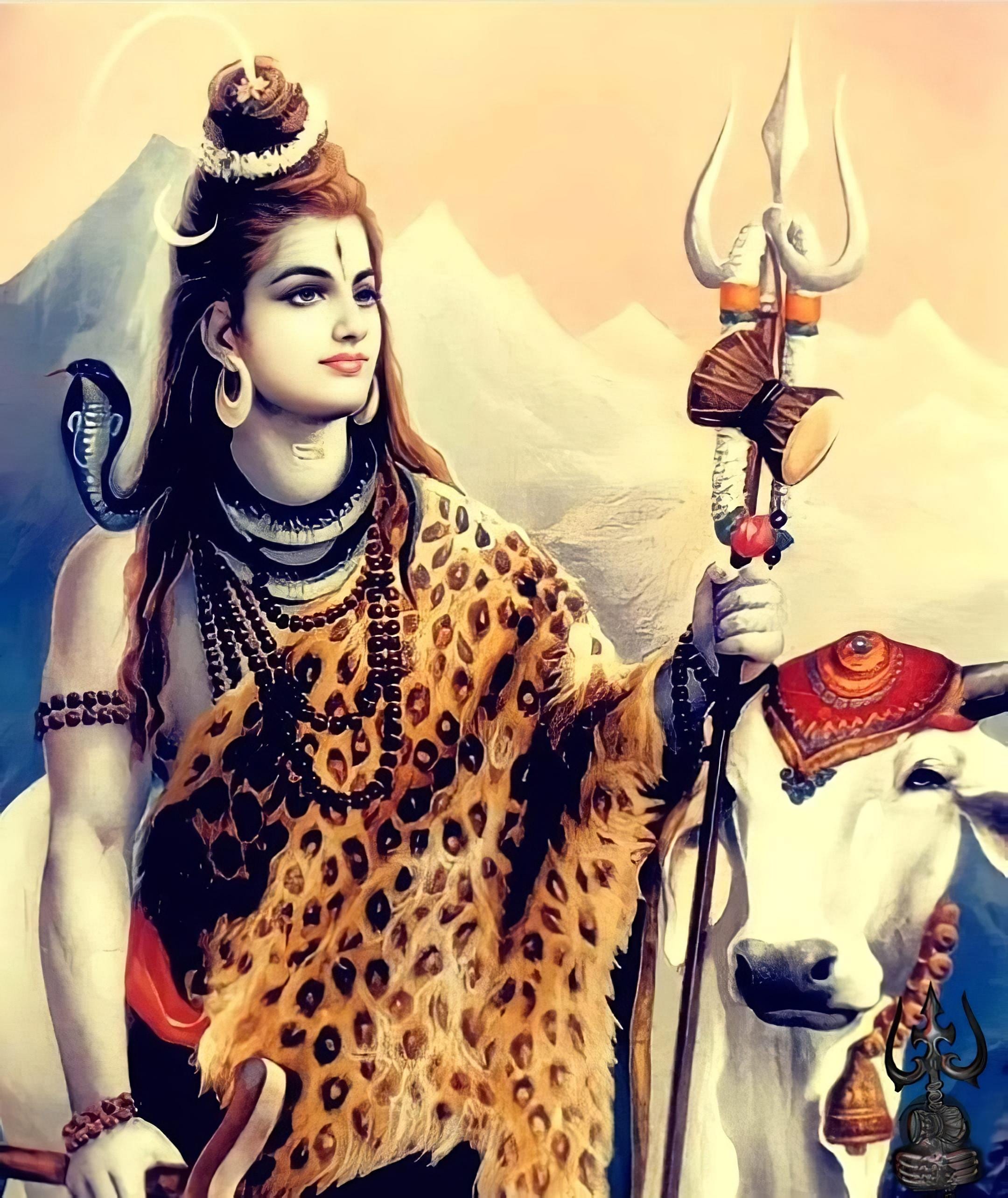
Escaping the influence of illusion: Lord Śiva worships Lord Saṅkarṣaṇa in Ilāvṛta-varṣa
“Śukadeva Gosvāmī said: In the tract of land known as Ilāvṛta-varṣa, the only male person is Lord Śiva, the most powerful demigod. Goddess Durgā, the wife of Lord Śiva, does not like any man to enter that land. If any foolish man dares to do so, she immediately turns him into a woman. I shall explain this later [in the Ninth Canto of Śrīmad-Bhāgavatam].In Ilāvṛta-varṣa, Lord Śiva is always encircled by ten billion maidservants of Goddess Durgā, who minister to him. The quadruple expansion of the Supreme Lord is composed of Vāsudeva, Pradyumna, Aniruddha and Saṅkarṣaṇa. Saṅkarṣaṇa, the fourth expansion, is certainly transcendental, but because His activities of destruction in the material world are in the mode of ignorance, He is known as tāmasī, the Lord’s form in the mode of ignorance. Lord Śiva knows that Saṅkarṣaṇa is the original cause of his own existence, and thus he always meditates upon Him in trance by chanting the following mantra.” (SB 5.17.15-16)
One of the eight sets of mountains surrounding Mount Sumeru, in Ilāvṛta-varṣa, is Kailāsa, located to the south. This is the abode of Lord Śiva. This abode is described in the Fourth Canto, chapter six (in the episode when the demigods go there to apologize to Lord Śiva after having offended him at the sacrifice organized by Daksa), as a paradisiac place, with pristine nature and all natural opulences. In the middle of it, there is a very auspicious place, where Lord Śiva sits under a great banyan tree, which is 100 yojanas high, with its branches spreading over 75 yojanas around. In other words, this tree alone is larger than Great Britain.
Despite such a great natural opulence, Lord Śiva is not interested in material enjoyment. He spends his time absorbed in meditation and in philosophical talks with associates such as Kuvera and the four Kumāras. Despite this, his wife, Pārvatī, is very eager to serve him, accompanied by her billions of servants.
This abode of Lord Śiva is off-limits for the inhabitants of the other eight varṣas. If any human man inadvertently tries to enter this sacred abode, he is immediately transformed into a woman, as described in the first chapter of the Ninth Canto, in the saga of King Sudyumna.
“The most powerful Lord Śiva says: O Supreme Personality of Godhead, I offer my respectful obeisances unto You in Your expansion as Lord Saṅkarṣaṇa. You are the reservoir of all transcendental qualities. Although You are unlimited, You remain unmanifest to the nondevotees.
O my Lord, You are the only worshipable person, for You are the Supreme Personality of Godhead, the reservoir of all opulences. Your secure lotus feet are the only source of protection for all Your devotees, whom You satisfy by manifesting Yourself in various forms. O my Lord, You deliver Your devotees from the clutches of material existence. Nondevotees, however, remain entangled in material existence by Your will. Kindly accept me as Your eternal servant.” (SB 5.17.17-18)
Lord Śiva is manifested from Lord Saṅkarṣaṇa of the catur-vyūha. Lord Saṅkarṣaṇa is thus the predominating deity in Ilāvṛta-varṣa, directly worshiped by Lord Śiva.
Some believe Lord Śiva is God Himself. This is not completely incorrect, since in fact, Lord Śiva (as Sadāśiva) appears as an expansion of Lord Sankarṣaṇa, manifesting in the material creation through Mahā-Viṣnu. However, when he appears inside the material universes and associates with the material energy, part of his qualities are covered, and he acts as a devotee, meditating on Lord Sankarṣaṇa and glorifying the Lord. Just as curd is nothing but milk, but can’t be used in place of milk in different recipes, Lord Śiva can’t be directly worshiped as the Supreme Lord. He assumes the functions of a guna-avatāra, controlling the bewildering force of the mode of ignorance, and acting as the greatest Vaiṣnava, helping the conditioned souls to get closer to the Lord.
The verse also describes Sankarṣaṇa as tāmasī, the Lord’s form in the mode of ignorance, which can raise a few questions. How is that?
This is connected with Lord Sankarṣaṇa as the predominating deity of the false ego, or ahaṅkāra, the very source of the illusion that binds the conditioned souls to this world. As described by Lord Kapila, false ego is the subtlest of the material elements, but from it, all the other material elements and everything else manifest.
Some believe in a dichotomy between God and evil, but this view is not supported in Vaiṣnava philosophy. There is nothing apart from the Lord. Everything comes from Him, and everything is under His full control. When it comes to the need for manifesting a force that can bind the souls to this world and serve as the basis for the illusory material reality, the Lord creates it in the form of the false ego, through His own expansion. Sankarṣaṇa is thus the controller of the mode of ignorance, but He is completely aloof from its influence, just as Lord Śiva is.
“We cannot control the force of our anger. Therefore when we look at material things, we cannot avoid feeling attraction or repulsion for them. But the Supreme Lord is never affected in this way. Although He glances over the material world for the purpose of creating, maintaining and destroying it, He is not affected, even to the slightest degree. Therefore, one who desires to conquer the force of the senses must take shelter of the lotus feet of the Lord. Then he will be victorious.
For persons with impure vision, the Supreme Lord’s eyes appear like those of someone who indiscriminately drinks intoxicating beverages. Thus bewildered, such unintelligent persons become angry at the Supreme Lord, and due to their angry mood the Lord Himself appears angry and very fearful. However, this is an illusion. When the wives of the serpent demon were agitated by the touch of the Lord’s lotus feet, due to shyness they could proceed no further in their worship of Him. Yet the Lord remained unagitated by their touch, for He is equipoised in all circumstances. Therefore who will not worship the Supreme Personality of Godhead?” (SB 5.17.19-20)
One of the reasons the Śrīmad Bhāgavatam includes so many prayers of exalted personalities is for us to learn the right devotional mood, the very foundation of our devotional practice. Lord Śiva is certainly not affected by attraction or repulsion to material objects, but we are. We live under the influence of lust and anger, and often fall into their control. We may sometimes think we are powerful enough to resist the influence of Māyā, but this is just another layer of illusion.
The Lord, however, is the controller of Māyā, completely free from her influence. The Mundaka Upaniṣad describes the Lord and the jīva as two birds living in the same tree. We become absorbed in eating the fruits of the tree, sometimes sweet, and sometimes bitter, but the Lord remains always transcendental in His original position. Exactly because He remains transcendental, He can help us to become free. We can’t resist the influence of Māyā by our own power, but when we take shelter on the Lord, surrendering at His feet, we are sheltered from her influence.
Māyāvādis believe that when the Lord appears in this world, He assumes a material body and performs material activities under the material mode of goodness. We, however, disagree with that. The Lord remains transcendental even while performing His pastimes in the material world. When He comes, He comes in His original spiritual body. He doesn’t assume a material form like us.
Materialists, however, can’t understand these pastimes and laugh at the Lord when He comes here, just as a prisoner laughs at the governor when he visits the prison, thinking he has become a prisoner like him. They project their own imperfections on Him, concluding that He acts under the influence of lust and anger, just like them. As Lord Śiva explains: “Thus bewildered, such unintelligent persons become angry at the Supreme Lord, and due to their angry mood the Lord Himself appears angry and very fearful. However, this is an illusion.”
There are many proofs that the Lord is transcendental, His body is fully spiritual, and His pastimes are free from the influence of the material modes. What to say about the Lord, even His pure devotees can remain aloof from material influence, even while living in this world. Understanding all of that, we should surrender unto Him.
“Lord Śiva continued: All the great sages accept the Lord as the source of creation, maintenance and destruction, although He actually has nothing to do with these activities. Therefore the Lord is called unlimited. Although the Lord in His incarnation as Śeṣa holds all the universes on His hoods, each universe feels no heavier than a mustard seed to Him. Therefore, what person desiring perfection will not worship the Lord?
From that Supreme Personality of Godhead appears Lord Brahmā, whose body is made from the total material energy, the reservoir of intelligence predominated by the passionate mode of material nature. From Lord Brahmā, I myself am born as a representation of false ego known as Rudra. By my own power I create all the other demigods, the five elements and the senses. Therefore, I worship the Supreme Personality of Godhead, who is greater than any of us and under whose control are situated all the demigods, material elements and senses, and even Lord Brahmā and I myself, like birds bound by a rope. Only by the Lord’s grace can we create, maintain and annihilate the material world. Therefore I offer my respectful obeisances unto the Supreme Being.” (SB 5.17.21-23)
A question modern science struggles to answer is what exactly gravity is. The effects of gravity are more or less understood and explained in terms of space-time curvatures, but what exactly causes it, is not very well understood. The hypothetical force carrier of gravity is the theoretical graviton, but it has never been detected.
According to the Vedas, however, gravity is a potency of the Lord, manifested through Lord Śeṣa. Through this potency, He holds all the universes, and all the planets, which remain in their assigned places. It may appear as a herculean task, but it is actually very easy for the Lord to do so, just like a serpent carrying a mustard seed. In the Kṛṣṇa Book, chapter two, for example, it is described that, “Ananta, or Śeṣa, is the source of the power which sustains all the planets in their different positions. Materially this sustaining power is known as the law of gravitation, but actually it is a display of the potency of Saṅkarṣaṇa.”
Lord Śiva is eternal, but he appeared in this universe from the anger of Brahmā, manifested when the four Kumāras refused his request to get married and increase the population of the universe. Lord Śiva, in turn, created the other demigods. The Lord, however, is the ultimate cause and effortlessly controls the whole cosmic manifestation through His innumerable potencies. Whatever great personality we can find inside the universe, the Lord is still greater.
“The illusory energy of the Supreme Personality of Godhead binds all of us conditioned souls to this material world. Therefore, without being favored by Him, persons like us cannot understand how to get out of that illusory energy. Let me offer my respectful obeisances unto the Lord, who is the cause of creation and annihilation.” (SB 5.17.24)
Ultimately, the material illusion is just one of the potencies of the Lord. Because we desired to be involved in material activities, the Lord sent us here, in His form as Mahā-Viṣnu. Similarly, when we finally decide to get out, we can become free by His grace. In this way, the soul is eternally dependent on the Lord. In our healthy condition, we accept this dependent position and serve the Lord in a bond of love. In this original position, we are completely happy. When, however, we try to be independent, our problems start.
In his purport, Prabhupāda emphasizes the point that material nature is nothing but a machine created by the Lord. The goal of studying Vedic cosmology is not so much in understanding the machine itself, but in understanding the Supreme cause behind it. When this Supreme Cause is understood, all our problems are solved.
Lord Śiva is completely free from the influence of the material energy, even though he is personally associating with her, but still, he prays in this way to show us the path for becoming free.
As Prabhupāda explains in his purport,
“All conditioned souls working within the illusory energy of the Lord consider the body to be the self, and thus they continuously wander throughout the universe, taking birth in different species of life and creating more and more problems. Sometimes they become disgusted with the problems and seek out a process by which they can get out of this entanglement. Unfortunately, such so-called research workers are unaware of the Supreme Personality of Godhead and His illusory energy, and thus all of them work only in darkness, never finding a way out.”
What is the solution then? “bahūnāṁ janmanām ante, jñānavān māṁ prapadyate, vāsudevaḥ sarvam iti, sa mahātmā sudurlabhaḥ “After many births and deaths, he who is actually in knowledge surrenders unto Me, knowing Me to be the cause of all causes and all that is. Such a great soul is very rare.” A sane man, therefore, surrenders to the Supreme Personality of Godhead and thus gets out of the clutches of the illusory energy, māyā.”
The prayers of Lord Śiva can be summarized as thus:
a) Although so powerful, Lord Śiva is not the Supreme. He remains in trance, worshiping Lord Saṅkarṣaṇa, who is His origin.
b) Sankarṣaṇa is the controller of the mode of ignorance, and the source of the false ego, the origin of all material elements. Still, He remains completely aloof from its influence, just as Lord Śiva himself.
c) Because the Lord is transcendental, His pure devotees can remain transcendental even while living in this world. Anyone who wants to remain free from the influence of the modes of material nature must thus take shelter of Him. Without His grace, no one can understand how to become free.
d) Materialists can’t understand the position of the Lord and project their own imperfections on Him. This is, however, simply due to their ignorance.
e) The Lord is the ultimate cause and effortlessly controls the whole cosmic manifestation through His innumerable potencies. There are many great personalities inside the universe, but the Lord is still greater.
Just as Lord Śiva does in Ilāvṛta-varṣa, the chiefs of the other varṣas worship a certain deity of the Lord with certain prayers, followed by all inhabitants. In this way, even though living in material comfort, they remain fixed in the platform of devotion. Each of the varṣas is led by a great devotee, who worships the Lord with particular prayers, which are described in chapters 5.18 and 5.19. These prayers are the central part of the second part of the Fifth Canto, containing many important philosophical revelations. They also add a few details about these different varṣas and their inhabitants.
This illustrates the point made by Śrīla Prabhupāda that the inhabitants of these varṣas are devotees, who get permission to enjoy in heavenly conditions there exactly because this material enjoyment does not make them forget Kṛṣṇa. After staying there for their allotted time, they usually return to Bharata-varsa, where they have the opportunity to further develop in their spiritual practice, and hopefully go back to Godhead.
This is a publication for thoughtful readers who want to go deeper into Kṛṣṇa consciousness. I publish daily, and all posts are available to free subscribers. If you wish, you can also choose a paid subscription to support this work. By subscribing, you also gain access to the manuscripts of the books I’m currently working on.
If you would like to contribute further, you can find the donation links here.