


You can receive new articles directly in your inbox. Subscription is free; donations are welcome.
A problem that may appear in different circumstances and become a serious stumbling block for the spread of Kṛṣṇa consciousness is sects and cults. Śrila Prabhupāda uses both words on occasion in the sense of “group” or the practice of a process, but here I’m using it in the negative sense.
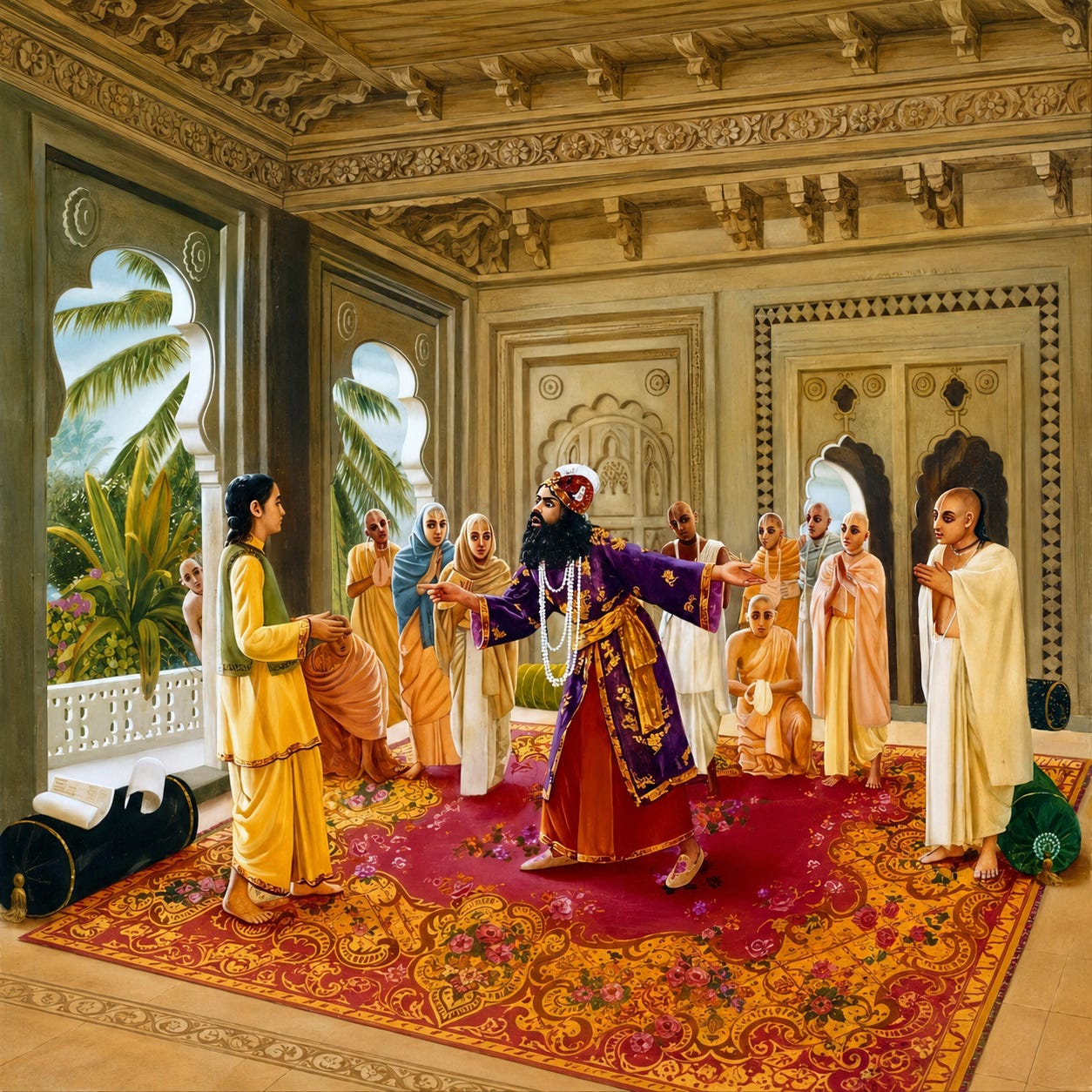
Real Kṛṣṇa consciousness is non-sectarian; it has to do with the original nature of the soul and his relationship with Kṛṣṇa. In the Jaiva Dharma of Śrila Bhaktivinoda Thākura, we see different examples of Vaiṣnavas from different ways of life, including even “Muslims” from the family of Chand Kazi who became pure Vaishnavas, despite externally still maintaining their Muslim dress and social connections. Although Vedic culture is considered the most favorable, Kṛṣṇa Consciousness does not depend on people changing their external dress or environment. As explained in the Bhagavad-gītā, it is more about internal transformation than external symbols. When properly understood, Kṛṣṇa consciousness can be spread unlimitedly to members of all cultures and ways of life. We can observe this is the life of Śrīla Prabhupāda, for example. He was able to present Kṛṣṇa consciousness to cardinals, businessmen, musicians, and so on, presenting it in a way that was relatable to each.
Sects, on the other hand, are based on externals. Members are supposed to follow a rigid dress code, eat certain foods, talk in a certain way, share the same opinions, and follow without questioning a certain charismatic leader. Members of sects are tightly controlled, and anyone who leaves or deviates from the group’s standards of conduct or opinions is ostracized. Sects can be based on conspiracy theories, religious ideas, fictional books, or even movies. There are many sects and cults in recorded history that did not end well, like the “Heaven’s Gate” and other examples.
One of the symptoms of real Kṛṣṇa consciousness is happiness, although a different type of happiness than the illusory happiness people search for in this material world. The happiness of Kṛṣṇa consciousness is a continuous state, while material happiness is flickering. This constant happiness that doesn’t depend on external factors is one of the symptoms of one who is getting closer to spiritual energy (Bg 18.54). We can see in paintings of the spiritual world that everyone there is happy. On the other hand, there are many depressed people in this material world. Kṛṣṇa consciousness is about spiritualized happiness, activity, and empowerment. This is what Śrila Prabhupāda describes in his books, and what we can practically observe in devotees who are maturely following his teachings.
The problem is that sometimes, because of immaturity, we may inadvertently create sects and cults based on Kṛṣṇa Consciousness, where the members are simply repressed and forced to fit into stereotypes. As in other cases, members of such sects tend to be sectarian, alienated, and aggressive against members of other groups, including devotees who don’t belong to the same group or who disagree with their philosophy. They frequently spend time gossiping and criticizing others instead of developing real Kṛṣṇa consciousness. Naturally, the result is not positive.
Sects and sectarian mentality can be a problem for those who are seriously trying to practice Kṛṣṇa consciousness and revive their relationship with Kṛṣṇa. Sects are like a material container that limits the transcendental expression of Kṛṣṇa consciousness, which is a transcendental process. Being part of a sect may work in the beginning (at least one may have the opportunity to chant Hare Kṛṣṇa), but it will always have negative repercussions that will increase as time passes. A non-sectarian approach to Kṛṣṇa consciousness is better.
Spiritual movements and organizations always have problems on different levels, because spiritual movements are based on accepting imperfect people and using their contributions. The existence of problems is thus just a proof of the imperfections of the members; it does not mean that the process does not work. At the same time, however, we should acknowledge the issues and try to solve them, and not just allow them to cover the real thing. Although it is not possible to have fire without smoke, we should not pretend that smoke is fire.
A few symptoms of an unhealthy group are excessive control of leaders over how the members dress, the way they speak, who they befriend, how they relate with relatives, and other life choices. There is a difference between guiding and showing concern and controlling or manipulating. The first is a symptom of good spiritual leadership; the second is cult behavior.
Other symptoms are an atmosphere of suspicion and vigilance, where difficult questions are discouraged, where loyalty to the group becomes more important than truth, outsiders being caricatured as fallen or dangerous, leaving being seen as a betrayal, blind faith in the words of the leader, even when they appear to contradict reason, devotees developing fear and repression over time instead of inner steadiness, and so on.
On the opposite, symptoms of healthy communities are devotees maintaining strong spiritual practice without being forced, a clear philosophical understanding combined with compassion with newcomers, respect for different services and levels of advancement, managerial functions not being automatically accepted as proof of spiritual advancement, leaders being accountable, honest questions being allowed, devotees being humble, joyful, responsible, cooperative, and compassionate with others. Another strong factor is the mentality of being strict with oneself but compassionate with others, instead of the opposite.
Not all strict groups are cults, but it is important to learn to differentiate real fire from smoke, understanding the difference between the seriousness of true spirituality, where one is serious about sādhana, study, vows, and service, and faithful to the teachings of Prabhupāda and the disciplic succession, and immature groups, where these qualities are artificially imitated.
To avoid falling into sects, it’s important to read and understand the philosophy of Kṛṣṇa Consciousness that Śrila Prabhupāda explains in his books, and to find bona fide, mature teachers who can help us to find the proper path. Nowadays, we frequently think that a spiritual guide is not really necessary and that we can figure out things by ourselves, but that’s not what the scriptures explain.
The takeaway is that Kṛṣṇa consciousness is always good, especially when properly understood and applied under the direction of some mature Vaiṣnava, but sects can be problematic. To steadily and safely advance in our spiritual practice, it’s important to learn to recognize and avoid such sects.
This is a publication for thoughtful readers who want to go deeper into Kṛṣṇa consciousness. I publish daily, trying to offer high-quality spiritual content, and all posts are available to free subscribers. If you wish, you can also choose a paid subscription to support this work.
You can also receive the updates on WhatsApp or Telegram.
If you would like to contribute further, you can find the donation links here.
Wow !!!
I checked Heaven's gate story also. That is a result of incomplete knowledge and guidance. If they had met Srila Prabhupada or any devotees, they would have been elevated to a higher consciousness. We can pray for all of them and ask for the Divine couple's blessings.
Yes, groupism is detrimental to our spiritual growth. It doesn't let us advance further in our cherished goal... go back home back to Godhead. Hare Krishna 🙏