

Subscribe to receive new articles by e-mail. It’s free, but if you like, you can pledge a donation:
In the Śrīmad Bhāgavatam, we hear descriptions of the rule of great saintly kings, such as Pṛthu and Priyavrata. Similarly, we hear about Lord Rama in the Ramayana, about King Yudhiṣṭhira in the Mahabharata, and so on. There is, however, another saintly King who is mentioned as being no less than Pṛthu or Yudhiṣṭhira, but is much less known. That’s King Gaya, who lived in the first Manvantara.
Gaya appears in the dynasty of Svāyambhuva Manu. The sequence is Priyavrata, Agnidhra, Nābhi, Ṛṣabhadeva, Bharata, Sumati, Devatājit, Devadyumna, Parameṣṭhī, Pratīha, Pratihartā, Bhūmā, Udgītha, Prastāva, Vibhu, Pṛthuṣeṇa, Nakta, and Gaya, and then: Citraratha, Samrāṭ, Marīci, Bindu, Madhu, Vīravrata, Manthu, Bhauvana, Tvaṣṭā, Viraja, Śatajit.
After the descriptions of Priyavrata, Agnidhra, Nābhi, Ṛṣabhadeva, and Bharata in the Fifth Canto, there is a description of Pratīha, who was a great devotee of Lord Viṣṇu. He is described as anusasmāra, someone who perfectly understood and always remembered the Supreme Lord. He became a great exponent of the principles of self-realization, a saintly king who instructed many. As Prabhupāda explains in his purport to text 5.15.4, to be effective as a spiritual teacher, one has to first realize the Supreme Personality of Godhead. After realizing Him, one can become a guru and propound Vaiṣṇava philosophy all over the world, following the example of Maharaja Pratīha.
The lineage of Maharaja Pratīha leads to the appearance of King Gaya, who is a plenary expansion of Lord Viṣṇu. As such, he was situated in the transcendental platform of viśuddha-sattva (pure goodness) and fully conversant with transcendental knowledge. It is described that:
“King Gaya gave full protection and security to the citizens so that their personal property would not be disturbed by undesirable elements. He also saw that there was sufficient food to feed all the citizens. [This is called poṣaṇa.] He would sometimes distribute gifts to the citizens to satisfy them. [This is called prīṇana.] He would sometimes call meetings and satisfy the citizens with sweet words. [This is called upalālana.] He would also give them good instructions on how to become first-class citizens. [This is called anuśāsana.] Such were the characteristics of King Gaya’s royal order. Besides all this, King Gaya was a householder who strictly observed the rules and regulations of household life. He performed sacrifices and was an unalloyed pure devotee of the Supreme Personality of Godhead. He was called Mahāpuruṣa because as a king he gave the citizens all facilities, and as a householder he executed all his duties so that at the end he became a strict devotee of the Supreme Lord. As a devotee, he was always ready to give respect to other devotees and to engage in the devotional service of the Lord. This is the bhakti-yoga process. Due to all these transcendental activities, King Gaya was always free from the bodily conception. He was full in Brahman realization, and consequently he was always jubilant. He did not experience material lamentation. Although he was perfect in all respects, he was not proud, nor was he anxious to rule the kingdom.” (SB 5.15.7)
As an ideal king, Gaya protected and maintained the citizens, collecting taxes and giving them back in the form of gifts and other benefits. As Prabhupāda explains, if the king or government official levies taxes on the citizens, without properly protecting them and engaging them in religious principles, they are forced to accept part of their sins. In other passages, it is described that a ruler becomes personally responsible for one-fifth of all the sinful reactions of the citizens. We can thus imagine the situation of materialistic leaders in Kali-yuga, who just exact taxes without properly protecting or engaging the citizens in dharma. Maharaja Gaya gave the perfect example for all political leaders who don’t desire to go to hell.
b) It is also described that he would organize regular meetings, where he addressed the citizens, pacifying them with sweet words and giving them moral instructions. Because Gaya was such a saintly king, he was very popular with the citizens, who would be eager to hear him and follow his teachings. This is similar to what is also described in the pastime of Pṛthu Maharaja, and is an important qualification for any type of ruler. When a ruler is simultaneously respected and loved by the citizens, they will be willing to rigidly follow all his instructions. In the case of Gaya, it is mentioned that by hearing and following the instructions of the King, the citizens were jubilant and peaceful.
c) He performed his duties as a householder perfectly and played the role of a strict devotee, always ready to give respect to other devotees and be engaged in devotional service.
d) Even though he was perfect in all aspects, he was not proud and was not anxious about ruling the kingdom. He was fixed in full in Brahman realization, free from bodily conception and always jubilant.
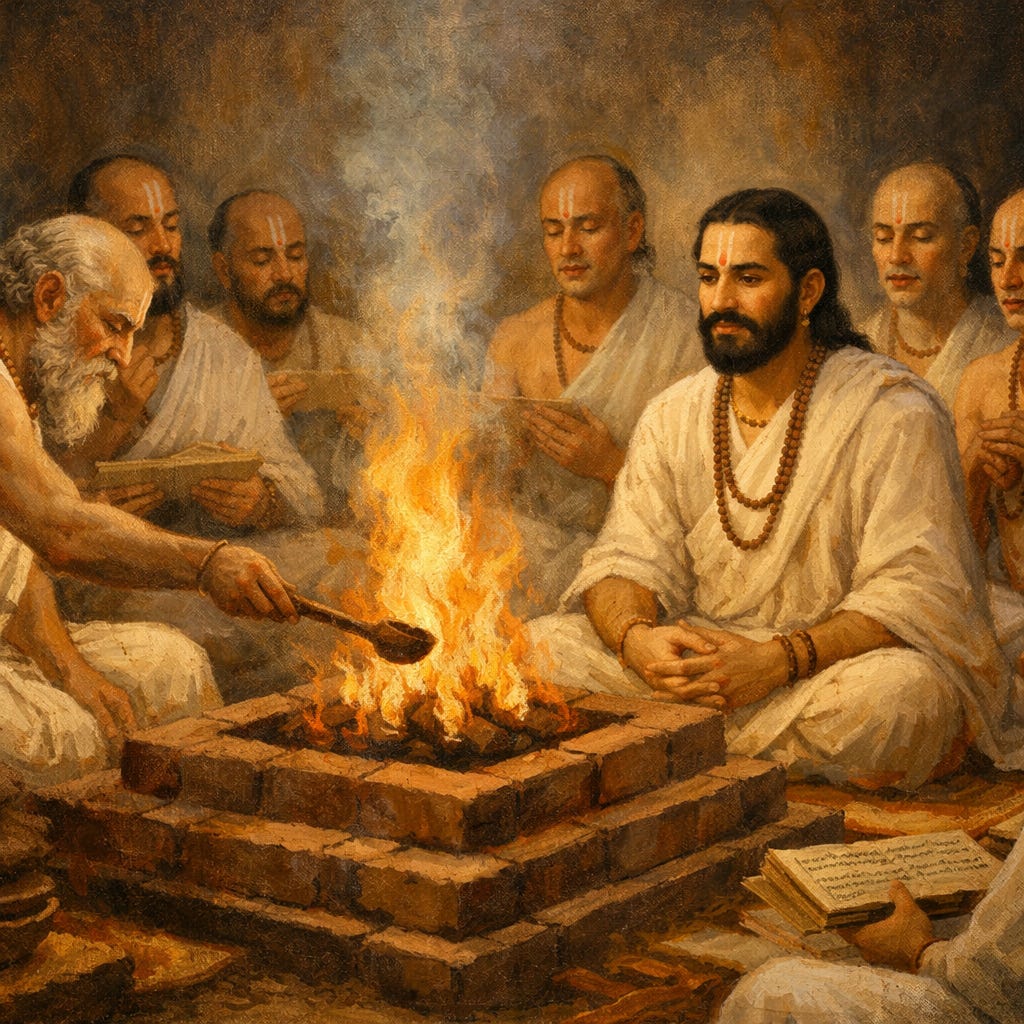
e) He performed all kinds of Vedic rituals, in the form of gigantic sacrifices, and maintained religious principles. Apart from that, he was an expert in studying the Vedic literature and possessed all kinds of opulences.
f) Because of the qualities of King Gaya, the celestial daughters of Dakṣa, such as Śraddhā, Maitrī, and Dayā, became satisfied with him, and came to Earth to bathe him with sanctified water and give him benedictions.
g) During his rule, the Earth, as a cow, delivered milk profusely. This means that, just as King Pṛthu, Gaya was able to extract all types of resources from the earth and satisfy all the desires of the citizens, even though he personally had no desire to satisfy.
h) He was able to subdue all other kings, who would be forced to fight on religious principles, and, even though defeated, would be very satisfied in being subdued by such a powerful and pious king. They would thus happily offer him tribute and all kinds of gifts. Similarly, the brāhmanas were so satisfied with his charitable disposition that they would willingly contribute a sixth of their pious activities for the king’s benefit. This happens automatically when a king properly performs his duties (just as a king assumes the sinful reactions of the citizens when he doesn’t), but in the case of King Gaya, the brāhmanas were especially eager to do so.
i) In his sacrifices, he would offer a great quantity of soma juice to Lord Viṣṇu, and then satisfy the demigods with the prasāda. Both Lord Viṣṇu and the demigods appeared to accept his offerings and offer him benedictions.
King Gaya is glorified in the Puranas with the following verses:
gayaṁ nṛpaḥ kaḥ pratiyāti karmabhir
yajvābhimānī bahuvid dharma-goptā
samāgata-śrīḥ sadasas-patiḥ satāṁ
sat-sevako ’nyo bhagavat-kalām ṛteThe great King Gaya used to perform all kinds of Vedic rituals. He was highly intelligent and expert in studying all the Vedic literatures. He maintained the religious principles and possessed all kinds of opulence. He was a leader among gentlemen and a servant of the devotees. He was a totally qualified plenary expansion of the Supreme Personality of Godhead. Therefore who could equal him in the performance of gigantic ritualistic ceremonies?
yam abhyaṣiñcan parayā mudā satīḥ
satyāśiṣo dakṣa-kanyāḥ saridbhiḥ
yasya prajānāṁ duduhe dharāśiṣo
nirāśiṣo guṇa-vatsa-snutodhāḥAll the chaste and honest daughters of Mahārāja Dakṣa, such as Śraddhā, Maitrī and Dayā, whose blessings were always effective, bathed Mahārāja Gaya with sanctified water. Indeed, they were very satisfied with Mahārāja Gaya. The planet earth personified came as a cow, and, as though she saw her calf, she delivered milk profusely when she saw all the good qualities of Mahārāja Gaya. In other words, Mahārāja Gaya was able to derive all benefits from the earth and thus satisfy the desires of his citizens. However, he personally had no desire.
chandāṁsy akāmasya ca yasya kāmān
dudūhur ājahrur atho baliṁ nṛpāḥ
pratyañcitā yudhi dharmeṇa viprā
yadāśiṣāṁ ṣaṣṭham aṁśaṁ paretyaAlthough King Gaya had no personal desire for sense gratification, all his desires were fulfilled by virtue of his performance of Vedic rituals. All the kings with whom Mahārāja Gaya had to fight were forced to fight on religious principles. They were very satisfied with his fighting, and they would present all kinds of gifts to him. Similarly, all the brāhmaṇas in his kingdom were very satisfied with King Gaya’s munificent charities. Consequently the brāhmaṇas contributed a sixth of their pious activities for King Gaya’s benefit in the next life.
yasyādhvare bhagavān adhvarātmā
maghoni mādyaty uru-soma-pīthe
śraddhā-viśuddhācala-bhakti-yoga-
samarpitejyā-phalam ājahāraIn Mahārāja Gaya’s sacrifices, there was a great supply of the intoxicant known as soma. King Indra used to come and become intoxicated by drinking large quantities of soma-rasa. Also, the Supreme Personality of Godhead, Lord Viṣṇu [the yajña-puruṣa] also came and personally accepted all the sacrifices offered unto Him with pure and firm devotion in the sacrificial arena.
yat-prīṇanād barhiṣi deva-tiryaṅ-
manuṣya-vīrut-tṛṇam āviriñcāt
prīyeta sadyaḥ sa ha viśva-jīvaḥ
prītaḥ svayaṁ prītim agād gayasyaWhen the Supreme Lord is pleased by a person’s actions, automatically all the demigods, human beings, animals, birds, bees, creepers, trees, grass and all other living entities, beginning with Lord Brahmā, are pleased. The Supreme Personality of Godhead is the Supersoul of everyone, and He is by nature fully pleased. Nonetheless, He came to the arena of Mahārāja Gaya and said, “I am fully pleased.”
You can also donate using Buy Me a Coffee, PayPal, Wise, Revolut, or bank transfers. There is a separate page with all the links. This helps me enormously to have time to write instead of doing other things to make a living. Thanks!