

« Things I Wish Someone Had Taught Me When I Started Krishna Consciousness
The three essential qualities of a great man
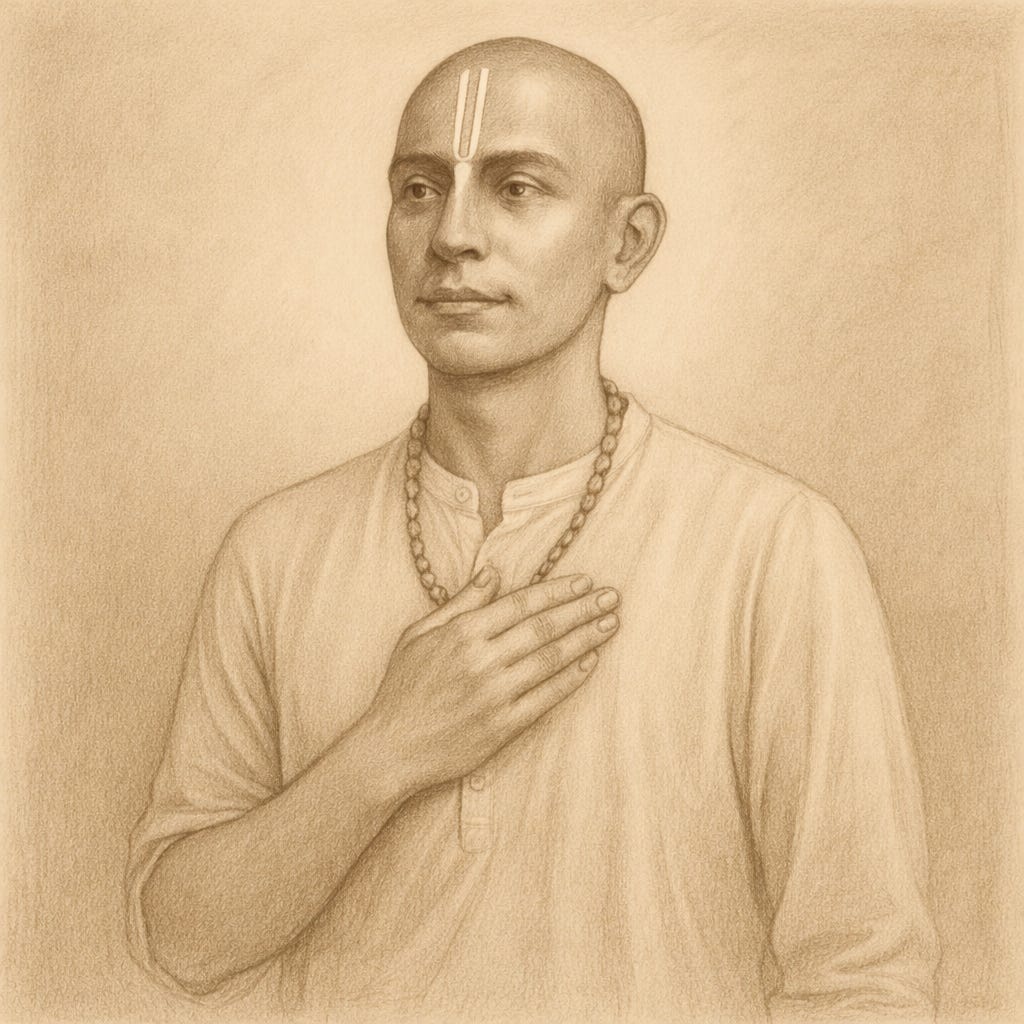
After understanding the basic mechanism of a woman being comfortable in following a man that she perceives as more qualified than herself, the next question arises: How to become such a man?
There are many great men described in the scriptures, such as Kardama Muni, the five Pandavas, and so on, who set the golden standard for the rest of us. We may, of course, not be like Kardama Muni or Yudhiṣṭhira Maharaja, but we should at least try to follow in their footsteps.
Good qualities are essential, especially when we speak about family life. One can’t demand to have a wife like Sitā if he is not like Rāma, and vice versa. The scriptures explain that marriage and friendship should be between people of similar natures; therefore, the first step to getting a good wife (or a good husband) is to develop our personal qualities. Once one has good personal qualities and is confident about the value of such qualities, one may be able to select a suitable spouse.
When we study the example of great men like Kardama Muni or Arjuna, we find that they have three main important qualities:
1- They know the goal of life.
2- They energetically strive in the direction of this goal, regardless of all obstacles and impediments.
3- They are kind and generous.
There are many other important qualities, such as being able to control one’s senses, being free from lust and greed, and so on, but all these other qualities derive from these three. We can say that these three central qualities are the engine that propels us in the direction of all other good qualities.
People who have these qualities, or are at least striving to obtain them, are attracted to others who have them, and this is the basis for the formation of sangas of advanced devotees, families of pure Vaiṣnavas, and so on. There are many foolish ladies, as well as many foolish men who don’t value such qualities, but if one understands their value, one will be able to eventually find one’s peers.
As human beings, we strive for acceptance from others. When a devotee associates with materialistic people, this is something that works against us, since we will tend to lower our spiritual standards to be better accepted in the group. That’s why great personalities mentioned in the scriptures would normally renounce life in society at a certain point in their lives and go to live in the forests or mountains. Of course, this is not possible (nor recommended) in our age, but we can get an even greater benefit by associating with pure Vaiṣnavas.
When we speak about “pure Vaiṣnavas”, we imagine that there is a group somewhere where only pure Vaiṣnavas live, but it’s not really like that. Even spiritual communities contain a mixture of devotees in different levels of advancement, going from materialists who have just a slight devotional inclination, all the way to pure devotees. The point is that advanced devotees tend to form bonds between themselves, both in friendship and marriage. Therefore, one of the keys to finding such souls is to strive to develop these qualities ourselves.
When we speak about marriage, there is another point that comes into view: Lady devotees who cultivate these spiritual qualities feel attracted to men who have them. They feel automatically inclined to follow such a man, and therefore, when such qualities are present in the man, all the ideas about chastity and other good feminine qualities become quite natural. If, on the other hand, the man lacks such qualities, the marriage will always be full of problems, no matter how qualified the wife may be. There are also cases of abusive men who can make the life of any woman miserable, regardless of her personal qualifications.
This said, let’s try to best understand these three qualities.
To understand the goal of life means to have a sense of mission, have a greater goal, and strive for it. Naturally, the ultimate goal of life is Kṛṣṇa Consciousness, but there are different paths that lead to this goal. Each devotee can find a particular service or a particular project, develop it well, and thus offer some tangible contribution. There are also secondary goals, like maintaining one’s family, that can’t be neglected. If the man has a tangible goal and works energetically to achieve it, the wife automatically becomes inclined to assist him in his mission, and therefore, cooperation becomes natural. Such a man will also be able to control his senses and act in a proper way, which will inspire natural admiration on the part of the wife.
If, on the other hand, the man lacks a clear purpose in life, he will tend to be lazy and under the control of his mind and senses. He will be restless, frustrated, propense to becoming angry, etc. Women have great difficulty following such a man. A man may speak as much as he wants about Vedic culture, chastity, etc., but without good personal qualities, he will not have the respect of his wife. Ladies respect men who walk their talk.
Although desirable, these first two qualities are, by themselves, not sufficient. There are many who understand that the goal of life is to advance in Kṛṣṇa Consciousness, have a sense of mission, and strive to improve their spiritual practice, but without simultaneously developing kindness and generosity, they become just dry ascetics. Kindness and generosity are some of the main symptoms that one is advancing in spiritual life, since it shows that one is developing the soft heart of a Vaiṣnava. Different from just mechanical activities, which can be imitated, these are qualities difficult to fake.
The quality of being kind and generous applies not only to the wife and children but also to friends, relatives, fellow devotees, etc. A man who is generous will not quarrel about minor things in the house; he will guide by example instead of trying to control. He will put the well-being of others ahead of his personal comfort, he will solve problems, give attention and good advice, and donate his time and energy. He will be kind, patient, and wise. A man with such good qualities will naturally be admired by others, and this will inspire a great deal of trust and admiration in his wife.
Naturally, a marriage is made of two parts. The husband has to have good qualities, and the wife also has to have good qualities. Even the best man can face a failed marriage if he marries an unqualified lady, and the opposite is also true. My point here is that when a man cultivates good qualities in himself, instead of just demanding good qualities from his spouse, everything works much better and more naturally. This is why much of the talk about chastity we see in our movement is often so caustic: it fails to take into account the necessary qualities in men.
« Things I Wish Someone Had Taught Me When I Started Krishna Consciousness
You can also donate using Buy Me a Coffee, PayPal, Wise, Revolut, or bank transfers. There is a separate page with all the links. This helps me enormously to have time to write instead of doing other things to make a living. Thanks!