

Subscribe to receive new articles by e-mail. It’s free, but if you like, you can pledge a donation:
Tips to survive and prosper in Mayapur
When Śrila Prabhupāda started the Mayapur community, it was an extremely austere place. Devotees were living in huts, doing their necessities in the fields, and taking cold baths from the wells. Even the most physically fit devotees would barely survive, constantly battling sickness.
Nowadays, however, things are very different. Mayapur became a very comfortable place, even too comfortable, one could argue, especially for devotees who started in the 1980s and 1990s and had the experience of austere temple life. Anyone with a modest income can afford to rent a flat in Mayapur, buy a scooter, eat nice food, and even have a maid to help with home chores. Prices have been rising steadily in the past few years, but they are still low compared with most of the world.
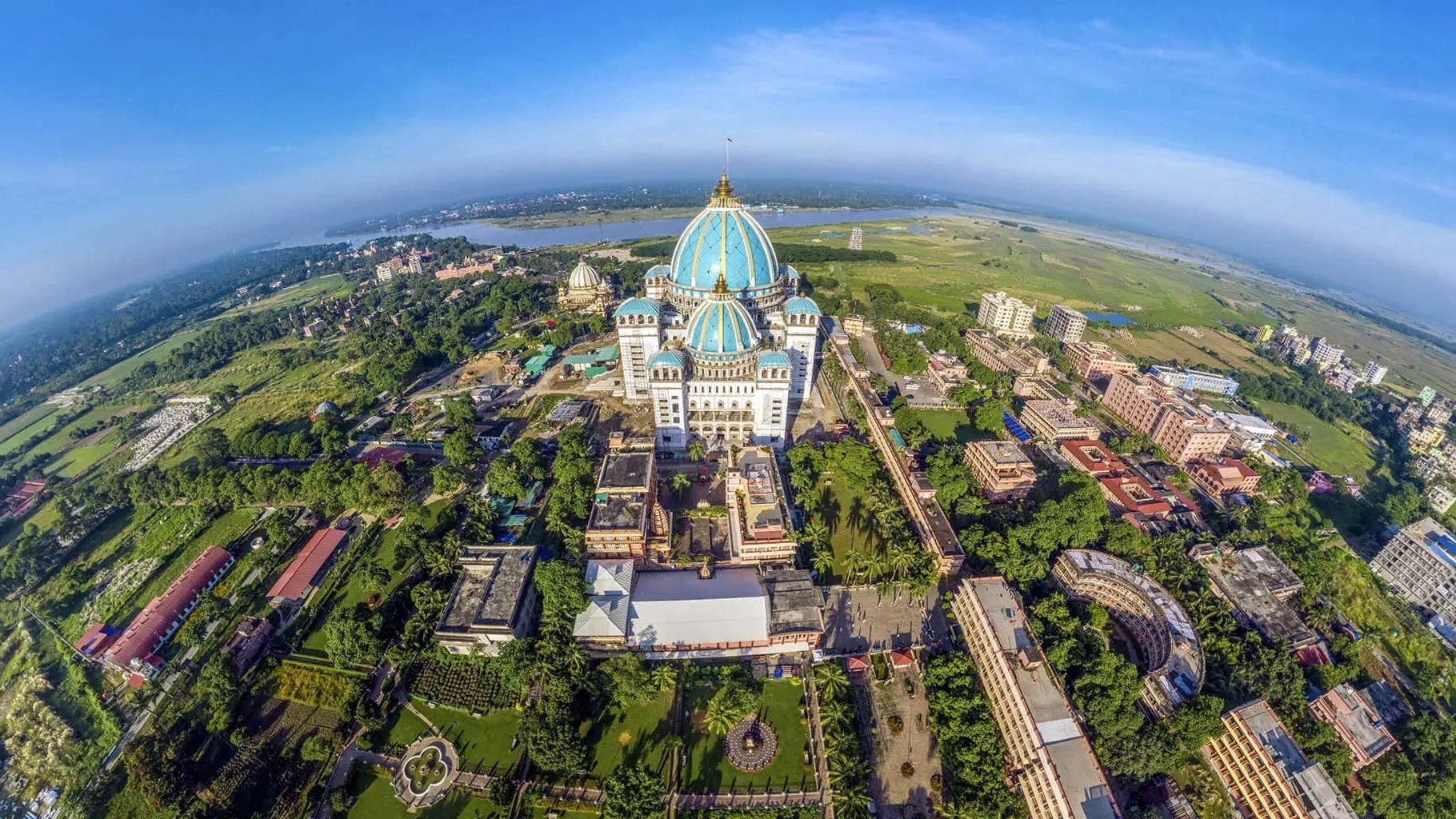
Different from other places where the ideal is to have rural projects, the idea in Mayapur is to offer good accommodations so people from all over the world can come to visit, benefit from the spiritual atmosphere, learn about devotional service, and spread it back in their home regions. Many believe that with the opening of the ToVP, millions of people will come annually to visit Mayapur, which will help to spread Krsna Consciousness all over the world. Whether this will become true or not, only time will tell, but that’s the reading many have of the prophecies of our previous ācāryas.
As described in the book Sri Bhaktisiddhanta Vaibhava, Śrila Bhaktisiddhānta himself set this precedent by organizing for the reception of a high British official in Mayapur, arranging for him to have even cigarettes and meat (prepared by some Kali worshipers from Navadvīpa). Śrila Prabhupāda showed the same spirit by building the first guest house and even orienting his disciples to make small huts for Indian visitors to make tea, since they could not stay a day without it.
The model of a big rural community would not be possible in Mayapur. It’s a relatively small place, without so much land available. Even with the current demand for land for building temples and apartments, the prices are already becoming quite high. Some of the newer housing projects are already 3 or 4 kilometers away from the main temple. Soon, the prices will force devotees to start building on the other side of the river. In any case, now that the project already became a big city, instead of a rural community, it would not be possible to go back, no matter how much one may discuss about it.
Going back to the initial topic, life in Mayapur can now be quite comfortable, so anyone interested in benefiting from the spiritual atmosphere can come and live without great difficulties, apart from visas. This in itself has some cons, because without a spirit of service, it is not possible to gain access to the spiritual dimension, but one may live there geographically at least.
Here are a few points that may help to get the most out of it:
1- Things in the dhāma happen in their own time. Maybe that’s the way Krsna finds to force us to renounce our propensity to control and instead focus on our spiritual practice. Devotees who want things to be exactly the way they want often spend a lot of time, money, and energy, and just get frustrated in the end. Devotees who, on the other hand, can accept things the way they are have a much better experience.
Once, a rich merchant wanted to give a donation to Śrila Sanātana Goswami for the improvement of the holy dhāma. Noticing that the man was proud, he gave him a broken brick and asked if the man could fix it. Receiving the brick, the man had a glimpse of the spiritual form of the brick, seeing it as composed of valuable jewels and cintamany stones. Through this vision, he understood that the holy dhāma is perfect in its spiritual form, and that is just due to ignorance that we see defects in it.
2- Prices can be quite high on Gaura Purnima because the population of the community (as well as the demand for products and services) grows several times, and locals use the opportunity to accumulate some savings for the rest of the year. Again, this emphasizes the point of focusing on spiritual practice instead of just running here and there trying to buy things.
There are two separate economies in Mayapur. One that serves local devotees and goes all year around, and another for visitors that come during festival time. The same apartment that may be rented for ten or fifteen thousand rupees during the summer may cost three or four thousand per day (!) during Gaura Purnima. To find local prices, you should join the groups used for local devotees (you can check, for example, MAYAPUR_ISKCON on Telegram).
3- Instead of planning to Gaura Purnima, when everything becomes expensive, and the spiritual atmosphere often becomes covered by economic activity and managerial meetings, you can consider visiting at another, more peaceful time of the year. December and January can be a good option. The climate is a little colder in the mornings, but it is comfortable during the day. If you like heat, you can also try the summer, from April to July. After August comes the rainy season, which can be an option of one wants to practice peacefully at home, as people used to do during the cāturmāsya season.
4- Local products are orders of magnitude cheaper than products one may be used to in the West. One can live quite well on a budget by using local products. However, imported products can cost a lot more than in the West. A bar of soap can cost anything from 10 to 200 rupees, a pot for cooking can cost from 300 to 5000 rupees, and so on, depending on what you want to buy. You can save a lot just by being open to adapting, trying puffed rice instead of cornflakes, chana (roasted chickpeas) instead of Pringles, coconuts instead of avocados, and so on. Living on a budget in the dhāma is actually a plus for our spiritual practice, instead of a minus.
5- Visitors often complain that locals (even devotees) try to exploit them by charging more for everything and even outright cheating them. There is actually an unspoken rule about it. If one acts like an adequate human being, treating others with respect, most sellers (the ones who are devotees at least) will treat him like a dhama-vasi and charge the normal prices. If one is arrogant, however, they will see him as a mleccha and use him as an ATM. That’s probably another way the dhāma punishes us for our pride.
6- Many devotees become disturbed by the noise. In many areas, there is constant noise due to construction and villagers hearing loud music. Many complaints are daily made but solutions are very slow to come by. There is however, a simple solution for it: white noise. There are many apps for that on both Android and iPhone that allow you to create a background sound mixing different noises (you can use the noise of a fan combined with birds and waves, for example). You just need to get an old phone, connect it to speakers, and leave it playing white noise all the time. This constant sound will block the noise from the environment. It may be a little irritating in the beginning, but very quickly your brain gets used to it, and you don’t notice it anymore. The same can work with mantras or classes.
7- It’s common that we come to Mayapur with an enjoying mentality, just like if we have gone to Thailand or Tenerife. This is however, a fatal mistake since it blocks our spiritual experience. Someone with this consciousness will see only the material faults. To see the spiritual form of the dhāma, one has to come with an attitude of service. One may live comfortably there, according to his or her necessity, but we should use this peaceful situation to improve our devotional service, not just become lazy and arrogant.
8- Many think in terms of coming to Mayapur to live for good. However, the success rate is quite low. It is extremely common that devotees go there, buy an apartment, reform and furnish it, just to decide to sell it and move away right after finishing it. The point is that, together with the spiritual atmosphere, there are many challenges in living in a holy place, starting from the fact that many are not there to really practice spiritual life. As long as we can maintain our consciousness focused on our spiritual practice, it is easy to overlook the difficulties, but as soon as our consciousness come down to the material plane, things can become uncomfortable quite fast.
Visas can also be a problem. There are options of long-term visas, both student visas and X-2 visas, but they can be obtained only when one is associated with a local institution. ISKCON used to give the invitation letters quite liberally, but starting from a few years ago, the process has become much harder. The tourist e-visas, however, are quite easy to obtain and practical, and they allow to stay for 3 months each visit (or 6 months with a visa-run). This is actually a good option for the beginning, allowing you to come to Mayapur for a limited time each year, and take this time to really practice, instead of sitting there thinking how to make money to pay the bills.
We can advance more by taking care of our material affairs for 9 months and then practicing seriously and peacefully for 3 months, than by sitting in a holy place and thinking how to make money for 12 months. Spiritual advancement comes from practicing the spiritual process and serving the Lord, not by just sitting in a holy place.
You can also donate using Buy Me a Coffee, PayPal, Wise, Revolut, or bank transfers. There is a separate page with all the links. This helps me enormously to have time to write instead of doing other things to make a living. Thanks! You can also receive the updates on Telegram.
I like how you say to atleast practice seriously for 3 months and make money abroad for 9 months. Very insightful prabhu.