


You can receive new articles directly in your inbox. Subscription is free; donations are welcome.
Originally, the divisions in the varṇāśrama system were based on qualifications rather than birth. Kṛṣṇa declares in the Bhagavad-gītā (4.13) that cātur-varṇyaṁ mayā sṛṣṭaṁ guṇa-karma-vibhāgaśaḥ: according to the three modes of material nature and the work associated with them, the four divisions of human society are created by Me.
However, with the advent of Kali-yuga, sectors of society started defending the division of classes based on hereditary rights, claiming that one can’t be a brāhmaṇa without being born of a brāhmaṇa father. This was one of the decisive factors in the destruction of Vedic culture, since the establishment of a hereditary system allows unqualified sons of brahmanas to assume the position of brahmanas and thus destroy the society from within.
According to them, if one is born in a degraded family, one has to take another birth in order to purify himself. Without changing one’s body, it’s not possible to become purified.
Vaiṣnava acaryas, however, energetically opposed this idea. Apart from the idea that a Vaiṣnava born into a sinful family can be initiated as a brāhmaṇa if he shows the proper qualifications, they argued that devotional service is transcendental and therefore not limited to any particular country, class, society, or circumstance. Any person can become a Vaiṣnava, whether he is born in a pious family in India or in a family of meat-eaters in the West. The point is not birth, but one’s commitment to the spiritual process of purification.
Supported by passages from the scriptures, they established the potency of the holy names and their capacity to elevate even the most sinful persons to the highest platform. Devotional service is thus open to all, being the constitutional occupation of the living entities, and once one becomes purified by the practice of devotional service, one becomes automatically qualified as a brāhmaṇa, since a Vaiṣnava is by definition superior to an ordinary brāhmaṇa. A brāhmaṇa is considered superior to the other classes for being established in the mode of goodness, a position that is superseded by a pure Vaiṣnava. As Prabhupada mentions:
“Anyone who is a pure Vaiṣnava is situated transcendentally, and therefore the highest qualification in the material world, namely, to be in the mode of goodness, has already been achieved by such a person.”
Apart from caste brāhmaṇas, another class that was vocal about hereditary privileges was the caste goswamis, who claimed to be the only ones qualified to act as spiritual masters and worship in the temples. On NoD 5, for example, Prabhupada mentions the Nityānanda-vaṁśa:
“In the Middle Ages, after the disappearance of Lord Caitanya’s great associate Lord Nityānanda, a class of priestly persons claimed to be the descendants of Nityānanda, calling themselves the gosvāmī caste. They further claimed that the practice and spreading of devotional service belonged only to their particular class, which was known as Nityānanda-vaṁśa. In this way, they exercised their artificial power for some time, until Śrīla Bhaktisiddhānta Sarasvatī Ṭhākura, the powerful ācārya of the Gauḍīya Vaiṣṇava sampradāya, completely smashed their idea. There was a great hard struggle for some time, but it has turned out successfully, and it is now correctly and practically established that devotional service is not restricted to a particular class of men.”
These are not just empty words but authorized conclusions supported by a host of passages from the scriptures.
In the Padma Purāṇa, the sage Vasiṣṭha tells King Dilīpa:
“My dear King, everyone has the right to execute devotional service, just as he has the right to take early bath in the month of Māgha [December-January].”
In the Kāśī-khaṇḍa portion of the Skanda Purāṇa, it’s mentioned
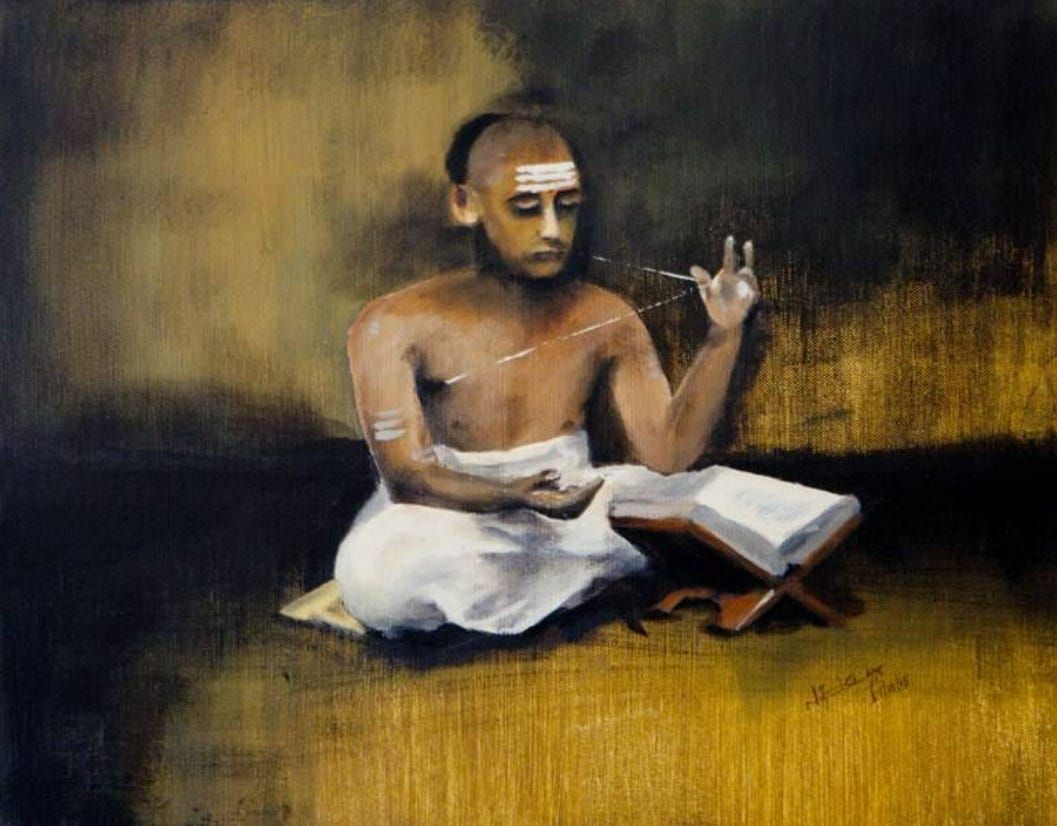
“In the country known as Mayūradhvaja, the lower-caste people, who are considered less than śūdras, are also initiated in the Vaiṣnava cult of devotional service. And when they are properly dressed, with tilaka on their bodies and beads in their hands and on their necks, they appear to be coming from Vaikuṇṭha. In fact, they look so very beautiful that immediately they surpass the ordinary brāhmaṇas.”
In his Hari-bhakti-vilāsa, Sanātana Gosvāmī gives an analogy, stating that any person who is properly initiated as a Vaiṣnava certainly becomes a brāhmaṇa, just as bell metal is turned into gold by a mixture of mercury. Śrila Rupa Goswami, however, adds that initiation is just the beginning, since one who doesn’t follow the rules and regulations after initiation will become fallen again.
Unfortunately, caste privileges are something that is very profoundly and deeply rooted in Indian culture since they were practiced for many centuries. We can’t also forget that the soul is never destroyed, and therefore the same caste brāhmaṇas and caste Goswamis who were oppressing the other classes in previous centuries are still around in new bodies, and many may be found even inside our movement, finding other groups to oppress, like women. Therefore, we need to remain always vigilant to avoid letting our movement degenerate back into a system of classes and privileges.
Read more:


This is a publication for thoughtful readers who want to go deeper into Kṛṣṇa consciousness. I publish daily, trying to offer high-quality spiritual content, and all posts are available to free subscribers. If you wish, you can support this work with a monthly contribution. When you subscribe, you can choose between a free subscription and a monthly contribution, and you can switch from a free subscriber to a supporter at any time.
You can also receive updates on WhatsApp or Telegram.
If you would like to contribute further, you can find the donation links here.
🕉️😌🤍✨🙏🏽