

« Things I Wish Someone Had Taught Me When I Started Krishna Consciousness
We also have a role to play
Another dimension of this question is how our society can have so many problems, including cases of abuse and other serious issues. We hear that this is a spiritual society, Mahāprabhu’s movement, etc., and we can ask ourselves how such things can happen in Kṛṣṇa’s own house.
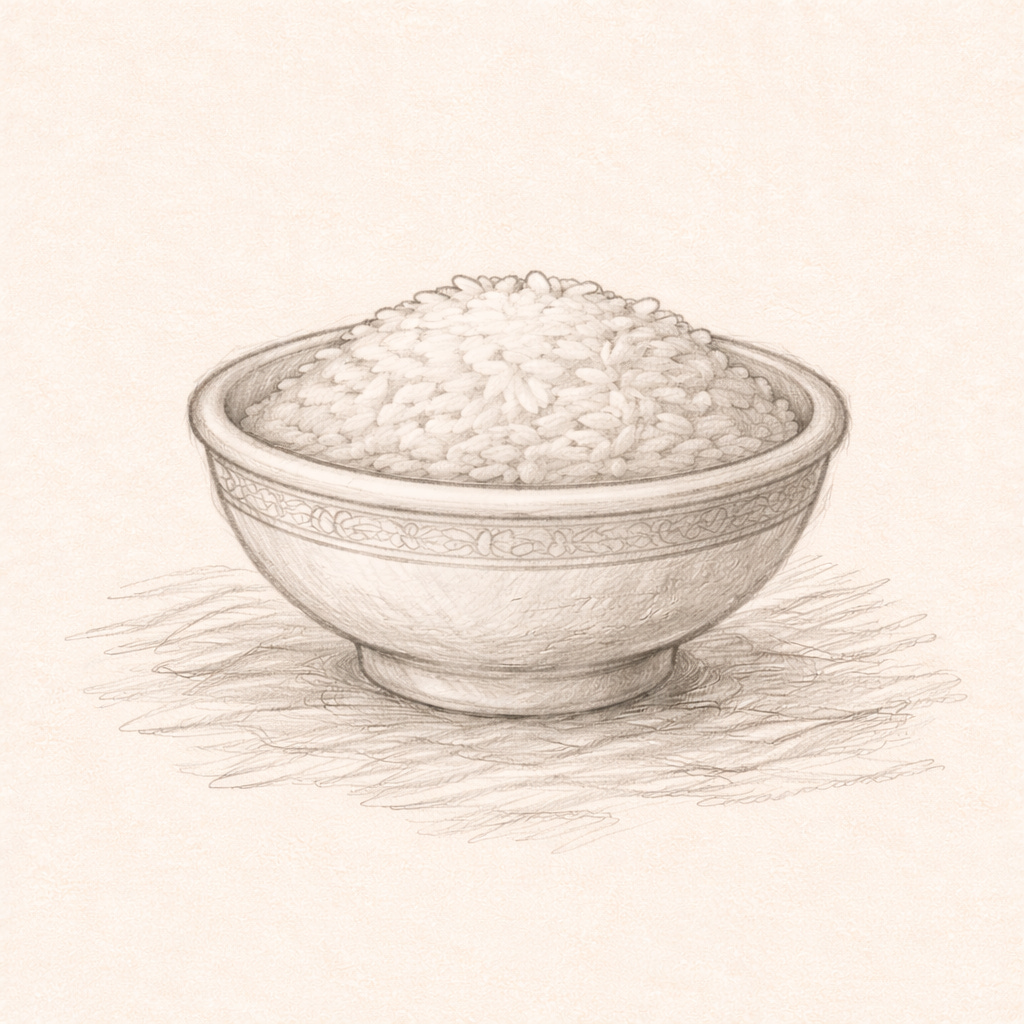
One way to see it is that when we offer some preparation to Kṛṣṇa, He always gives us back something better than what was offered. There is always a spiritual quality and special taste added to the food. However, Kṛṣṇa’s reciprocation depends on how much care and devotion we put into the offering, and, except in cases of special mercy, it will not alter the basic properties of the food. If we offer rice, it will not come back as rasagullās. If it is burned, it will come back burned. If it is without salt, it will come back without salt.
The basic principle of spiritual life is that we try to offer something nice to Kṛṣṇa, the best we can, and not demand things from Him. The way to establish a relationship is always to give, and not to demand. Kṛṣṇa, of course, knows that, and He waits until we are ready to relate to Him in good terms. Many see God as an order supplier, someone who should satisfy all their desires in exchange for some official worship. Kṛṣṇa can also reciprocate with them to a certain extent to reinforce their faith, but He will not accept to fulfill all their whims.
One example that can be given in this connection is the pastime of the demigods approaching Lord Viṣnu after being defeated by Vṛtrāsura. The demigods didn’t ask Lord Viṣnu for advice before killing Viśvarūpa, their spiritual master, and when Vṛtrāsura appeared as a result, they went to the Lord asking Him to appear as an incarnation to solve the problem they themselves created. The Lord still reciprocated, giving them knowledge of how to manufacture the thunderbolt weapon from the bones of Dadhīci, but He didn’t accept doing the dirty work for them.
Similarly, all sorts of problems appear in our society due to contamination introduced by us. Even an abusive leader can maintain a position only if supported by a group of sentimental followers. It could be a perfect society if everyone would perfectly perform all their duties, but because we fail in doing so, being lapse in following the instructions of Prabhupāda and other representatives of the Lord, problems appear.
There is a certain way to make sweet rice or any other nice preparation, which requires securing quality ingredients, good cooking utensils, etc., cooking it properly, giving it time to cool, and so on. If we do everything properly, we will offer nice, sweet rice to Kṛṣṇa, and we will get nice prasādam back. If, however, we offer some burned preparation made from adulterated milk, we will also get the same back.
The same principle applies to everything. Because the basic principle of our society is devotional service to Kṛṣṇa, there is always a special spiritual quality present, but the basic form will still be of what we offer. A house will not become bigger because we make it a temple, nor will it be miraculously restored by magic. All the black spots in the painting will still be there, just as the broken ceiling and the damaged doors. The spiritual quality will be there, but the basic physical form will not change. Similarly, when we create a community, a school, or anything else, the basic form will still be of what we put there. Kṛṣṇa may accept our offering, no matter how flawed it may be, but still, what we will receive back as a result will not be different in essence from what we offered.
Schools, for example, have always been an area neglected in our movement. Often, the worst people, who would not be useful for anything else, were put as teachers; the schools would not be properly funded or supervised. Managers would not give it the proper attention, seeing it more like a headache than anything else, and the parents would also not supervise it closely, thinking that they were doing enough by just paying the fees. The school would often be put out of view in some building in the back, and everyone would prefer to look the other way. Then, when problems would appear, everyone would be surprised.
Of course, the teachers or managers who were in charge and let things happen are responsible, but all others, who saw the mismanagement and the problems growing and failed to take proper action, also share part of the burden, and all of us, as a society, are partially responsible for it, directly or indirectly.
Seeing things from the perspective of offering something to Kṛṣṇa can be empowering, helping us to understand that we have a role to play in the development of a spiritual society, getting out of the position of mere spectators. We can’t solve everything, but there is always some positive role we can play if we are humble and introspective enough.
Even if we are not on the platform of organizing things well out of pure devotion to Kṛṣṇa, we can at least try to understand and perform our duties properly for our own sake and for the sake of our dependents. We can connect with other devotees to help organize things properly and offer something pleasing to Kṛṣṇa. When we do so, good results come back.
The whole Bhagavad-gītā is based on this premise. The position of Arjuna as a devotee of the Lord was never in question, but when he was faced with a difficult situation, his immediate reaction was to take the easy path, running from the problem. However, because he approached Kṛṣṇa to ask what to do, Kṛṣṇa had the opportunity to give him the knowledge that allowed him to achieve the best outcome.
Had Arjuna just run like he originally intended, the results would be very different, as explained by Kṛṣṇa in the second chapter of the Gītā. Similarly, when we face perplexing situations or when things appear to be out of our control, if instead of just neglecting the situation, we come to Kṛṣṇa or His representative to get instructions, we can get the knowledge of how to properly act. Applying this knowledge will then be our battle of Kurukṣetra, which will allow us to fulfill our duties and act properly, creating something nice that can be offered to Kṛṣṇa.
« Things I Wish Someone Had Taught Me When I Started Krishna Consciousness
You can also donate using Buy Me a Coffee, PayPal, Wise, Revolut, or bank transfers. There is a separate page with all the links. This helps me enormously to have time to write instead of doing other things to make a living. Thanks!