

Subscribe to receive new articles by e-mail. It’s free, but if you like, you can pledge a donation:
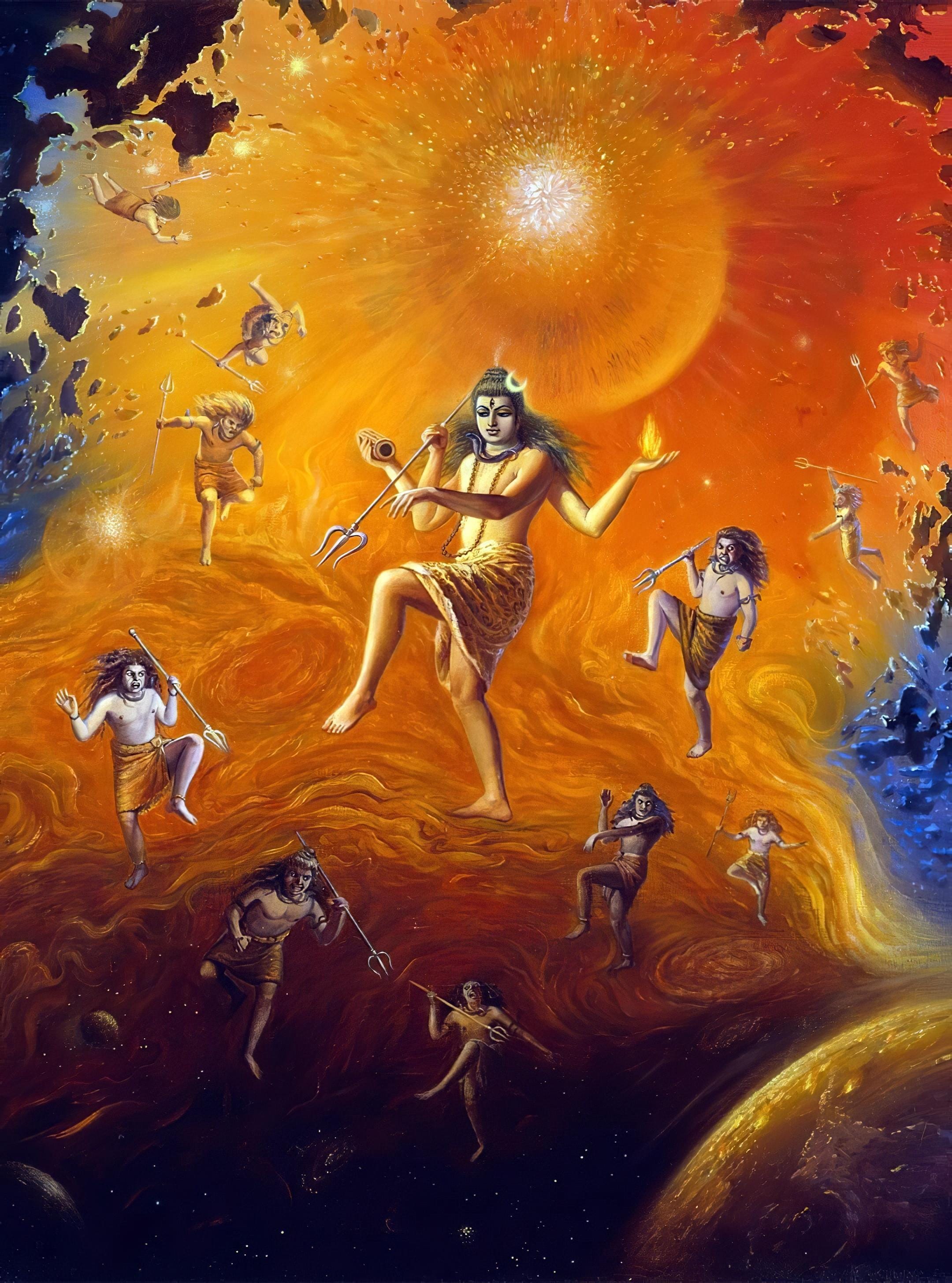
When the Śrīmad Bhāgavatam and other Vedic scriptures describe the destruction of the universe, we usually study the process of annihilation from the perspective of the universe in itself, with the cosmic manifestation being destroyed by fire and other cosmic forces, and returning to its constitutional parts, as mere energy, which is in turn absorbed back into the body of Mahā-Viṣnu. However, what happens to the souls who are involved in the cosmic creation? Who goes back to the spiritual world? Who stays for a new cycle of creation? What do they do during the time the universe is unmanifested, and how do they remember their previous activities and natures when the universe is created again? This is a rabbit role that goes a lot deeper than we may imagine at first.
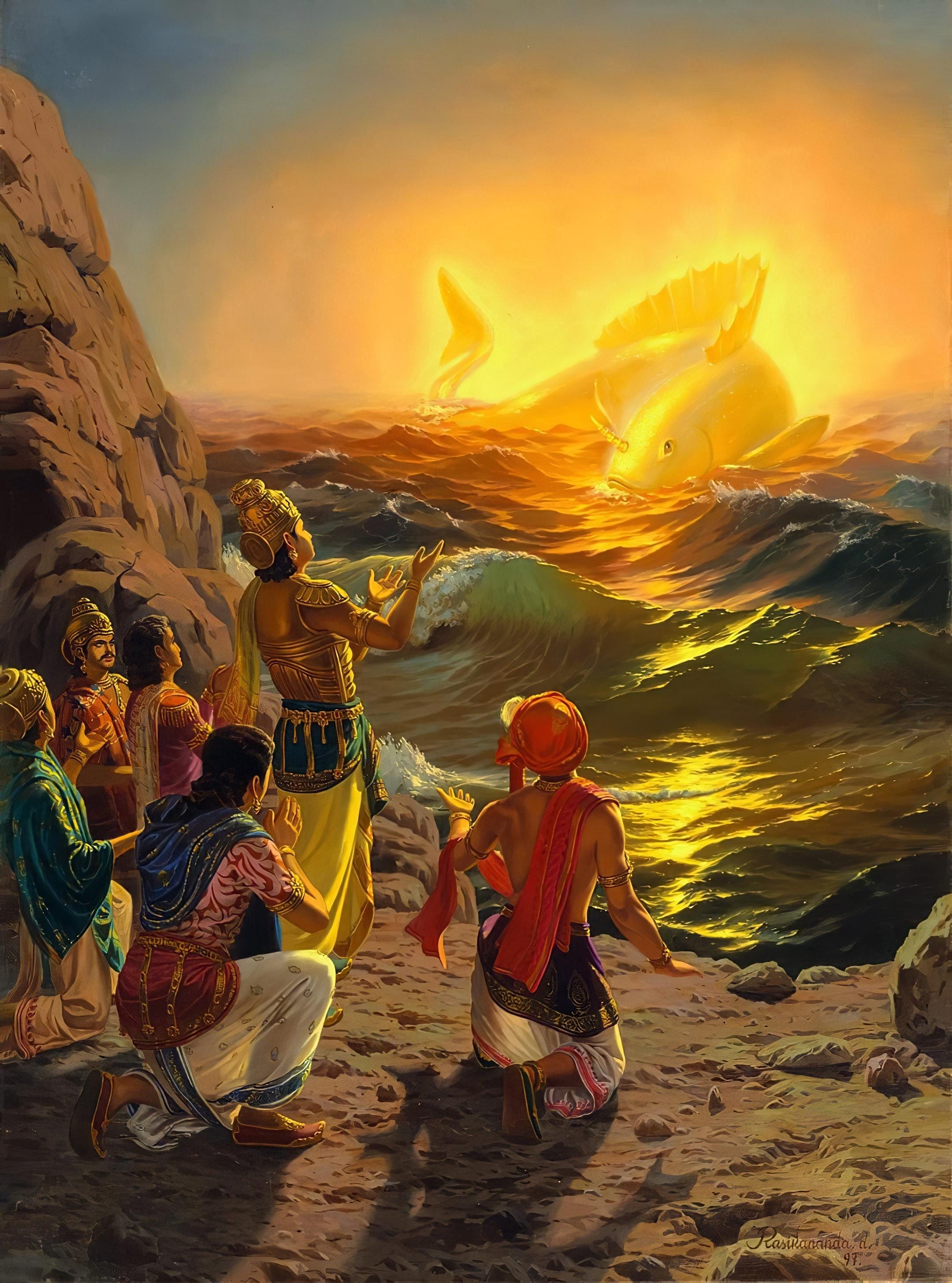
First, there are three types of universal destruction. The first is what happens at the end of a manvantara, when a Manu comes to the end of his reign and is replaced by the next. At this point, not only does a new Manu take charge, but all the demigods are replaced by a new team. There are always cosmic disturbances during this process (just as when a new president, followed by a new team of ministers, etc., takes charge after elections), but not necessarily a full universal devastation. At the end of the last cycle, during the transition of Cākṣuṣa Manu to the current one (Vaivasvata), there was a devastation, which led to the appearance of Matsya Avatāra, who saved Maharaja Satyavrata (chosen to be the next Manu) and a host of great sages. This event matches the dates for the Permian–Triassic Extinction, studied in geology. There are also similarities with the description of Noah’s Ark in the bible.
Ordinary living beings who are destroyed at the end of these cycles simply assume new bodies as soon as the respective species they are supposed to take birth again become available, just as usual. A soul doesn’t necessarily take birth immediately after leaving one’s previous body. Often, a soul has to wait for some time in the body of Mahā-Viṣnu until the right conditions for one’s next birth become available. This happens not only after a cosmic devastation, but ordinarily between one birth and the next.
What about the demigods? There are two paths for them: One is that demigods can be promoted to Maharloka after concluding their duties. From there, they can follow the same path followed by great yogīs and ascetics, being gradually promoted from Maharloka to Janaloka, and then to Tapoloka and Satyaloka (the planet of Brahma), and then, if successful, receiving the opportunity of going back to Godhead together with Brahmā. A second path is that they can come down to earth, taking a human birth in a rich or pious family and from there practice devotional service. Sometimes, in special cases, demigods may also go back to Godhead, in case they have achieved devotional perfection during their lifetimes.
The next type of devastation is what happens at the end of a day of Brahmā. We tend to think the universe is completely destroyed at the end of a day of Brahmā, but that’s not usually the case. In fact, just a relatively small part of the universe is destroyed.
Each material universe is composed of 14 planetary systems. There are the seven subterranean planetary systems inhabited by the asuras, then Bhū-Mandala, the intermediate planetary system, followed by Bhuvarloka (the realm of Yakṣas, Rākṣasas, and other types of spirits) and Svargaloka (the celestial plane). After these, we have the higher planetary systems of Maharloka, Janaloka, Tapoloka, and Satyaloka already mentioned, and then the seven coverings of the universe, which are also inhabited (as described in the Bṛhad-bhāgavatāmṛta)
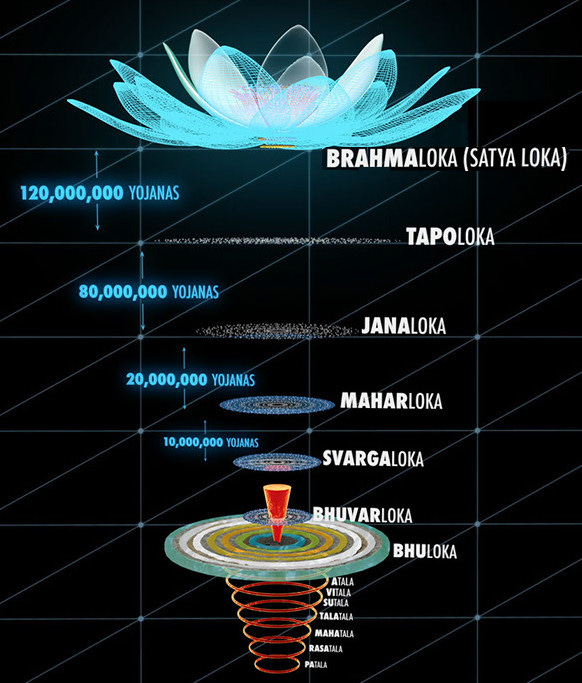
Each planetary system is exponentially larger than the previous, and the same tendency continues in the coverings, each ten times larger in diameter than the previous. There are different opinions on what exactly each of these planetary systems correspond in terms of the visible universe. My personal conclusion, reconciling different passages, is that what is described as Bhū-mandala corresponds roughly to the area of our solar system, Bhuvarloka and Svargaloka correspond to most of our Galaxy, up to the polestar, and the other planetary systems, as well as the coverings, correspond to all the rest we see in the sky.
It is described that at the end of the day of Brahmā, the seven lower planetary systems, together with Bhū-Mandala, Bhuvarloka, and Svargaloka, are destroyed, along with all the inhabitants. Maharloka is also partially affected. It is not directly destroyed, but becomes uninhabitable for the time being. Some of the inhabitants, the ones who have attained the necessary qualification, migrate to Tapoloka, while the others perish.
We can notice that what modern scientists believe in terms of the sun becoming a red giant and destroying most of the solar system, as well as the scale of time for that, roughly matches the description of the destruction at the end of the day of Brahmā.
The life expectancy in the lower planetary systems is always relatively short. Human beings live from 100 years (Kali-yuga) to 100,000 years (Satya-yuga), while inhabitants of Svargaloka live for 10,000 celestial years (3.6 million years), and demigods can live for up to a Manvantara (306.72 million years).
Life in Maharloka is capped to the extent of the day of Brahmā, so great sages and demigods who attain this level can live up to 4.32 billion years. However, if they are promoted to Janaloka and beyond, they become essentially immortal and can remain there for trillions of years, up to the end of the life of Brahmā. At this point, they can either go back to Godhead, following Brahmā, or attain the causal ocean, and from there come down to take birth again in another cycle of creation.
In this way, the planetary systems up to Svargaloka are destroyed, but all the great sages living from Tapoloka upwards survive during the night of Brahmā, just as described in the Bṛhad-bhāgavatāmṛta. Their planets are self-illuminated and don’t depend on the light of the sun, and therefore, practically speaking, not much changes during this period. They continue their spiritual practice during the night of Brahmā more or less as they do during his day.
When Brahmā finally wakes up, after 4.32 billion years, he recreates the lower planetary systems (up to Svargaloka), including all inhabitants, and life in these regions goes on again as usual.
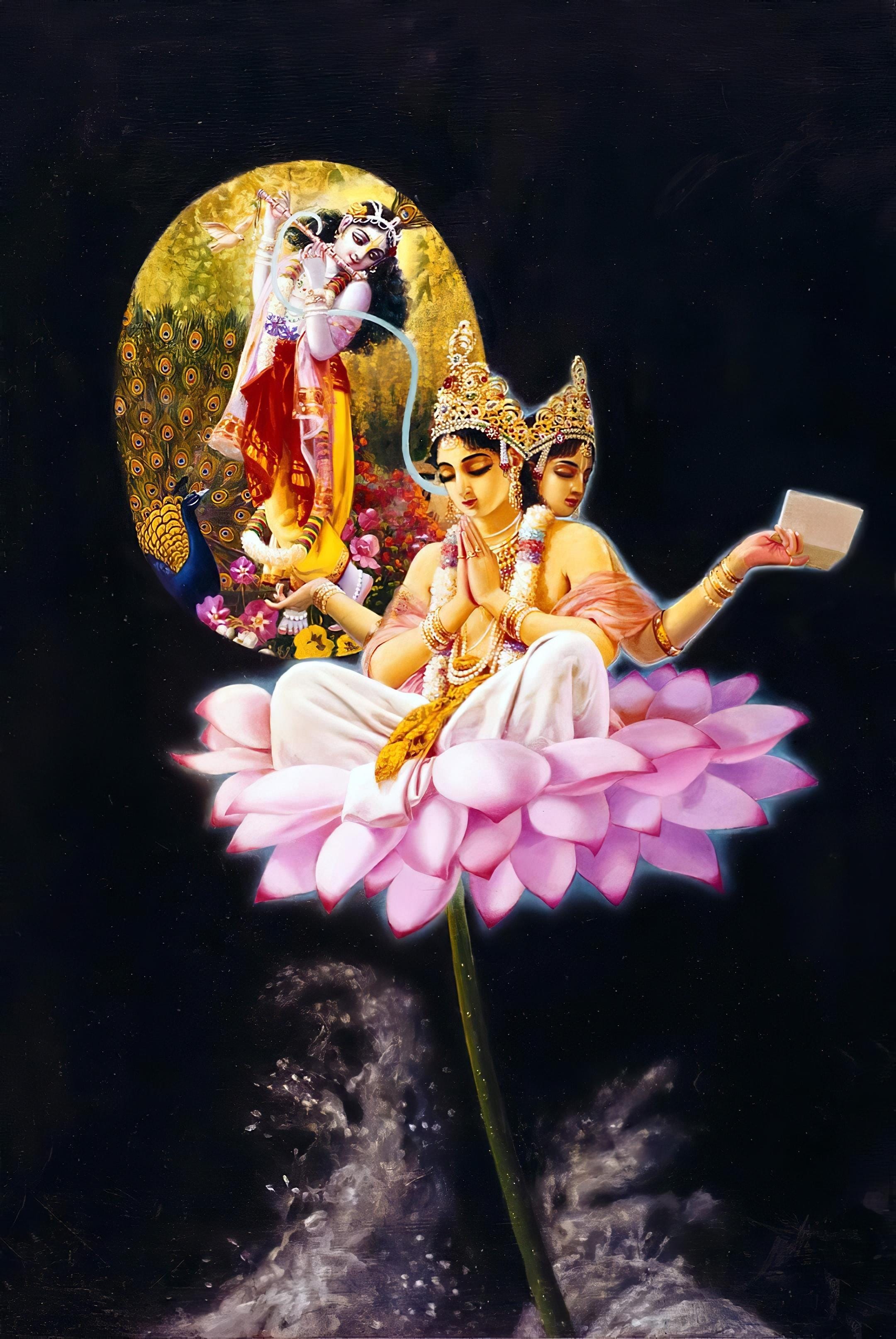
The current day of Brahmā is unusual, as there was a complete destruction of the universe at the end of the previous day. This happens only once during the lifetime of Brahma, at the end of the first half of his life. In this particular cycle, the universe is completely rebooted, and Brahma awakens in the dark and without remembering who he is at the beginning of the next day, just as described in the 2nd canto of Śrīmad Bhāgavatam.
You can also donate using Buy Me a Coffee, PayPal, Wise, Revolut, or bank transfers. There is a separate page with all the links. This helps me enormously to have time to write instead of doing other things to make a living. Thanks!