


You can receive new articles directly in your inbox. Subscription is free; donations are welcome.
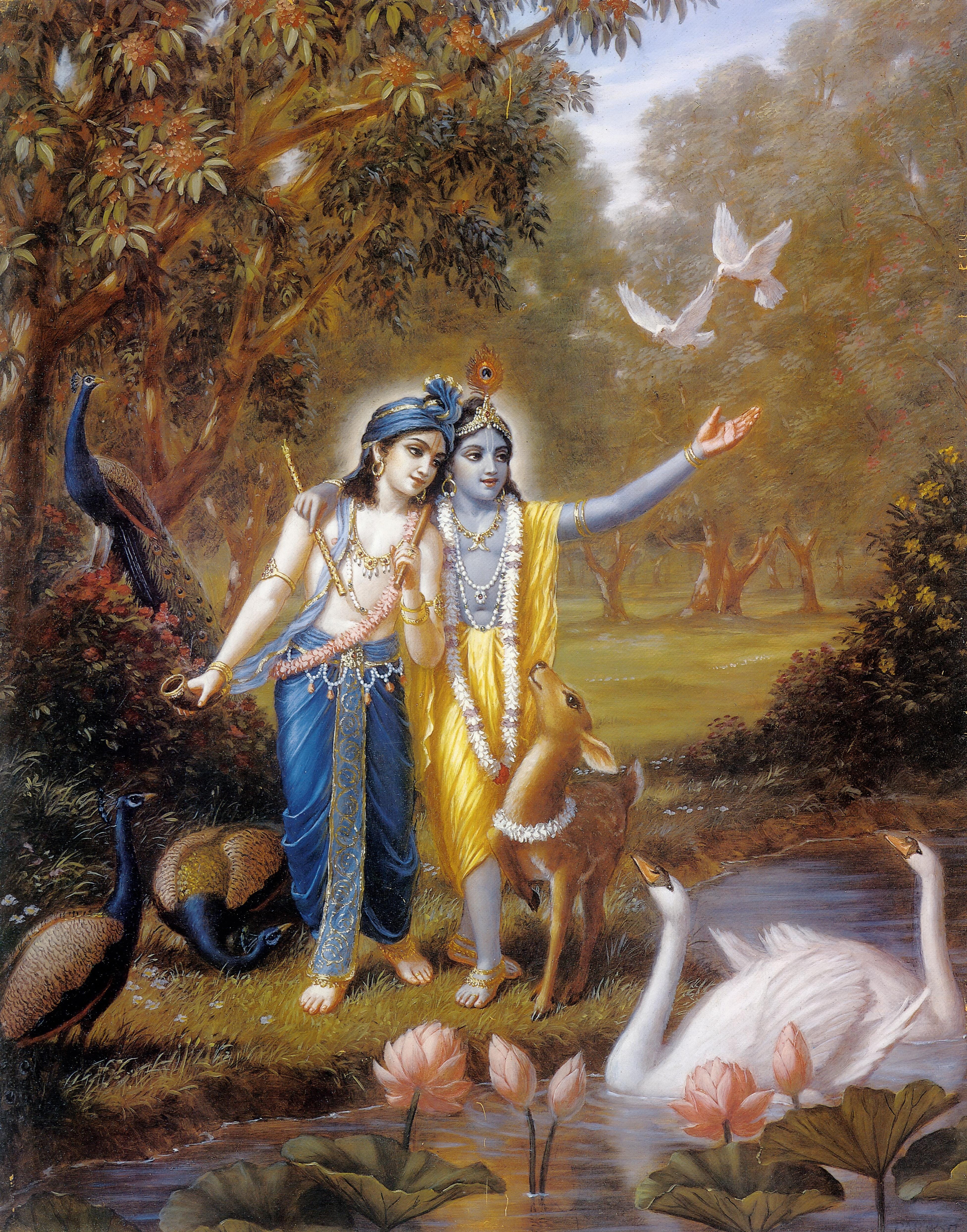
Kṛṣṇa means “the all-attractive.” For devotees, it makes perfect sense, since Kṛṣṇa is so beautiful. However, a materialist, or even a follower of a different philosophy, could protest: Not everyone is attracted to Kṛṣṇa. People are often attracted to money, women, cars, or deities that they consider different gods. Considering this point, how can we sustain that Kṛṣṇa is truly the all-attractive?
In the Bhagavad-gītā, Kṛṣṇa explains that the cosmic manifestation is composed of His separated material energies. He is the source, the foundation, and the essence of everything.
A materialist may say that he is not attracted to Kṛṣṇa, but the things he is attracted to, including cars, houses, money, or women, are nothing but the energy of Kṛṣṇa. Therefore, he is also attracted to Kṛṣṇa; it is just that due to a lack of knowledge, he is attracted indirectly. Let’s take a beautiful woman, the supreme object of attraction for a materialistic man, for example. This woman is the combination of a body composed of the five material elements and an individual soul. Both are potencies of Kṛṣṇa. Her beauty and other assets are also nothing but small fragments of Kṛṣṇa’s opulence. The materialist is thus deeply attracted to Kṛṣṇa; it is just that this attraction manifests in an unhealthy way, as envy and a desire to enjoy Kṛṣṇa’s potencies separated from Kṛṣṇa as a person. When this tendency is purified, the soul again comes to its normal, healthy state, manifesting an attitude of love and service to Him.
Not only does everything that exists come from His potencies and rest upon Him, but Kṛṣṇa is the active principle behind everything. He is the potency by which everything functions and attracts us. He is the force behind the radiance of the sun, extraordinary talents and abilities, and even the sound from which the cosmos itself manifests. Whatever attractive things we see, we should know they are just fragments of Kṛṣṇa’s attractiveness. Due to illusion, we may think we are attracted to certain material objects, but in reality the attractive potency in the object comes from Kṛṣṇa. The problem is that material illusion causes us to seek that potency separately from Him. When this material conditioning is cleared, we realize that what we had been seeking all along was ultimately Kṛṣṇa.
For example, Kṛṣṇa mentions that He is the taste of water, raso ’ham apsu. There is a certain sequence in the creation of the material elements. Ether introduces sound, air touch, fire form, and water taste. This original taste of pure water, the very essence of water, is a manifestation of Kṛṣṇa. Water can then be mixed with salt and other substances, just like our original Kṛṣṇa consciousness can be covered by lust, anger, and so on, but when this happens, it stops being attractive.
Although water is available for free almost everywhere, people still buy mineral water, because they prefer to drink pure water. Every time we drink, pure water, we can remember Kṛṣṇa, and every time we are forced to drink stale or foul-tasting water, we can remember of our contaminated condition and desire to return to our original consciousness of devotion to Kṛṣṇa.
Kṛṣṇa also declares that He is the light of the sun and the moon, prabhāsmi śaśi-sūryayoḥ. When physicists study the sun, they conclude that the sun emits light through a process of nuclear fusion. According to the Vedas, however, this is just the apparent process. Ultimately, all light is an emanation of Kṛṣṇa. It starts as the impersonal brahmajyoti, Kṛṣṇa’s spiritual effulgence that permeates the whole creation, penetrating even inside the material universes. If this transcendental light is everywhere, why is it that we see the sky dark at night? The point is that this is transcendental light, and we have material eyes. What the sun does, is to reflect this spiritual light in a form that we can see. Superficially, it appears that the sun is generating light by a process of nuclear fusion, but the ultimate cause is this process of transcendental reflection.
In this way, every time we see the light of the sun or the moon, or in fact any form of light, we can remember that this light is just an insignificant fraction of Kṛṣṇa’s effulgence. Behind this effulgence is Kṛṣṇa Himself, in His personal form. If the light of the sun is so dazzling, and the light of the moon so cooling, we can only imagine how attractive Kṛṣṇa is in His personal form.
Kṛṣṇa also mentions that He is ability in man, pauruṣaṁ nṛṣu. There are many persons who can achieve extraordinary things, but we should understand that this ability also comes from Kṛṣṇa. The word used in this case is “vibhūti”. It indicates a manifestation of Kṛṣṇa’s potency. Kṛṣṇa later gives a series of examples. Even animals such as the shark and the lion are powerful only because they show a small fragment of Kṛṣṇa’s power.
In material consciousness, when we see someone showing some extraordinary talent, we either become envious, or glorify the person as the responsible for what was accomplished. In Kṛṣṇa consciousness, however, there is no need for envying anyone. We can respect and honor the person, but at the same time appreciate that the source of his or her talent is Kṛṣṇa. This soul is simply being empowered to achieve something due to His grace. Kṛṣṇa confirms this point later in the Gītā, by stating that “Know that all opulent, beautiful and glorious creations spring from but a spark of My splendor.”
One may desire, or even work hard to achieve something, but unless Kṛṣṇa agrees to empower this soul with a fragment of His power, one cannot accomplish anything. Many work hard, but that does not mean they all become millionaires.
The point is that together with a certain talent, Kṛṣṇa gives us free will. We can use it under the false ego, claiming the merits and results of what we do, or we can use it as an instrument to serve Kṛṣṇa and benefit others.
An interesting example of the contrast between these two mentalities is described in the Ramayana. Rāvana is the materialist, trying to capture Sītā, the eternal consort of Lord Rāma, while Hanumān is the devotee trying to reunite her with Him. Ability is the potency of Kṛṣṇa, and should be brought back to Him, being used in devotional service. Everyone has a certain talent that was given by Kṛṣṇa. Using this talent for Kṛṣṇa brings us to the perfection of life.
Go deeper:

This is a publication for thoughtful readers who want to go deeper into Kṛṣṇa consciousness. I publish daily, trying to offer high-quality spiritual content, and all posts are available to free subscribers. If you wish, you can also choose a paid subscription to support this work.
You can also receive updates on WhatsApp or Telegram.
If you would like to contribute further, you can find the donation links here.