

« Making Sense of the Vedic Universe, a Higher-Dimensional Reality
Bhārata-varṣa means India?
Another point is that “Bhārata-varṣa” is also often translated as “India” in some of the translations and purports of Prabhupāda. How can these three interpretations be reconciled? How can Bhārata-varṣa be sometimes described as one of the nine divisions of Jambūdvīpa, sometimes as our planet, and sometimes as India?
In his research work, Sadāpūta Prabhu concludes that the description of Bhū-mandala in the Fifth Canto describes, simultaneously, four models. We have thus the main explanation of Bhū-mandala as a description of the higher reality of the demigods, and three other secondary models described simultaneously. This is possible due to the nature of the Sanskrit language, where the same words can have more than one meaning, and thus an expert poet is capable of composing sentences that have multiple simultaneous meanings.
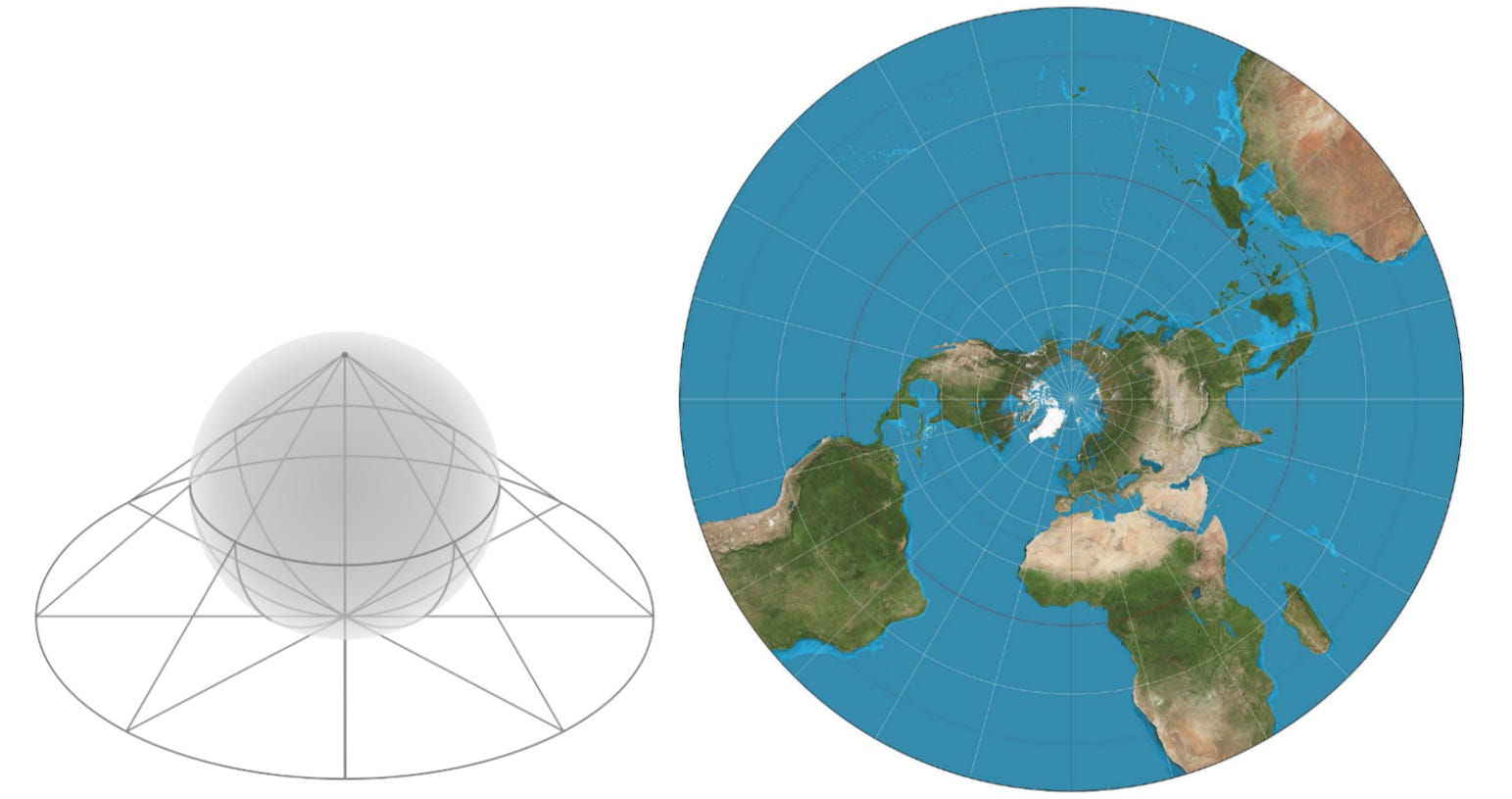
According to him, the first of these secondary explanations is Bhū-mandala as a stereographic projection (or a planisphere) of our planet, taking the north pole as the center. This is commonly used to represent the features of a sphere on a map intended for astronomical or navigational purposes. A planisphere is very convenient in such situations because it allows one to calculate the position of stars and planets in the sky, as well as land and maritime routes, without entering into all the complexities of calculating the curvature of the earth. That’s basically what we do every time we use a map.
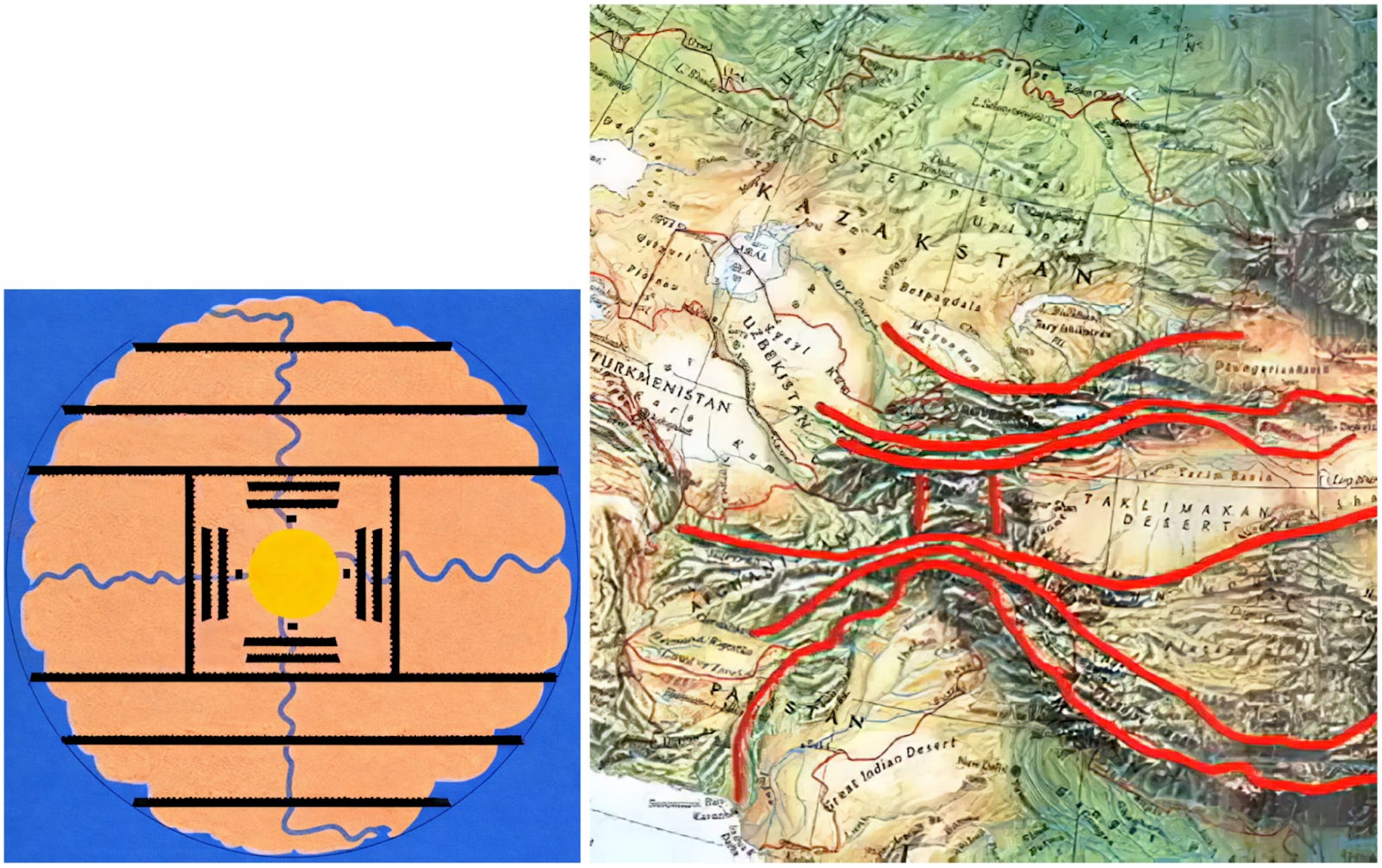
The second explanation is of Jambūdvīpa, the central part of Bhū-mandala, as a topographical map of south-central Asia, offering a basic description of the geography of our planet, with a focus on the area of the Himalayas, India, and the surrounding regions. This model describes the different rivers that flowed there in antiquity. In this secondary meaning, Bhārata-varṣa can be understood literally as the Indian subcontinent, bordered by the Himalayas.
The third explanation is of it as a map of the solar system. In this explanation, the borders of the different islands of Bhū-mandala describe the orbits of the planets of our solar system from the geocentric perspective adopted by the Purāṇas, which they roughly match.
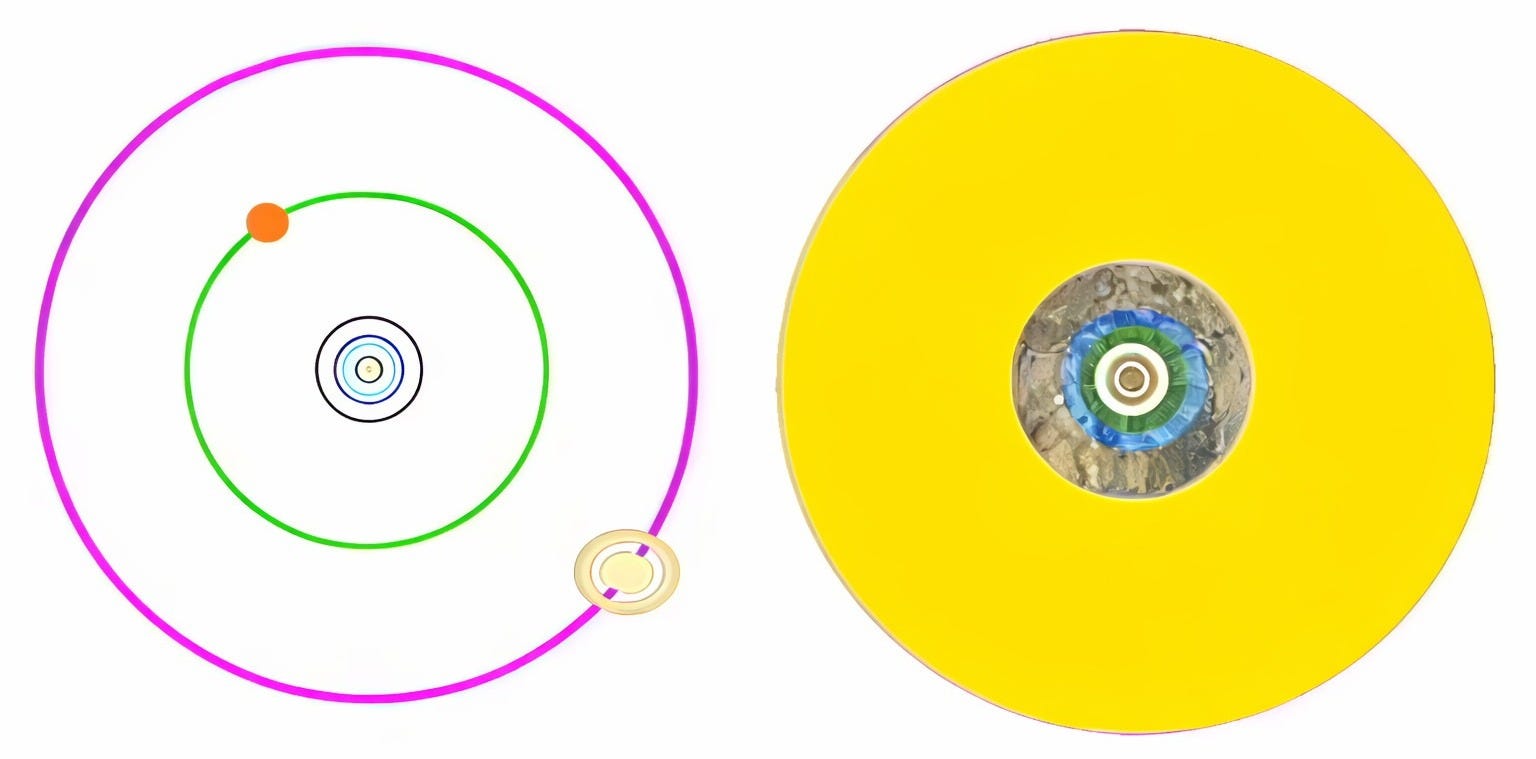
In this way, the description of Bhū-mandala in the Śrīmad-Bhāgavatam also includes geographical and cosmological knowledge, describing several models simultaneously, but the higher meaning is as a map of the higher-dimensional intermediate planetary system, as experienced by the demigods. In different passages, Prabhupāda mentions different aspects, and everything fits together when we understand the full model.
Read the whole book:
« Making Sense of the Vedic Universe, a Higher-Dimensional Reality
This is a publication for thoughtful readers who want to go deeper into Kṛṣṇa consciousness. I publish daily, trying to offer high-quality spiritual content, and all posts are available to free subscribers. If you wish, you can also choose a paid subscription to support this work.
You can also receive the updates on WhatsApp or Telegram.
If you would like to contribute further, you can find the donation links here.