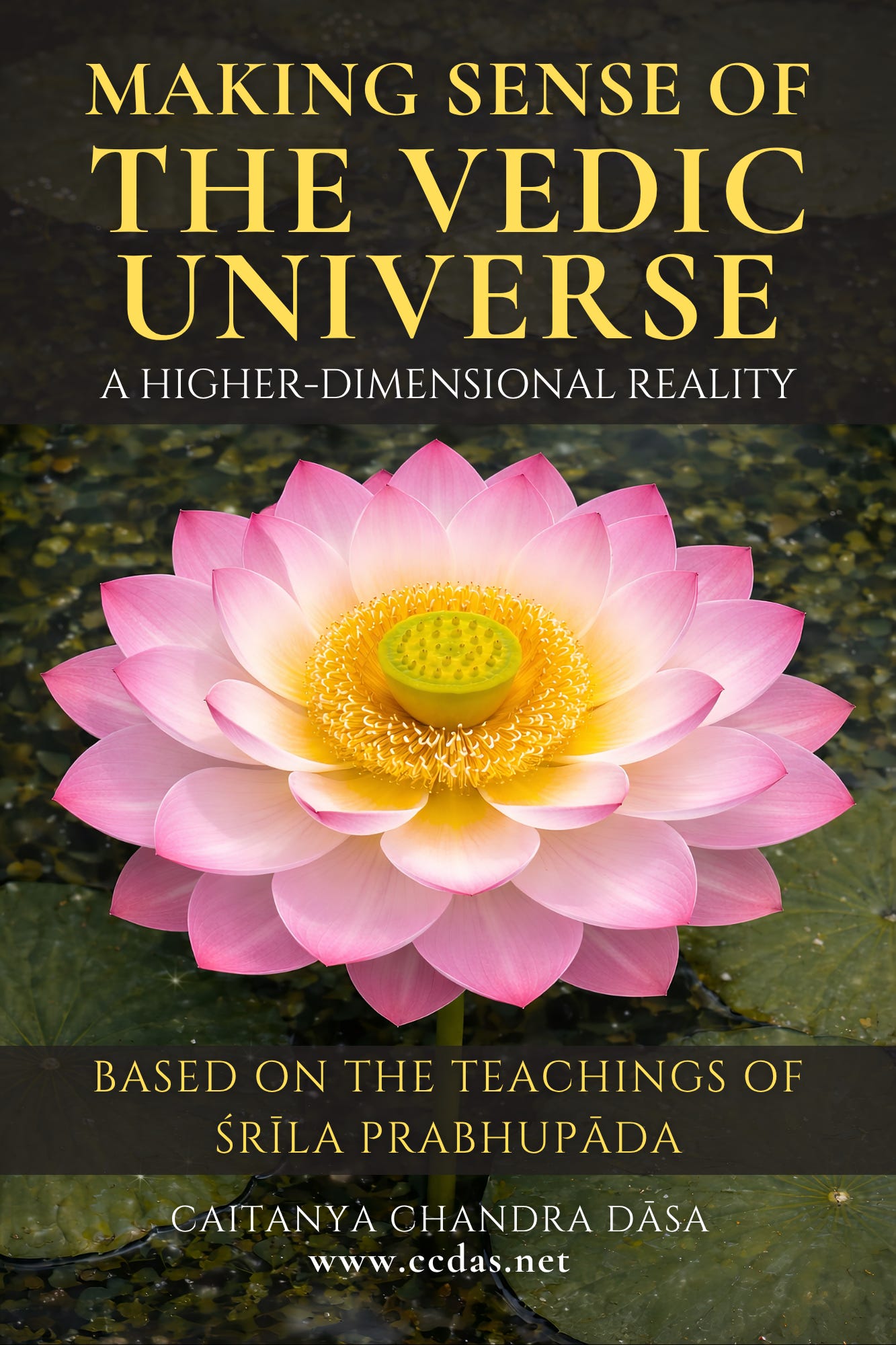
The spiritual value of the Vedas is undeniable. Hundreds of millions of people seek guidance from books such as the Bhagavad-gītā, Mahābhārata, Rāmāyaṇa, and the Purāṇas, receiving from them practical wisdom about the soul, our relationship with God, the purpose of life, and the path of self-realization. No other literature offers such a deep and systematic exploration of these themes.
At the same time, however, the Vedic cosmological model can be bewildering. For many modern readers, the descriptions of Bhū-maṇḍala, Mount Sumeru, the higher and lower planetary systems, the movements of the sun, and so on, appear at first glance strange, inaccessible, or incompatible with the picture of the universe offered by contemporary science. In other words, the same scriptures that describe the deepest spiritual knowledge also describe a universe that may seem incoherent.
Nowhere is this contrast more evident than in the Śrīmad-Bhāgavatam, a book that simultaneously offers the most in-depth exposition of spiritual knowledge in the Vedic scriptures and the most difficult elaborations on Vedic cosmology, especially in the Fifth Canto. As a result, these cosmological sections are often neglected, reduced to symbolism, or treated as remnants of an ancient worldview with little relevance in the modern world. Others collapse this knowledge into conspiracy theories, forcing the descriptions into crude literalism and turning profound cosmological teachings into claims about a flat earth, hidden continents, and similar misunderstandings.
This book begins from a different perspective. It is not an apologetic work written to defend the Vedic model against modern scientific conclusions through forced harmonizations, nor does it start from the assumption that the Bhāgavatam’s cosmology is a problem requiring rescue. On the contrary, it begins from the understanding that the Vedic cosmological model is coherent and meaningful, and from there tries to present the richness of this knowledge. It does not ignore modern findings or dismiss them as hoaxes. Rather, it considers recent discoveries carefully, but does so from a particular standpoint: not by accepting science as the final tribunal before which the scriptures must justify themselves, but by asking whether recent discoveries may actually help us better appreciate the Vedic description of reality.
In most cases, modern discoveries do not weaken the Vedic model, but instead offer unexpected support for it, checking our tendency to flatten and misunderstand the scriptural description of the universe. The Vedic model then shines in its own light, helping us understand that reality is far more complex, layered, and counterintuitive than a narrow materialistic framework allows. It offers the higher philosophical system that saves us from the mechanistic conclusion of a universe created by chance and a life devoid of purpose.
⤵️ Download the ebook
📚 Do you prefer a printed copy?
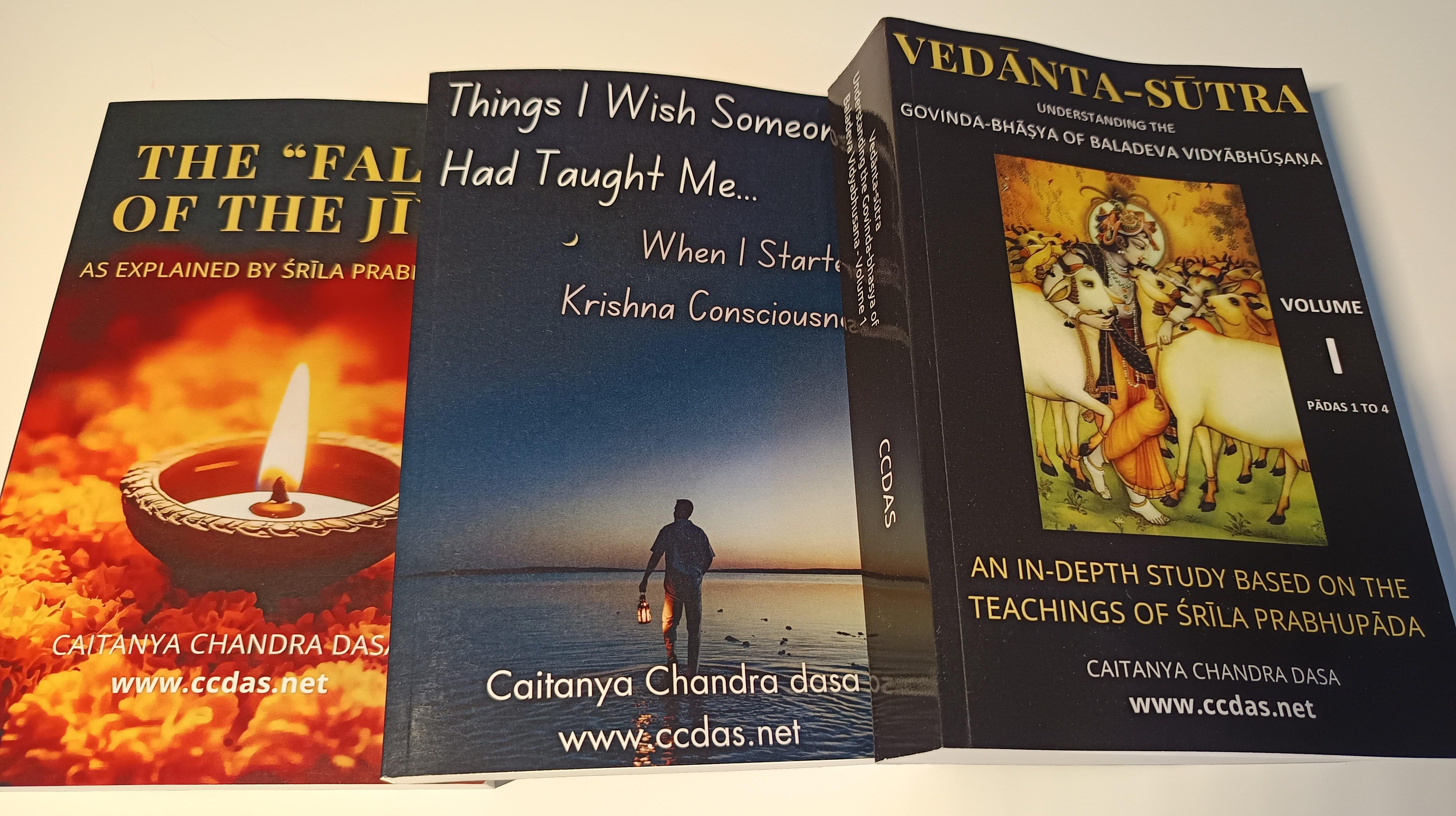
My books are available in printed form on Amazon. They are available in most of the world. Here are the direct links to the Amazon stores for my books:
US , UK , DE , FR , ES , IT , NL , JP , CA , AU
➡️ Read the book online:
+ Preface: Rethinking the Vedic Universe
+ Introduction: Different perceptions of reality
+ Chapter 1: The Vedic Universe
+ Chapter 2: Studying the structure of Jambūdvīpa
Where exactly does our planet fit into the description of Jambūdvīpa?
Does the description of Bhū-mandala indicate that the earth is flat?
+ Chapter 3: More details on the varṣas of Jambūdvīpa
+ Chapter 4: Bhū-mandala, the intermediate system
The inhabitants of Kuśadvīpa, who worship the Lord through fire
The mysterious commentary by Śrīla Viśvanātha Cakravartī Ṭhākura
Time dilation and other mysterious features of the Vedic universe
+ Chapter 5: The movements of the sun
+ Chapter 6: The orbits of the planets and stars
+ Chapter 7: Bila-svarga, the subterranean heavens
+ Chapter 8: The Hellish Planets
⤵️ Download the ebook:
My books are available for free on most platforms, and you can contribute with donations according to your means.
Google Play Books: If this platform is available in your country, you should see the “Books” tab at the bottom of the screen when you open Google Play on your phone or tablet. Just search for the names of the books, or open the link for the series.
This is very practical for reading on a phone or tablet because it is formatted to fit the screen perfectly, unlike PDFs, which can be very uncomfortable to read on a small screen.
My books are also available on Amazon Kindle, but Amazon charges a fee.
You can also just download the PDF file directly here and leave a donation of any amount that is suitable for you.
Donate on PayPal | Stripe | Wise | Revolut | Other ways (UPI, PIX, etc.)

There are three options of files:
a) The regular version, with margins for printing.
b) A version without borders (more convenient for on-screen viewing).
c) An EPUB file compatible with most e-readers.
Feel free to download what is convenient for you.
📖 Do you prefer a printed book?
My books are available in printed form on Amazon. They are available in most of the world. They print and sell the books and give me a few euros for each copy.
Here are the direct links to the Amazon stores for my books:
US , UK , DE , FR , ES , IT , NL , JP , CA , AU
In India, they are available through Pothi. They also send to a few other countries. Here is the link to buy.