


You can receive new articles directly in your inbox. Subscription is free; donations are welcome.
According to the Vedas, our universe is divided into 14 planetary systems. Our planet is part of Bhū-mandala, the 7th planetary system from top to bottom. We can find many descriptions about Svargaloka, the 5th planetary system, where the demigods live, and also some about the upper planetary systems inhabited by great sages, up to Satyaloka, the highest planetary system, the abode of Brahmā. However, much less is known about the lower planetary systems, where the asuras live.
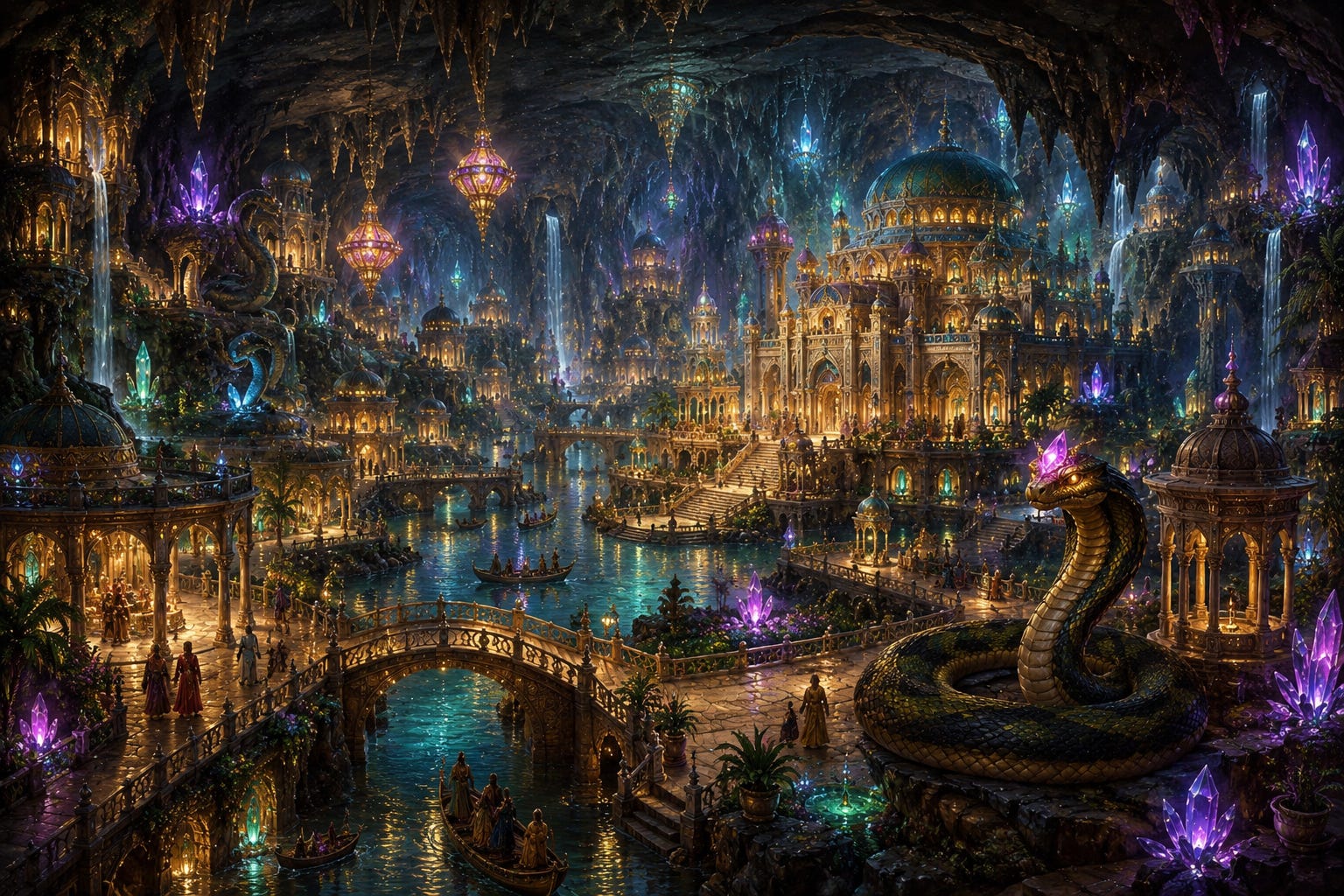
We find a few short descriptions of them in the 5th canto of the Śrīmad-Bhāgavatam, but just a few of the most prominent features are mentioned in the text, since the main goal of the Śrīmad-Bhāgavatam is to speak about Kṛṣṇa and His pure devotees, and not about the asuras. Still, here are the details I can share from the book on Vedic Cosmology, and also a few illustrations made based on the descriptions from the Śrīmad-Bhāgavatam.
The first point is that the inhabitants of all these planetary systems live underground, without access to the light of the sun. Because they can’t see the sun, they don’t notice the passage of the days and nights. They live in a continuous night, both literally and figuratively, not only living under artificial lights but also completely blind to self-realization. They are free to enjoy life until their pious merits are completely exhausted. After that, they usually go to the lower species of life and have to go through the evolutionary cycle. After millions of births, they eventually take birth as human beings. In this way, the final result of their material enjoyment and aversion to God is just birth and death.
A personality very connected with the subterranean heavens is Maya Dānava, the great architect of the demons. He builds many opulent cities in the lower planetary systems. All these cities contain gardens, parks, roads, and so on, as well as different types of birds and other animals. Demons travel from one city to another and stay in specially constructed hotels and guest houses. Apart from demons, many nāgas (celestial serpents) live in these cities, and the mystical gems on their heads emit light that illuminates them, replacing the light of the sun.
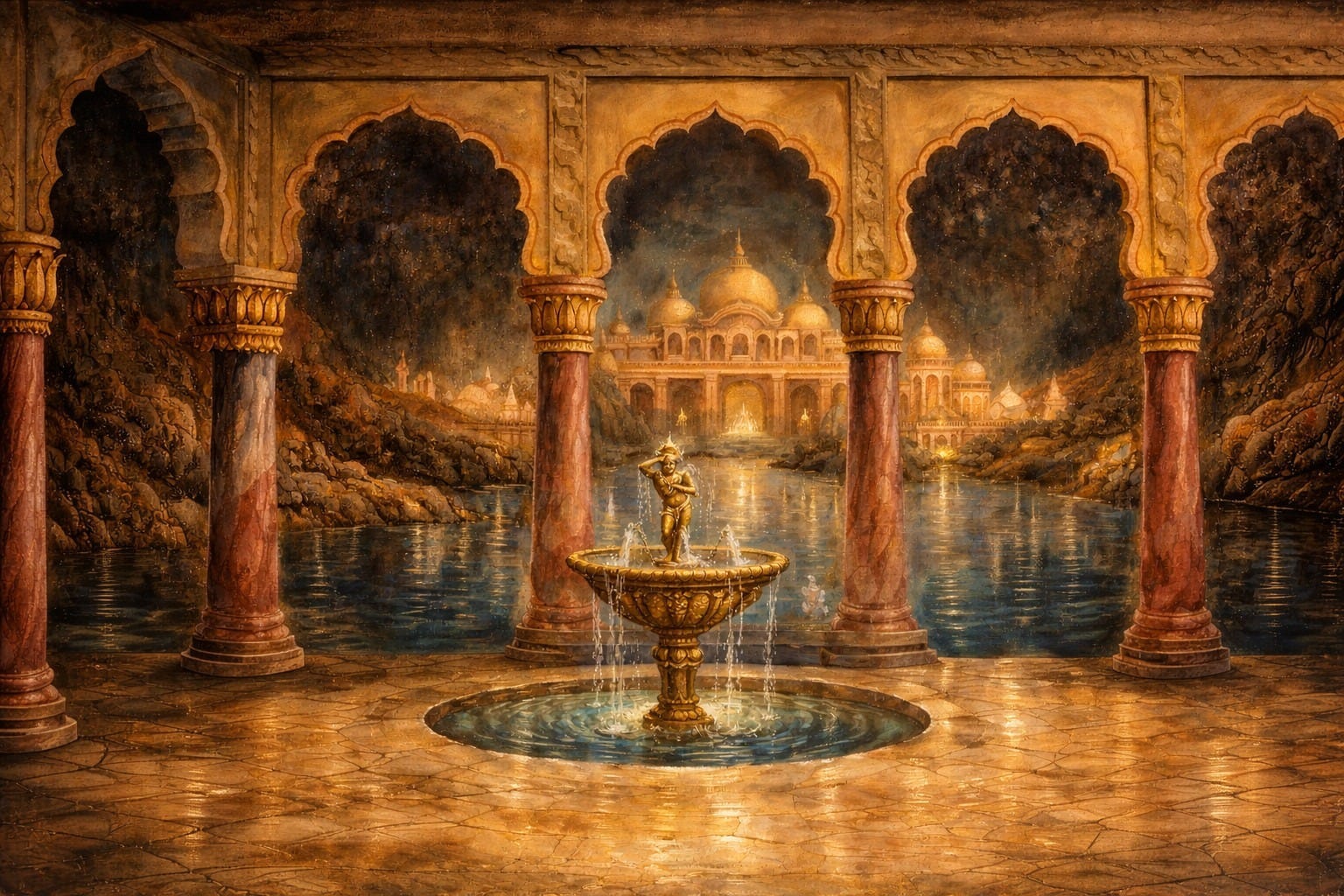
Their cities are described as more opulent than even the cities of the demigods. Since there is no sunshine in those subterranean planets, time is not divided into days and nights, and consequently, fear produced by time does not exist.
Just as our planet is connected to the higher abodes through subtle passages in the Himalayas, we are connected to these lower abodes through caves and subterranean passages. There are many stories in the folklore of different cultures of men going through these passages and finding very opulent places with beautiful women, etc. Based on these old folk stories, many believe these subterranean heavens exist under the surface of our planet, but that’s not exactly true. These planetary systems are composed of many planets that exist below the plane of Bhū-mandala, and not literally inside the earth. They are simply connected to our planet through these subtle subterranean passages, just as our planet is connected with the celestial planets through subtle passages in the Himalayas.
Being these lower planetary systems composed of many planets, they must surely contain all sorts of varied manifestations. However, the Śrīmad-Bhāgavatam describes only a few prominent details. As in other passages, the main focus is not to give an academic presentation, but to elevate our consciousness, helping us to understand the shortcomings of this materialistic lifestyle.
Atala, the Kingdom of Bala
Maya Dānava has a very talented son called Bala, who creates the conditions for the enjoyment of the demons living in Atala, the first of the seven lower planetary systems.
Material enjoyment is based on two fundamental principles: control over matter and other people, and sexual life. To facilitate the first, Bala created ninety-six types of mystic illusory arts that are used by the inhabitants of Atala. Prabhupāda adds that these mystical powers are also used by yogīs and svāmīs to cheat their followers even on our planet, by producing gold and performing other magical feats.
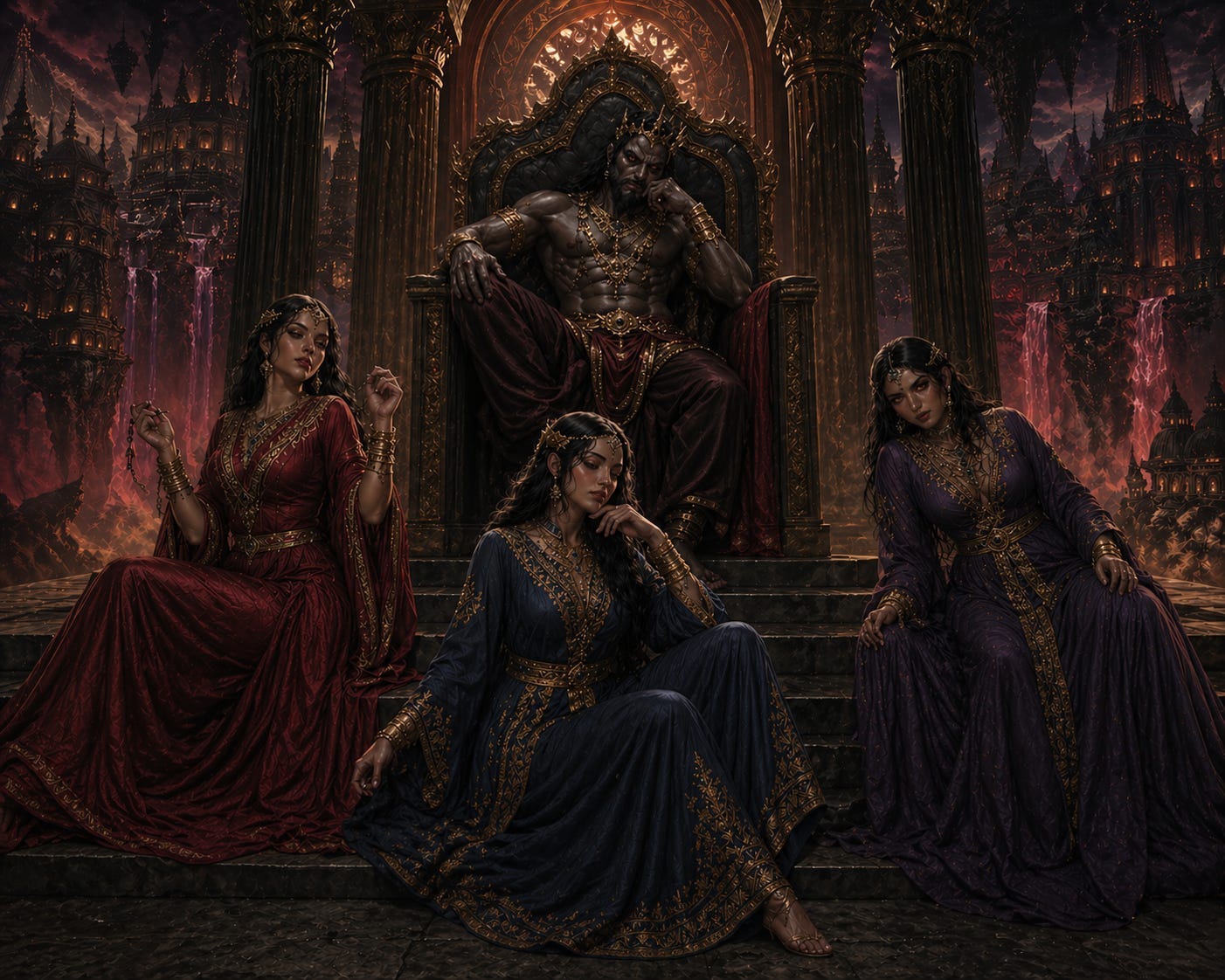
Next, to facilitate their sexual enjoyment, he created three types of women who are easily accessible. Sexual enjoyment is the greatest allurement of material existence. The thrill of getting new partners one after the other keeps us completely absorbed in material existence, life after life. Another problem with sexual life, when practiced without a higher purpose, is that it is exploitative. The idea is to obtain something, to get enjoyment and other desirable things from the partner, and not to serve. The idea is to take instead of giving. To regulate it and control its negative aspects, the scriptures prescribe fidelity, chastity, modesty, and other qualities and duties. The basic idea is that one should get a single partner for life and dedicate oneself to this relationship, instead of jumping here and there. Inside this framework, we then try to develop spiritual principles, such as cooperating in spiritual practice, bringing Kṛṣṇa to the center, etc.
Responsible and religious men and chaste women are the basic foundation of this progressive lifestyle; therefore, this is something demons want to demolish to establish their hedonistic lifestyle. We can see this at play in the creation of Bala. He created three types of seductive and manipulative women who keep men under their control, away from the goal of life. Using these women, he makes sure that the men in his dominions remain under illusion, far from the path of self-realization. The men think they are enjoying themselves, but in reality, they are just being used, their lusty desires turned against them, transformed into instruments for control.
Vitala, the Land of Unlimited Gold
Lord Śiva appears to be simultaneously present in several places in creation, associating with different sets of associates and performing different activities. He lives in Ilāvṛta-varṣa, where he meditates on the Supreme Lord and has philosophical discussions with great devotees such as Nārada Muni and the four Kumāras. In that celestial abode, Bhavānī serves him with her billions of lady associates.
Lord Śiva simultaneously lives in Vitala, where he gives association to ghosts and other lower entities, thus creating a path for their deliverance. In this manifestation, Lord Śiva performs his duty of engaging in sex life with his consort to increase the population of living entities. This produces a river that is used by the inhabitants of this planetary system to produce huge quantities of a type of gold.
Therefore, the two characteristics of Vitala are the association of Lord Śiva as Bhūtanātha, the Lord of the spirits, and the presence of great material opulence, fruit of the almost unlimited quantity of gold available there.
Sutala, the Abode of Bali Mahārāja
Ultimately, the Lord creates the material universes to provide an opportunity for the conditioned souls to regain their original nature of service to Him. To fulfill this purpose, He sends His pure devotees to take birth here and spread the culture of love of Godhead.
Pure devotees are free to take birth anywhere, and some of them, such as Prahlāda Maharaja and Bali Mahārāja, are sent on special missions to give association to the demons living in the lower planetary systems.
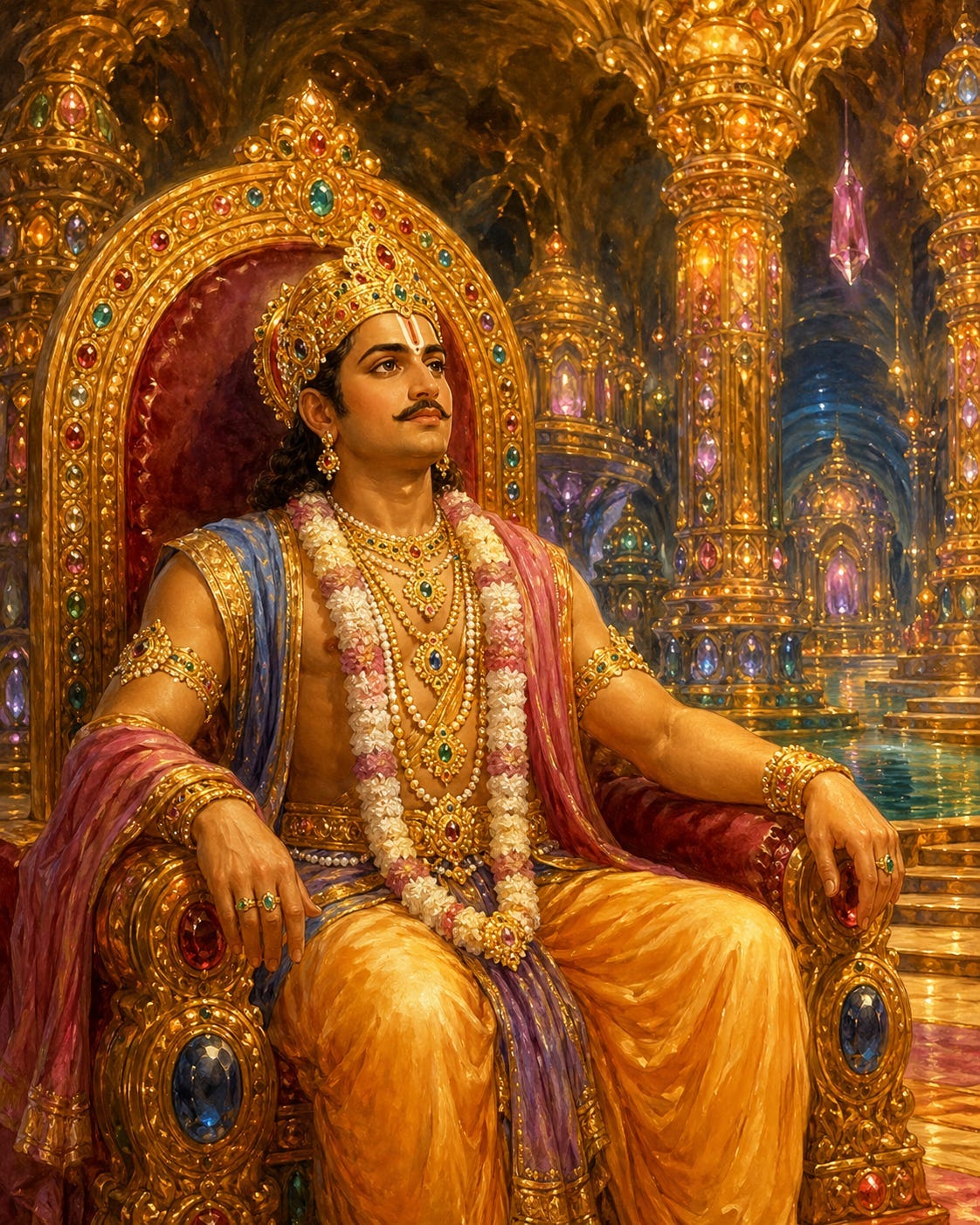
Prahlāda Maharaja became the king of Sutala after Lord Nṛsiṁhadeva killed Hiraṇyakaśipu. Later, the throne was passed to Virocana and then to Bali, who eventually became the king of the three worlds after defeating the demigods. After donating the three planetary systems to Vāmanadeva, Bali Maharaja was reinstalled as the king of Sutala, where he continues to worship the Lord while living in great material opulence. Since he desired to control the celestial planetary system, he was blessed by the Lord to become the next Indra (in the 8th manvantara), reigning over the celestial sphere without opposition for an entire manvantara, before going back to Godhead. Meanwhile, the Lord stays continuously with him, serving him as his doorman.
Talātala, the abode of Maya Dānava
Apart from being the architect of the lower planetary systems, Maya Dānava rules the planetary system of Talātala. He is not just an architect; he is a powerful sorcerer, with many followers, called māyāvīs. He combines, thus, technical and mystical knowledge.
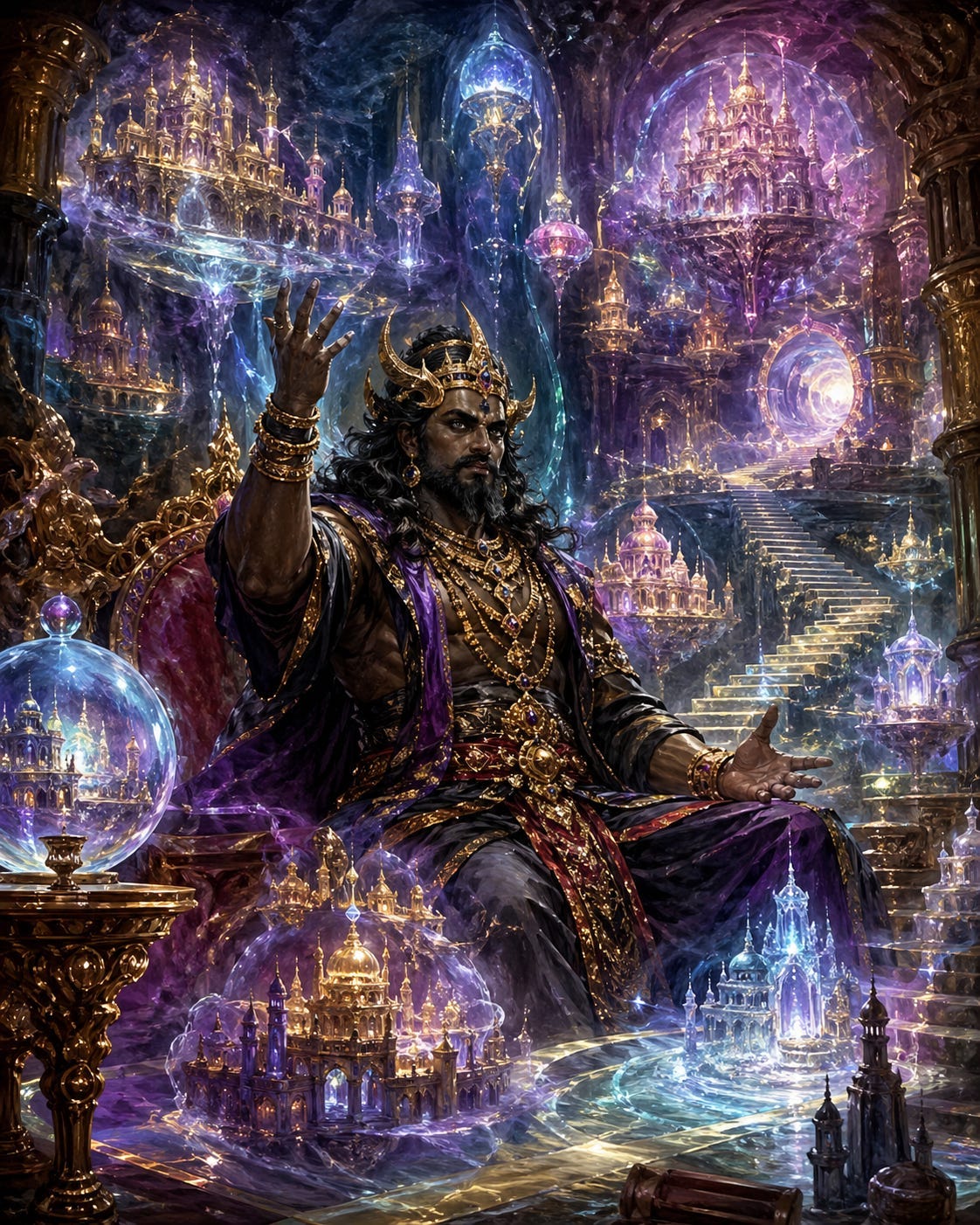
In the Seventh Canto, for example, it is described how once the demons, after being defeated by the demigods, took shelter of Maya, who constructed three powerful flying cities, imbued with many illusory powers, including invisibility. Boarding these cities, the demons started destroying the three worlds until Lord Śiva joined the battle and killed many of them. Maya, however, was able to counteract this by resurrecting the slain demons using a well of nectar he had created. Only after Lord Viṣnu interfered, coming together with Brahmā in the form of a cow and a calf to drink the nectar, was Lord Śiva able to defeat them.
Later, however, Maya surrendered to Lord Śiva, who returned his kingdom and offered him protection. Due to that, Maya lives under the false hope that the protection of Lord Śiva will protect him from death.
Another similar incident is described in SB 2.7.37. In a past Kali-yuga, human beings were able to contact Maya, who constructed invisible aerial fortresses that allowed them to attack other planets. The massacre was then stopped by another appearance of Buddha, who appeared in an attractive form to teach them non-violence.
In this way, Maya is extraordinarily talented in terms of technical knowledge, simultaneously mastering the sciences of architecture and engineering, weapons, illusion, urban design, astronomy, and so on. He is, however, blind in terms of spiritual knowledge. He can manipulate the material energy, but he is still under illusion and fear of death. In this sense, he is very similar to modern scientists and all sorts of materialists, who become absorbed in material knowledge, forgetting that death is coming near, or sometimes get caught in the illusory hope that progress in material knowledge can somehow save them from death.
The planetary systems of Mahātala and Rasātala
Different from the previous abodes, which are populated mainly by asuras with a human form, Talātala is a nāga realm, the abode of many powerful serpents, like Takṣaka and Kāliya. The defining characteristic of these serpents is that they are very powerful, having many hoods and extremely strong poison. They are also very angry, which makes them especially dangerous.
They are also defined as mahā-bhogavantaḥ, addicted to all kinds of material enjoyment, just like other asuras. They, however, can’t live in peace, being constantly threatened by Garuḍa, who is always attentive in keeping their population under control, constantly fighting and hunting the snakes.
Another aspect is that, despite living in constant anxiety, these serpents constitute families and consider themselves happy living with their wives, and children, just like all materialists. Sometimes they even forget their fear and travel around the planetary system with their families.
Daityas and Dānavas
The demons have two principal branches, descending from Diti and Danu (two wives of Kaśyapa Muni). The history of Diti is described in the Third Canto. She gave birth to Hiranyākṣa and Hiraṇyakaśipu, who became the two patriarchs of the Daityas. There is no specific description for Danu (just a few verses mentioning her descendants, the Dānavas). The case of Diti is extensively described because it was an exceptional occurrence.
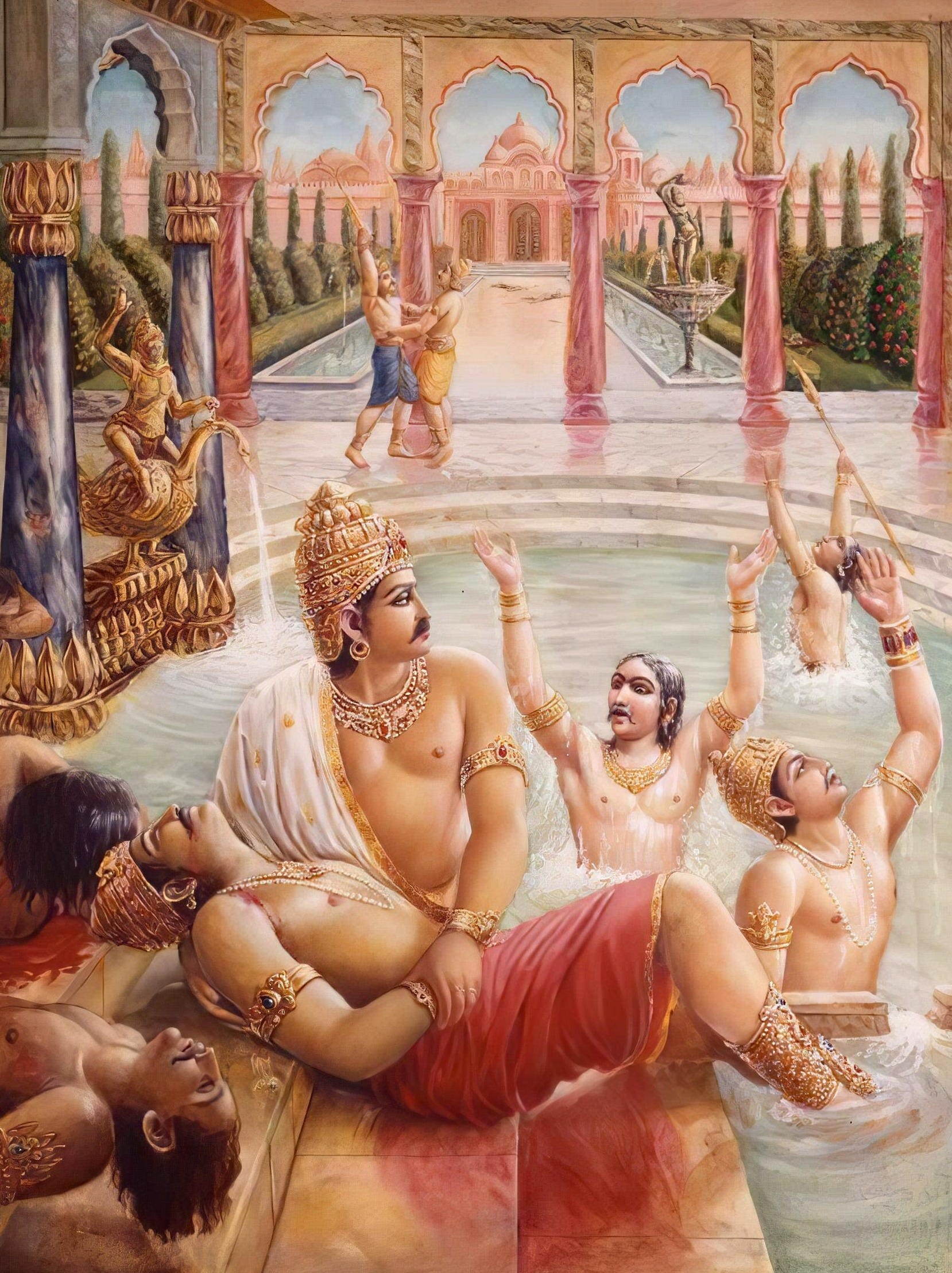
In any case, both the Daityas and Dānavas are described as living in different lower planetary systems, just as the Nāgas are. It seems that all three species have access to all seven planetary systems. It is just that certain groups are more prominent in specific abodes.
A higher-dimensional space
These different types of asuras are all described as sharing the same subtle dimension where demigods and inhabitants of previous yugas live. They interact with both demigods and human beings, and often fight with them. It is described that Arjuna, for example, visited the celestial planets during the 13-year exile of the Pāṇḍavas and assisted the demigods in fighting with the asuras. It is also described that the Pāṇḍavas fought against Nāgas, Rākṣasas, and other races. In our age, however, interactions between human beings and asuras tend to happen in the astral plane, when one is outside the body, or sometimes in dreams. Demons from these lower planetary systems can also take birth on earth to promote their godless style of civilization and create havoc.
This verse describes Rasātala as being the abode of specific branches of the Daitya and Dānava families, like the Nivāta-kavacas, Kāleyas and Hiraṇya-puravāsīs. Many of them live in Hiraṇya-pura, a city made of gold. The predominant characteristic of the asuras of Rasātala is that they are naturally very powerful, violent, and cruel, and share a hatred for the demigods.
The verse, however, also calls our attention to the discrepancy between their power and condition. They live in holes in the ground, and are constantly in fear. They frequently wage war against the demigods, but are usually defeated by them. Only sometimes can they defeat the demigods in extraordinary circumstances, such as when Indra offended his spiritual master. Above all, they always remain fearful of the Sudarśana-cakra of the Lord. In other words, the characteristics of their existence are hostility, defeat, and insecurity. They are great in pride, but regularly defeated.
Pātāla (Nāgaloka)
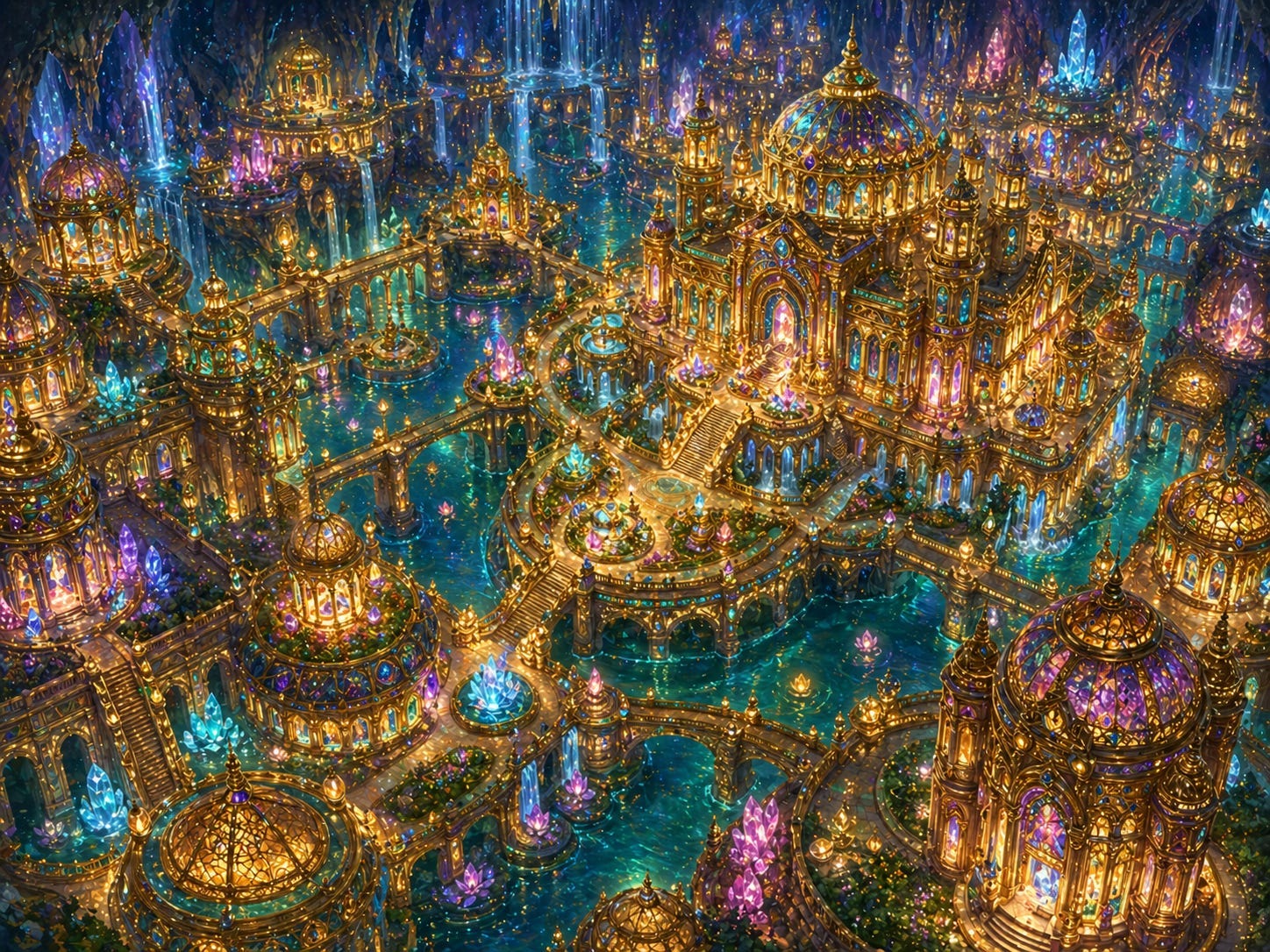
The last of the seven lower planetary systems is Pātāla, or Nāgaloka. These serpents also have many hoods and are described as very angry, envious, and addicted to sense enjoyment. Their special characteristic is having very brilliant jewels on their foreheads that illuminate not only their own abode but all the subterranean heavens.
Pātāla is not just a dark underworld, but an opulent place, with aristocratic dynasties, different kingdoms, family traditions, and so on. The nāgas have serpentine forms, mixing snake and human characteristics. They are very powerful and can use their mystic powers to assume human forms when they desire. In the Mahābhārata, it is described how Ulūpī, a Nāga princess, fell in love with Arjuna. She assumed the form of a beautiful woman and used her mystic powers to bring him to her palace when he bathed in the Ganges. She begged him to stay for one night and accept her as his wife. After that, she continued to follow Arjuna, helping him in many situations while remaining incognito. Their son, Irāvān, fought on the side of the Pāṇḍavas in the battle of Kurukṣetra.
In other words, Pātāla is very far from being a destitute place. In fact, as Prabhupāda mentions, earth during Kali-yuga is one of the most miserable places of the universe in material terms. Practically everyone else is better than us, including the nāgas and asuras. What makes Pātāla such an undesirable place is the combination of material opulence, sense gratification, aristocratic life and lack of Kṛṣṇa consciousness. This combination makes it very difficult for souls who fall there to ever see the light of the sun again.
Read also:

This is a publication for thoughtful readers who want to go deeper into Kṛṣṇa consciousness. I publish daily, trying to offer high-quality spiritual content, and all posts are available to free subscribers. If you wish, you can also choose a paid subscription to support this work.
You can also receive the updates on WhatsApp or Telegram.
If you would like to contribute further, you can find the donation links here.