

« The Song of God—Volume 1, chapters 1-6
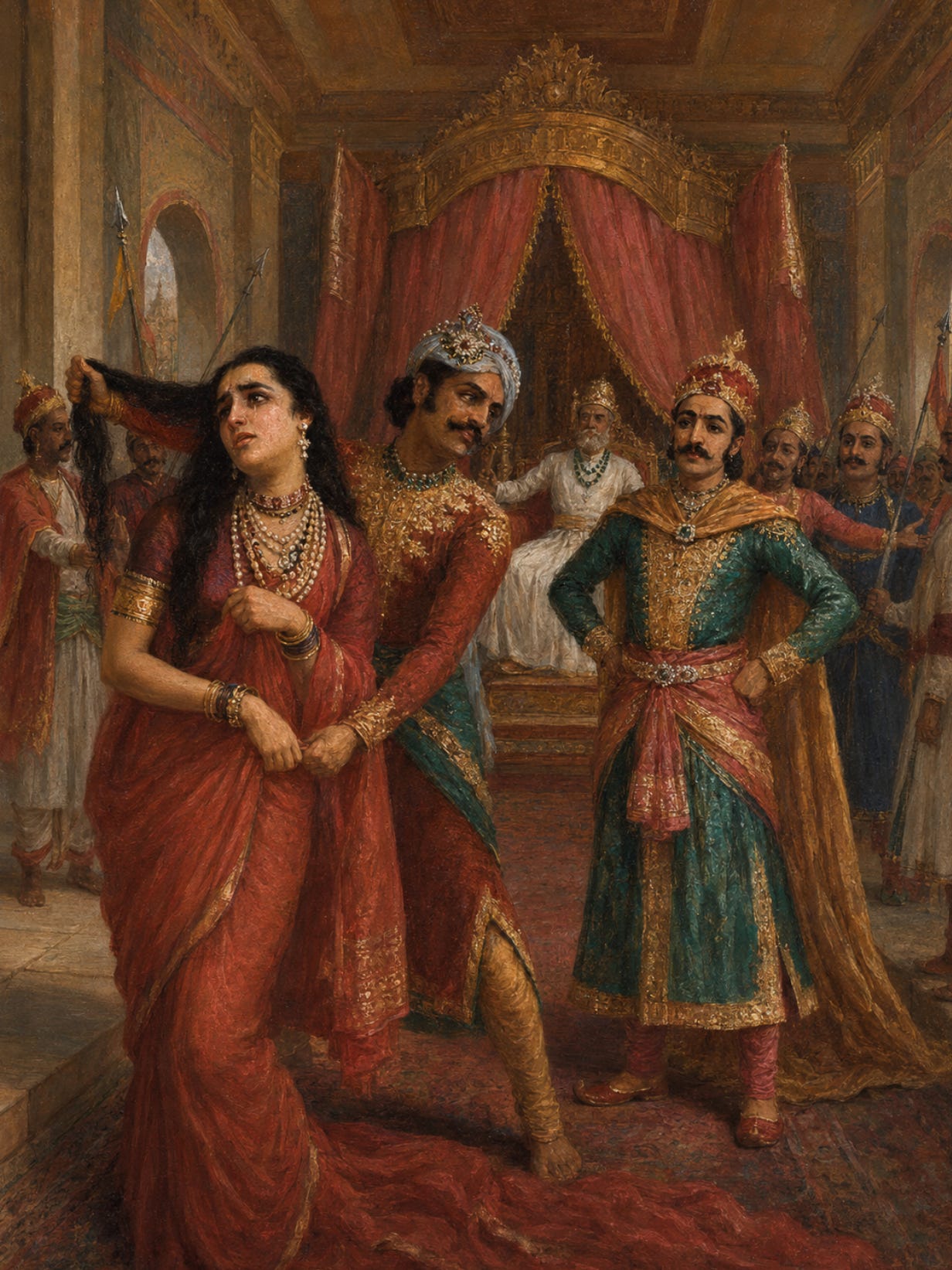
How unwanted progeny destroys society (Bg 1.40 to 1.43)
After presenting arguments based on non-violence and fear of sinful reactions, Arjuna now expands his argument beyond the immediate consequences, analyzing the long-term effects on the whole society. If the senior members are killed, the family traditions will be broken, spiritual culture will decline, and both ancestors and future generations will suffer. How could this be positive?
Verse 40: adharmābhibhavāt kṛṣṇa, praduṣyanti kula-striyaḥ
strīṣu duṣṭāsu vārṣṇeya, jāyate varṇa-sankaraḥ
When irreligion is prominent in the family, O Kṛṣṇa, the women of the family become polluted, and from the degradation of womanhood, O descendant of Vṛṣṇi, comes unwanted progeny.
Verse 41: sankaro narakāyaiva, kula-ghnānām kulasya ca
patanti pitaro hy eṣām, lupta-piṇḍodaka-kriyāḥ
An increase of unwanted population certainly causes hellish life both for the family and for those who destroy the family tradition. The ancestors of such corrupt families fall down, because the performances for offering them food and water are entirely stopped.
Verse 42: doṣair etaiḥ kula-ghnānām, varṇa-sankara-kārakaiḥ
utsādyante jāti-dharmāḥ, kula-dharmāś ca śāśvatāḥ
By the evil deeds of those who destroy the family tradition and thus give rise to unwanted children, all kinds of community projects and family welfare activities are devastated.
Verse 43: utsanna-kula-dharmāṇām, manuṣyāṇām janārdana
narake niyatam vāso, bhavatīty anuśuśruma
O Kṛṣṇa, maintainer of the people, I have heard by disciplic succession that those whose family traditions are destroyed dwell always in hell.
When Arjuna says that from the degradation of womanhood comes unwanted progeny, he invokes the concept of varṇa-sankara, or unwanted progeny, which is an important concept in Vedic culture.
To beget good children who can be educated in spiritual values and thus propagate the spiritual culture is considered one of the main duties in family life. This demands a very appropriate mindset, where children are conceived by their parents not only within marriage but with proper consciousness. The consciousness of the parents determines what kind of soul will take shelter in the womb, and in ancient times, couples would follow the process of garbhādhāna samskāra with the idea of attracting an enlightened soul. However, when the families are destroyed, the helpless women can be seduced by unscrupulous men, and such children born out of base carnal desires and adultery will have a much lower consciousness, introducing all kinds of problems in society and ultimately leading to its destruction.
Children are not blank slates; they bring their previous impressions, personal traits, and desires from past lives. The upbringing and the education a child receives from the parents and tutors play a great role in who he or she is going to become, but a great deal is brought from the previous life. A highly enlightened soul will be able to ascend to the highest level of spiritual practice with just a little help, while a soul at a lower level of spiritual development may struggle to follow basic moral principles even with the best education.
The problem of the world is not overpopulation but the increase in people with low consciousness. When good children are born, everything becomes auspicious. The point is thus not about decreasing the population but increasing the proportion of good children. If the world were to become overpopulated with pure devotees, it would be Vaikuṇṭha. Nowadays, it is practically impossible for regular people to follow this Vedic process for begetting good children, but the same result can be achieved by the spread of Kṛṣṇa consciousness.
The Garuḍa Purāna mentions:
oṃ apavitraḥ pavitro vā, sarvāvasthāṃ gato ’pi vā, yaḥ smaret puṇḍarīkākṣaṃ, sa bāhyābhyantaraḥ śuciḥ, śrī viṣṇuḥ śrī viṣṇuḥ śrī viṣṇuḥ
“Whether one is pure or impure, or having passed through all states of existence; whoever remembers the lotus-eyed Lord Viṣṇu, becomes purified both externally and internally.”
One may be pure or impure, but if one remembers the Lord, it doesn’t matter, because by chanting His holy names, one becomes immediately purified. By chanting the holy names, we are protected at every step. Hiraṇyakaśipu was a great demon, but because he inadvertently pronounced the name of Viṣṇu when he was with his queen, he ended up conceiving a pure devotee, Prahlāda Mahārāja. Therefore, even if people are not very rigidly following devotional principles, they may still conceive enlightened children who can change the world if they can remember the holy name of Kṛṣṇa. Such is the power of the holy names.
In text 1.41, Arjuna invokes another important component of Vedic culture, which is the process of making offerings to the ancestors.
Pious people who are attached to their families and follow the path of pious fruitive activities recommended in the Vedas (karma-kānda) have the opportunity to meet their ancestors in Pitṛloka and remain there as long as their descendants honor them and provide them with offerings of food and water (piṇḍa). In other words, pious people can extend their current identities and remain connected with their family members if they can perform their family duties properly and leave pious descendants who can continue the family tradition. That’s why in Vedic culture, the offerings to the ancestors are considered so important. When this chain is broken, all the ancestors fall from Pitṛloka and receive their next bodies according to their karma, and the family is thus permanently destroyed.
The same offerings have the purpose of saving ancestors from different types of ghostly or hellish life if that’s the case. However, as Prabhupāda explains in his purport, “Simply by performing devotional service, one can deliver hundreds and thousands of forefathers from all kinds of misery.” One who simply adopts the path of devotional service benefits his ancestors more directly than any karma-kānda rituals may do. The purpose of all Vedic ceremonies and rituals is to satisfy the Supreme Lord, and therefore, when one directly serves the Lord, there is no need to do anything else.
Main points in the purports of Śrīla Prabhupāda:
“When irreligion is prominent in the family, O Kṛṣṇa, the women of the family become polluted, and from the degradation of womanhood, O descendant of Vṛṣṇi, comes unwanted progeny.”
a) One of the main priorities of the varṇāśrama system is to create conditions for the birth of enlightened souls who can bring prosperity to society. For this, the women should be properly protected by elderly members, since if the women become degraded, unwanted population appears.
b) When the family tradition is destroyed, adultery is introduced into society due to the free mixing between the genders and the actions of irresponsible men. This leads to the birth of degraded souls, which is followed by the degradation of society, with war, pestilence, etc.
“An increase of unwanted population certainly causes hellish life both for the family and for those who destroy the family tradition. The ancestors of such corrupt families fall down, because the performances for offering them food and water are entirely stopped.”
a) Those who are not on the path of devotional service have to perform different types of rituals prescribed in the Vedas, including the offering of prasādam from the worship of Lord Viṣṇu to the forefathers to free them from different types of miserable life they may have fallen into.
b) One who is engaged in devotional life, however, doesn’t need to perform such rituals, because just by serving the Lord, he or she can save hundreds and thousands of ancestors from all kinds of miserable existence. By the performance of devotional service, all other obligations are automatically fulfilled.
“By the evil deeds of those who destroy the family tradition and thus give rise to unwanted children, all kinds of community projects and family welfare activities are devastated.”
a) The breaking down of family traditions and the consequent collapse of the varṇāśrama system bring chaos to society. People become spiritually blind, forgetting the ultimate goal of life. Being a kṣatriya, Arjuna was a leader in society, and he felt he would be personally responsible.
“O Kṛṣṇa, maintainer of the people, I have heard by disciplic succession that those whose family traditions are destroyed dwell always in hell.”
a) Arjuna bases his argument on what he heard from authorities, which is positive. This is the basis for receiving real knowledge. One cannot obtain real knowledge without being helped by a person who already possesses this knowledge.
b) In the general path of the Vedas, one who performs sinful activities in life should perform a process of expiation (prāyaścitta) before death to avoid punishment in hell. However, without senior family members to guide them, even this would not be possible for the surviving members. Arjuna feared that both he and the rest of the family would go to hell as a result of the battle.
Next: Arjuna decides not to fight (Bg 1.44 and 1.45)
Read the entire book:
« The Song of God—Volume 1, chapters 1-6

This is a publication for thoughtful readers who want to go deeper into Kṛṣṇa consciousness. I publish daily, trying to offer high-quality spiritual content, and all posts are available to free subscribers. If you wish, you can also choose a paid subscription to support this work.
You can also receive the updates on WhatsApp or Telegram.
If you would like to contribute further, you can find the donation links here.