

« Making Sense of the Vedic Universe, a Higher-Dimensional Reality
Chapter 4: Bhū-mandala, the intermediate system
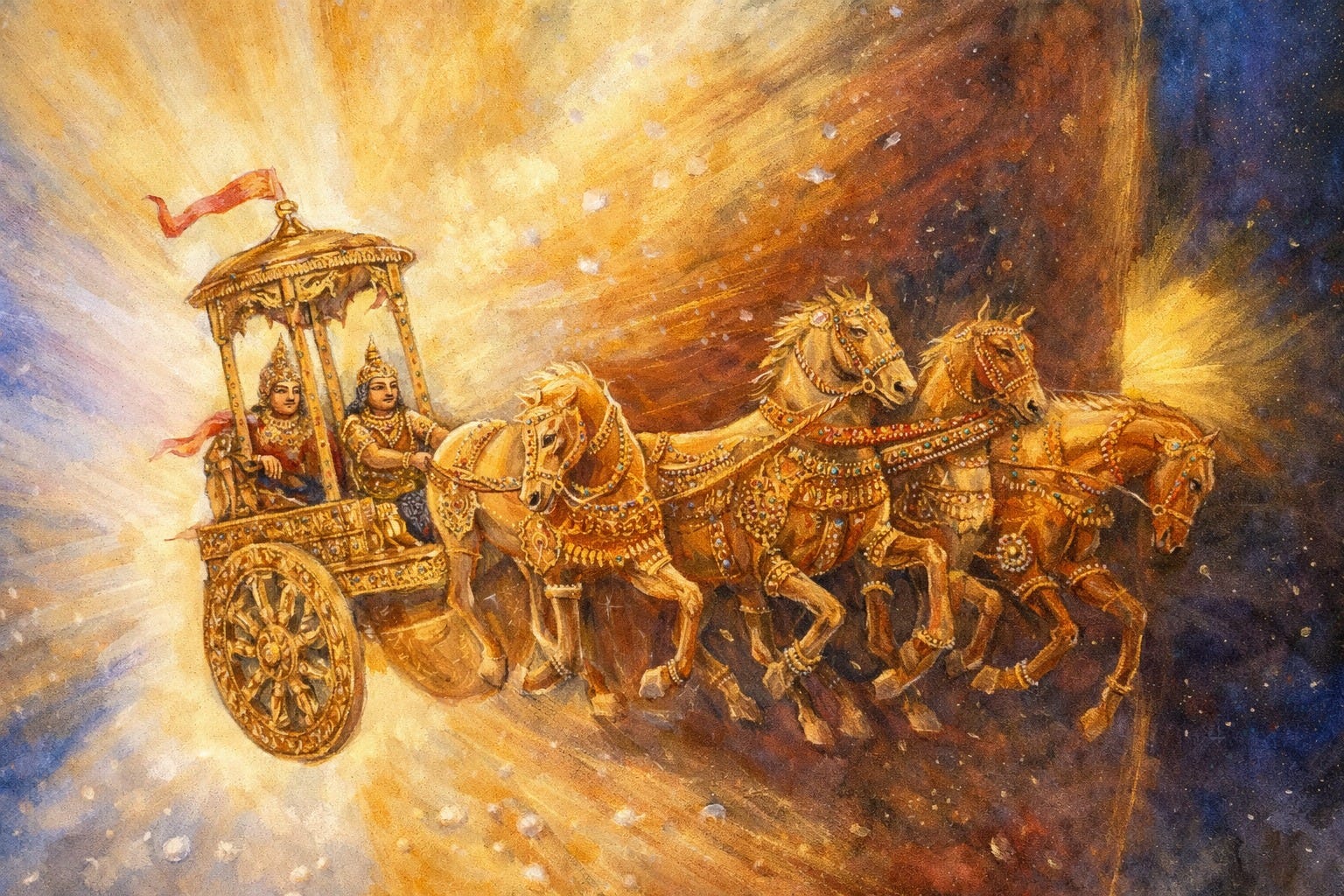
After concluding the description of the central island of Jambūdvīpa, Śukadeva Gosvāmī starts the description of the other six islands that form the planetary system of Bhū-mandala. Each island is described following the same basic formula: its extent, distinguishing characteristics, and its place in the structure.
“The great sage Śukadeva Gosvāmī said: Hereafter I shall describe the dimensions, characteristics and forms of the six islands beginning with the island of Plakṣa.” (SB 5.20.1)
As described in the Fourth Canto, Priyavrata Maharaja divided the planetary system of Bhū-mandala into seven concentric islands using his mystic sun-chariot. After the ocean of salt water that surrounds Jambūdvīpa, there are six other islands: Plakṣadvīpa, Śālmalīdvīpa, Kuśadvīpa, Krauñcadvīpa, Śākadvīpa, and Puṣkaradvīpa. Each island is exponentially larger than the previous one, subdivided into separate tracts of land, and surrounded by its own ocean.
Priyavrata gave the rulership of each of these islands to one of his sons. Mahārāja Āgnīdhra took charge of Jambūdvīpa and passed the kingdom on to his sons, leading to the succession of kings that culminated with King Virajā, as described in the first part of the Fifth Canto. The other islands, however, remained under the rule of the descendants of the other sons of Priyavrata.
Making sense of the description of Bhū-mandala
If taken literally, the description of Bhū-mandala results in a structure like this, with the central island of Jambūdvīpa, the sets of concentric islands and oceans around it, and the sun circling around:
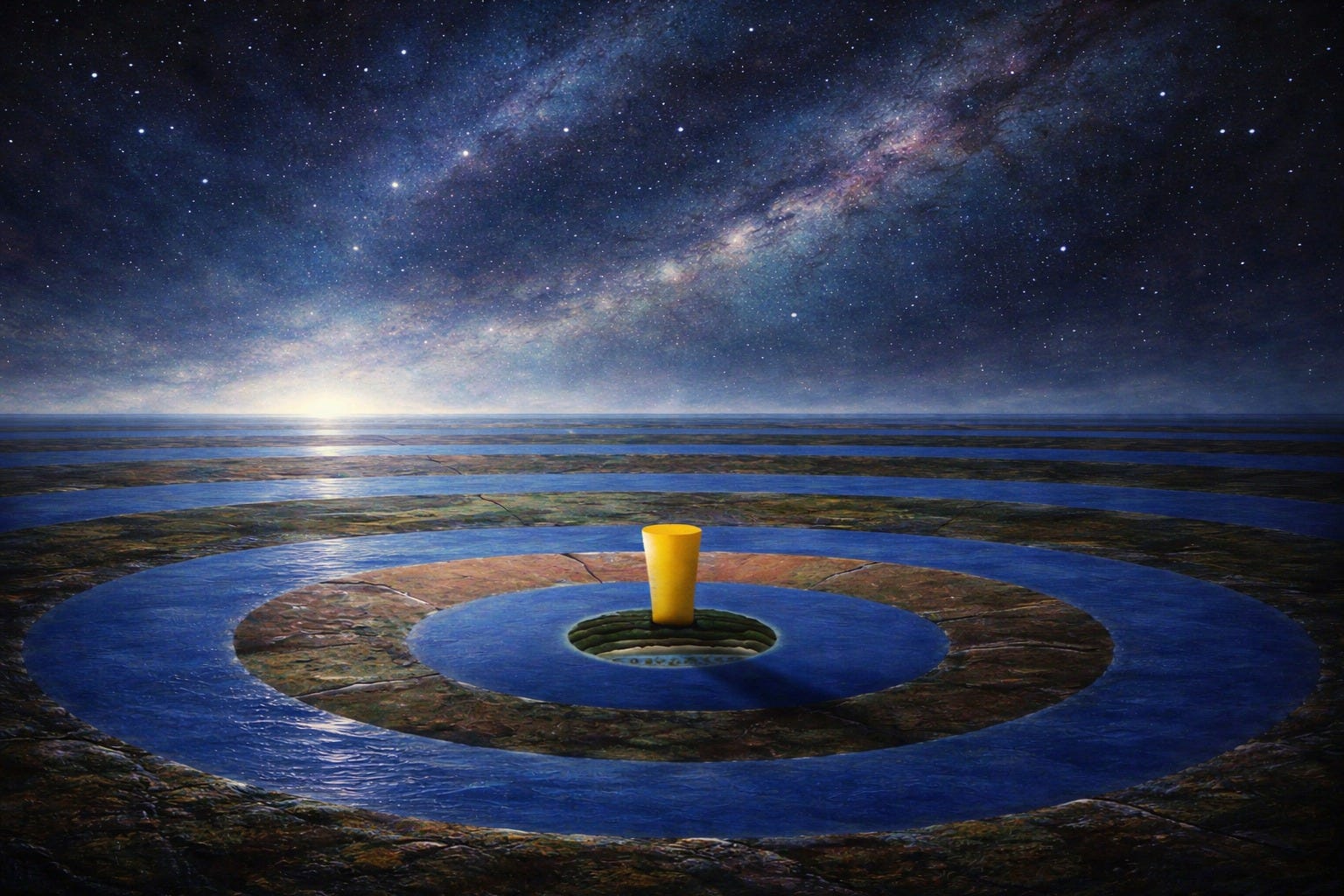
This is, however, very different from what we see when we look at the sky, and contradicts the model described in the Bhāgavatam itself. The circular movement of the sun is supposed to produce day and night in the different varṣas, with the sun rising in the east and setting in the west, just as we observe on our planet. If the varṣas of Bhū-mandala were all flat tracts of land, the inhabitants would all see the sun circling around, just like at the north pole. Certainly, there is more to it.
How can this description be understood? In his letter with his conclusions about the cosmological model of the Vedas, Prabhupāda mentions that “The planets have their fixed orbits, but still they are turning with the turning of the great tree. There are pathways leading from one planet to another made of gold, copper, etc., and these are like the branches.”
This describes the idea that both the nine varṣas of Jambūdvīpa, as well as the different tracts of land that form the other islands of Bhū-mandala, appear as separate planets, and not literally a sequence of concentric islands around the earth. This is also supported by the analogy of Bhū-mandala being compared to a lotus flower. There are different rings of petals in a lotus, but each ring is constituted of separate petals.

It is also important to consider that, by definition, a mandala is not a simple arrangement of concentric rings, but a radial–concentric structure where each ring is segmented into discrete, evenly arranged units, like petals radiating from the center of a flower. See this example:
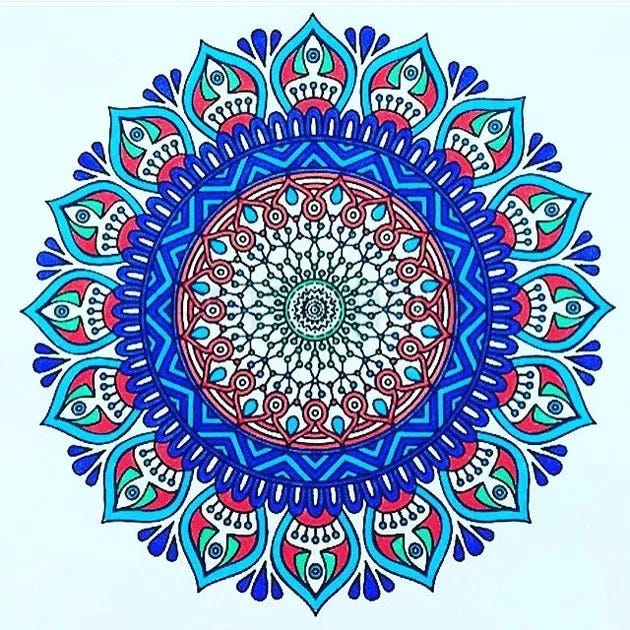
Bhū-mandala is often depicted as a series of concentric rings, as in the previous image, but this is just a simplified model, a visual aid to understand the disposition of the islands. The usage of the term “mandala” and the comparison with a lotus flower make the point that it is not a simple sequence of concentric rings, but a much more nuanced structure, composed of planets and subtle passages connecting them, just as Prabhupāda concluded. When it is accepted like that, the emphasis changes from geographical proximity in our observable universe to proximity in terms of accessibility and experience of the respective inhabitants. Bhū-mandala describes thus the intermediate planetary system and the experience of the inhabitants, and not simply a cartographic map.
How can it be that planets that appear distant in our gross reality may appear close together in a higher dimension? Ashish Dalela makes an interesting point in his book Mystic Universe, making the point that distance in the Vedic model is not only geometric, but can also be semantic or hierarchical. In other words, different planets may appear to be far from each other in terms of geometry, and at the same time be close together in terms of similarity and hierarchy, just as different words may appear far from each other in a dictionary, but close together in a sentence.
It may look speculative at first, but there are many practical examples. For example, Kṛṣṇa is in one sense very distant, situated in Goloka Vṛndāvana, the highest planet in the spiritual sky, inaccessible even for someone able to travel for millions of years at the speed of the mind. In another sense, however, He is inside our hearts and can be seen by persons who have the proper vision. What is this proper vision? Kṛṣṇa is completely pure and spiritual. One who can attain a similar platform, acquiring a pure and spiritual consciousness, can see Him as very near, while someone with a gross, material consciousness will see Him as very distant. Similarly, different planets and other structures of the universe appear closer for people in a similar level of consciousness.
In the Vedic cosmological model, the universe is described as a combination of 14 different planetary systems forming a hierarchical structure. We tend to imagine it as a sequence of disks, one on top of each other, but in practice it works more like 14 different levels of consciousness. To us, the stars and planets that form these different planetary systems appear spread around the cosmos, and we can’t reach any of them, but for their inhabitants, the other planets that compose their respective planetary systems appear to be near and connected, just as we have different countries on our planet, connected by roads, shipping routes, airways, etc.
Going from the United States to Japan on one’s own feet may appear impossible, but for one who takes a plane, following the proper process of visas and security checks, it is not a difficult trip at all. Multiple cities can be very far away in terms of miles or kilometers, but close in terms of flights and connections. For one traveling on a direct flight, Tokyo may feel close, while a nearby city may feel very distant if one has to walk.
Another example is the distance between two offices located in opposite buildings. Normally, to go from an office on the top of the first building to another on the top of the second, one would have to go all the way down and then all the way up, which can be a long way, especially if one has to take the stairs. However, if one would have access to a walkway between the two buildings, he could go from one office to the other very easily. For him, the distance between the two offices would be very short, while for other people, taking the long way, it would be quite far.
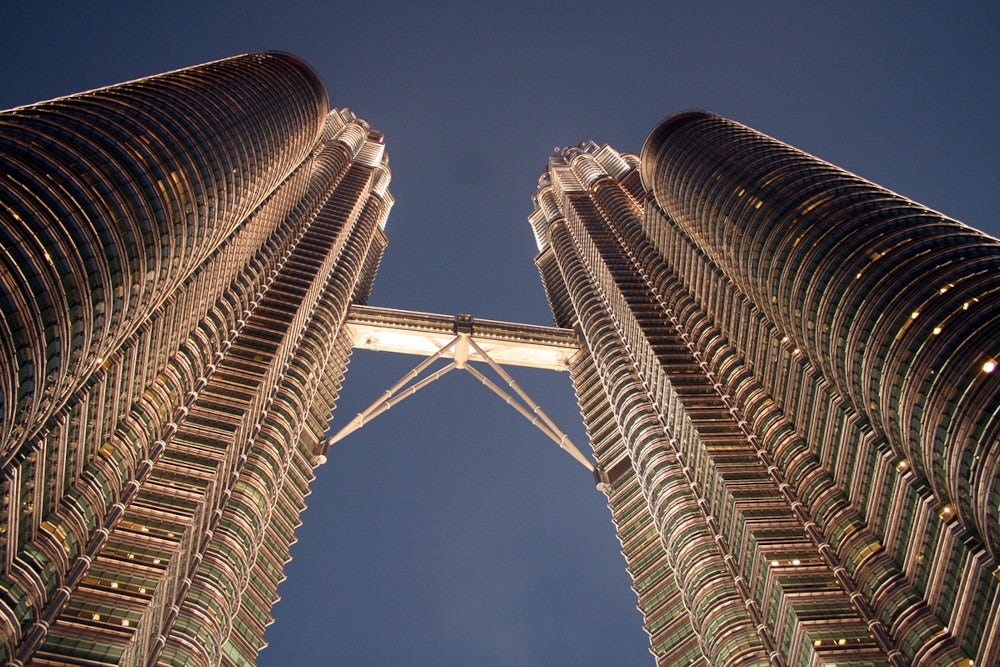
Another practical effect is that once the walkway is available, the concept of space in itself changes, making the two offices start looking like a continuous area instead of being part of two separate buildings. When we take this into consideration, the idea that different planets may be perceived by their inhabitants as a single region, like in the case of Jambūdvīpa, does not seem so unbelievable.
Another way to understand it is to see the universe as an inverted tree, as Kṛṣṇa describes in the Bhagavad-gītā.
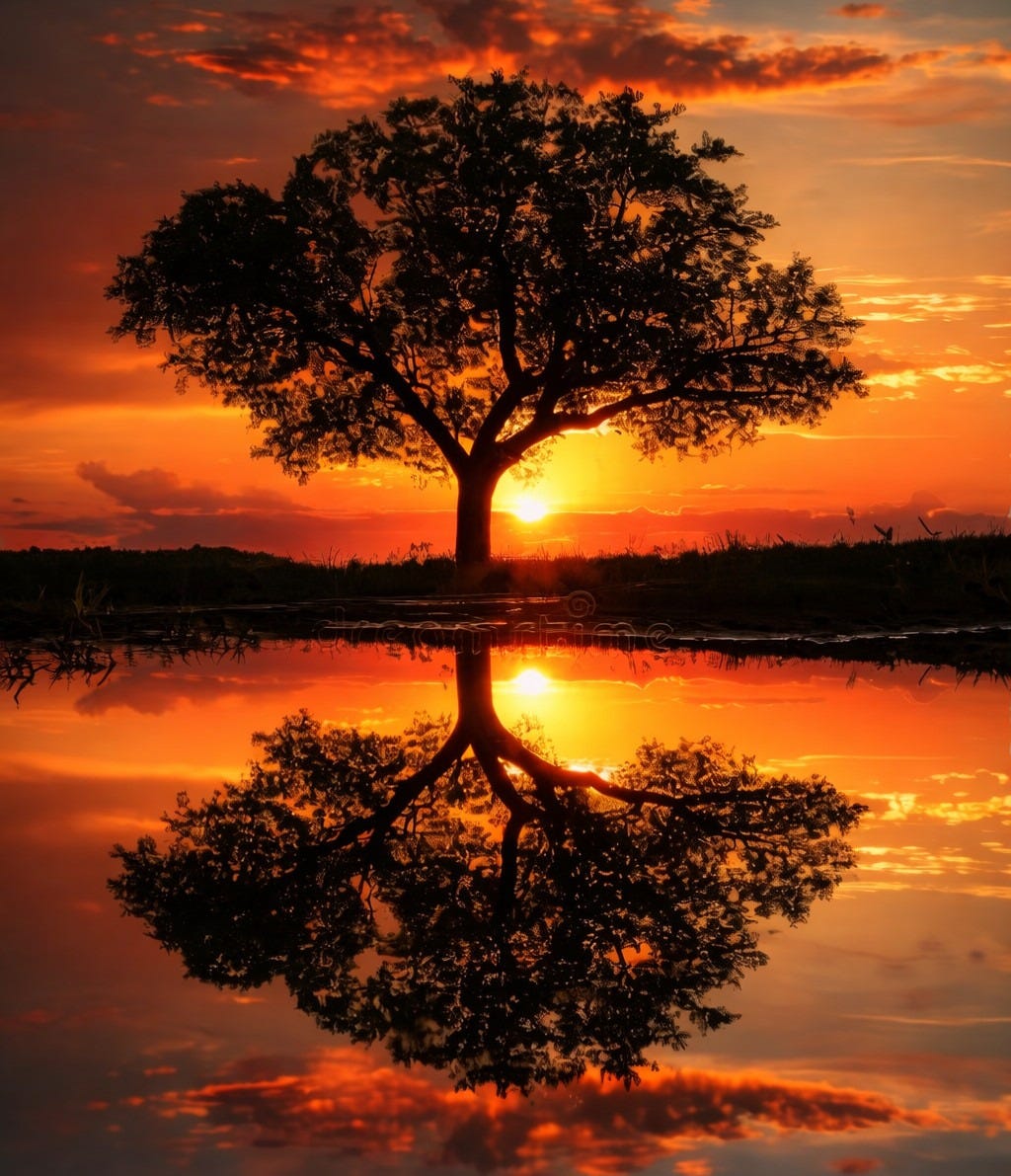
Imagine a tree where the branches are invisible. In this case, the leaves and fruits would appear to be floating in the air, disconnected from each other. However, when the branches are revealed, we see they are all connected. Similarly, in our gross dimension we can see only the gross elements of our universe, and thus all planets and stars appear to be very distant from each other, floating in the vastness of space. When the subtle structures are revealed, however, not only do many more structures become visible, but it can also be noted that they are all connected. That’s what Prabhupāda describes as “pathways leading from one planet to another made of gold, copper, etc.” which are like the branches.
In our gross dimension, even the closest stars appear to be light-years away, and according to the theory of special relativity, nothing can travel faster than light. However, both the matter we interact with and the light we see are gross representations of the five material elements. The same elements exist in subtler forms of matter that form the bodies of demigods and other higher beings, as well as their abodes. These subtle forms of matter are not necessarily subject to the same physical laws.
Another point is that traveling through these subtle pathways is not like traveling through a long straight line through our ordinary metric, but a trip through a different structure. It is thus not necessarily about traveling faster.
Imagine a small insect traveling through a book. One way to travel from one page to another is to go to the border of the page and, from there, make the turn to the next page. Going from page 1 to page 100 by this process would be a long path; the insect would need to travel about 20 cm per page. However, traveling vertically, passing through the pages, the distance would be just a few millimeters.
This may all sound like fantasy at first, but similar concepts are also discussed in modern physics. According to modern theories, a wormhole is a connection between two points of spacetime, like a tunnel or bridge connecting two ends at separate points. Traveling through a wormhole, one could reach very distant regions of the cosmos by traveling a comparatively modest distance. This is similar in concept to what we have been discussing.
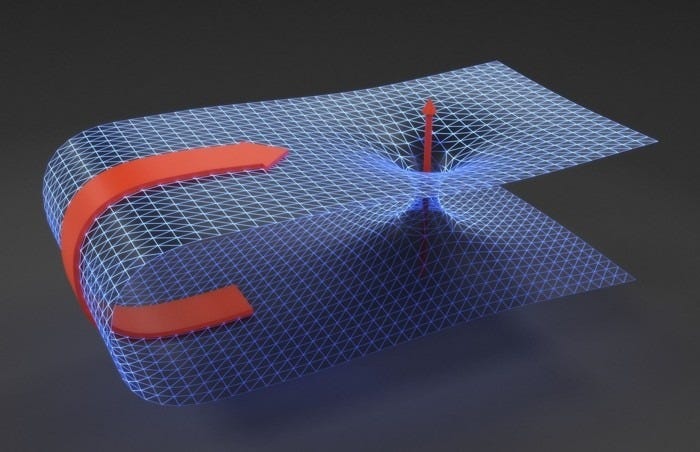
In this way, in the Vedic model, interplanetary travel is entirely natural for advanced beings who can move through the branches connecting different planets, whereas directly jumping from one leaf to another, as we attempt to do in our space exploration programs, is extremely difficult. It is like walking all the way to Tokyo instead of taking a plane.
The Vedas explain how yogis are capable of traveling all over the universe by elevating their consciousness and thus acquiring bodies suitable to live in the planetary systems they desire. Interplanetary travel thus involves changing the level of consciousness and perception, which leads one to acquire an appropriate body, and not just moving a certain number of physical miles. In this way, the yogī himself (as the combination of soul and subtle body) can easily travel from one planet to the other, but his gross body will remain on this planet, left to be cremated or buried.
In conclusion, we receive a gross body on our planet because that’s the level of existence that matched our consciousness at the end of our previous life. With the senses we receive in this body, we can only perceive gross matter, and thus the cosmos appears as an almost empty vastness of space, and other planets and stars are almost unreachable. This also applies to the different instruments we use to study it (such as telescopes), which are made using the same type of gross matter. In this context, traveling using a spaceship is useless, because not only does jumping from one leaf to the other of the universal tree take too much time, but also because even if we reach other stars and planets, we can’t interact with the inhabitants there, who will have subtler types of bodies. What is the point of traveling such a long way just to sit in a desert?
The idea that the universe is composed of different dimensions, and that different species of celestial beings possess subtler types of bodies may seem implausible at first, but we have something similar even in our planet. It is well known among different groups of spiritualists that there is a subtle dimension around us that is inhabited by ghosts and spirits. According to the Vedas, ghosts are souls who wander in their subtle bodies, without a gross body. They remain chained to our gross reality because of their attachment, but because they now have a different type of body, they are invisible to us, and can’t interact with us, or with the objects of our dimension. Although not yet accepted in mainstream science, there are many studies about this. Unless we choose to be completely skeptical and believe only in what we can directly see, we have to admit that there are other beings around us whom we cannot see and different levels of abodes we can’t perceive. As soon as we admit that, the multidimensional universe of the Vedas starts making sense.
Instead of thinking of interplanetary travel in terms of spaceships and light-years, we need to use our time here to purify and elevate our consciousness. This process leads us to a new body, higher in the multidimensional tree, where we have access to more aspects of the universe. When we become situated higher in the tree, different levels of planetary systems and the subtle branches that connect them become accessible, and as a result, we become free to move between them.
Read the whole book:
« Making Sense of the Vedic Universe, a Higher-Dimensional Reality
This is a publication for thoughtful readers who want to go deeper into Kṛṣṇa consciousness. I publish daily, trying to offer high-quality spiritual content, and all posts are available to free subscribers. If you wish, you can also choose a paid subscription to support this work.
You can also receive the updates on WhatsApp or Telegram.
If you would like to contribute further, you can find the donation links here.