


You can receive new articles directly in your inbox. Subscription is free; donations are welcome.
In the Sixth Canto of the Śrīmad-Bhāgavatam, we find the astonishing passage when the Yamadūtas come to take the sinful Ajāmila, who had stolen, kidnapped, and killed, and are stopped by the Viṣnudutas, who threaten them with their transcendental weapons, accusing them of trying to arrest an innocent man. It happened that after seeing the Yamadūtas, Ajāmila had chanted the name of Lord Nārāyaṇa just once, but in full concentration. His chanting thus had qualified as namābhasa, and had completely eradicated all his sinful reactions. From this moment he became sinless and was thus outside of the jurisdiction of Yamaraja. The attempt of the Yamadūtas was thus unlawful.
This encounter of the Viṣnudutas and the Yamadūtas led to a long philosophical conversation that we find in the pages of the Śrīmad-Bhāgavatam.
At the start, the Viṣnudutas mention:
“Alas, how painful it is that irreligion is being introduced into an assembly where religion should be maintained. Indeed, those in charge of maintaining the religious principles are needlessly punishing a sinless, unpunishable person.
A king or governmental official should be so well qualified that he acts as a father, maintainer and protector of the citizens because of affection and love. He should give the citizens good advice and instructions according to the standard scriptures and should be equal to everyone. Yamarāja does this, for he is the supreme master of justice, and so do those who follow in his footsteps. However, if such persons become polluted and exhibit partiality by punishing an innocent, blameless person, where will the citizens go to take shelter for their maintenance and security?
The mass of people follow the example of a leader in society and imitate his behavior. They accept as evidence whatever the leader accepts.
People in general are not very advanced in knowledge by which to discriminate between religion and irreligion. The innocent, unenlightened citizen is like an ignorant animal sleeping in peace with its head on the lap of its master, faithfully believing in the master’s protection. If a leader is actually kindhearted and deserves to be the object of a living entity’s faith, how can he punish or kill a foolish person who has fully surrendered in good faith and friendship?”
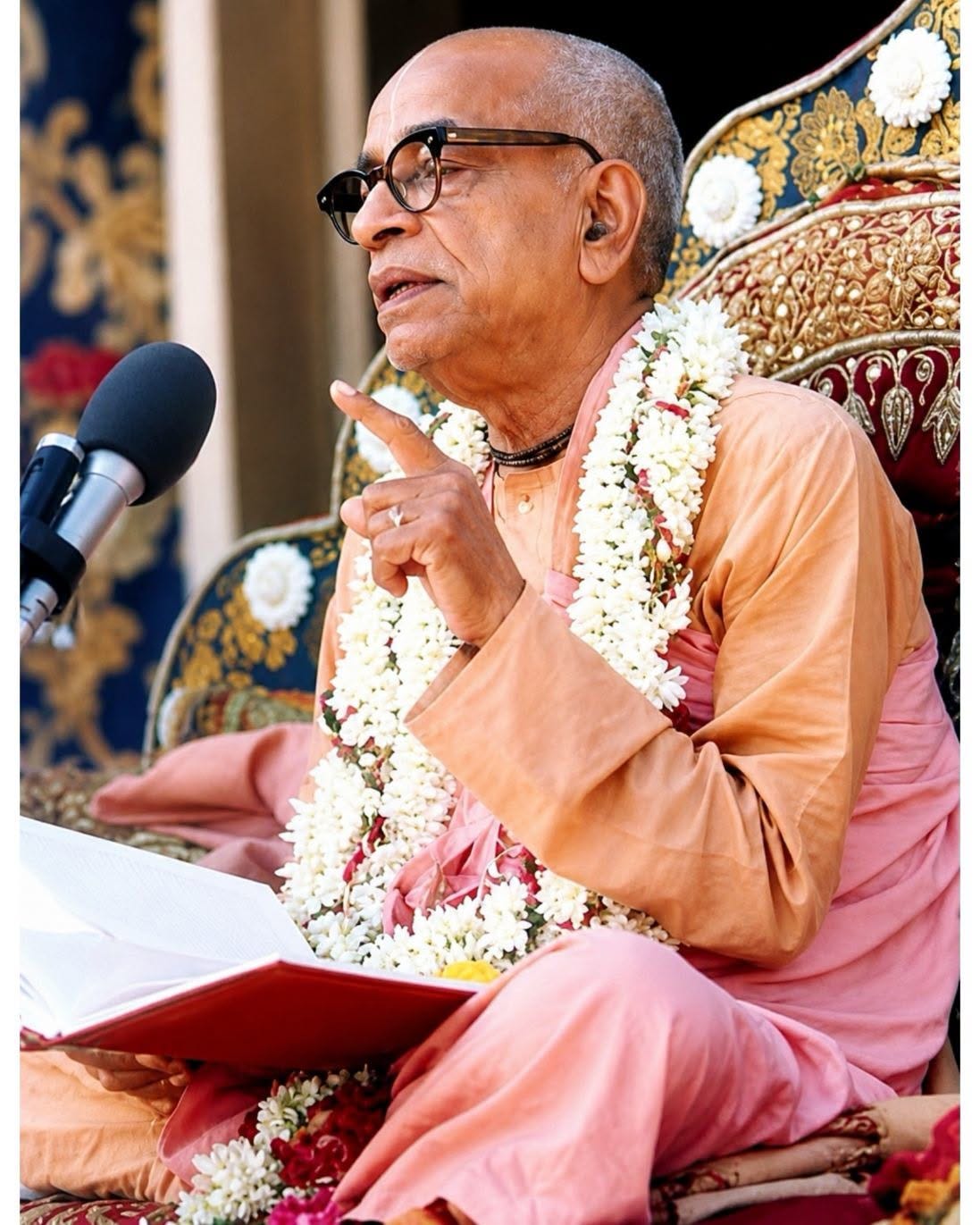
Another topic, discussed in texts 6.2.3 to 6.2.6, is the nature of a dharmic government, which must impartially protect the innocent, punish criminals, and never betray the trust of the people under its protection. The purports Prabhupāda gives for these verses also gives us the guidelines for the administration of groups and communities of devotees.
It can be divided into five main points:
a) Justice must not be partial
Prabhupāda mentions that “if completely sinless people are punished, the entire assembly of Yamarāja is contaminated. This principle applies not only in the assembly of Yamarāja, but throughout human society also.”
Often devotees are punished, criticized, removed from their services, or even ostracized based on incorrect or incomplete information. If leaders act on unsubstantiated accusations without properly examining them and giving the accused sufficient opportunity to explain themselves, they risk becoming instruments of injustice instead of protectors.
Another side to it is that decisions should not be made based on favoritism, friendships and alliances, or the size of someone’s donations. A leader may be tempted to judge people based on their usefulness, but the real religious principle is that the same standards should be applied to everyone. This is indicated by the words samāḥ vaiṣamyaṁ in the verse: A leader should be equal to everyone.
b) Leaders are guardians, not proprietors
In 6.2.3, Prabhupāda compares the responsibility of rulers to that of parents. Their duty is to help their dependents to realize their relationship with Kṛṣṇa, guiding them without exploiting their position. He adds that this principle was followed by kings like Mahārāja Yudhiṣṭhira, Mahārāja Parīkṣit, Lord Rāmacandra, Mahārāja Ambarīṣa, and Prahlāda Mahārāja.
Temples and communities exist primarily to help devotees advance in their Kṛṣṇa consciousness. The expansion of the project should not become more important than the welfare of the devotees connected with it. We should use our project to benefit devotees, and not use devotees to benefit our project.
c) Leaders should teach through example
Leaders in religious communities are not just mere managers, but references whom people look up to. If the leaders become leaders become harsh, dishonest or manipulative, these behaviors become normalized throughout the community, creating a toxic environment for everyone, and undermining people’s faith in the process itself. As the Viṣṇudutas mention, “The mass of people follow the example of a leader in society and imitate his behavior.”
d) Authority must not be used to exploit
Prabhupāda strongly condemns viśvasta-ghāta, the betrayal of someone who has trusted another. We teach people that they should surrender unto Kṛṣṇa, and then present ourselves, as a group or institution, as the place where they should do so. This soul who is dear to Kṛṣṇa, but who has been away from Him since time immemorial, then, somehow or other, agrees to give it a try. How unfortunate it is if such trust is betrayed?
This applies especially to vulnerable devotees, including women, children, the elderly, and devotees who have been serving full time and depend on the temple or community for their maintenance. The protection of devotees must take precedence over personal alliances, institutional reputation, etc.
Text 6.2.3 opens another connected point: “if such persons become polluted and exhibit partiality by punishing an innocent, blameless person, where will the citizens go to take shelter for their maintenance and security?”
If the same leadership controls the whole justice process, including the hearing of complaints, investigations, judgment and application of disciplinary measures, a vulnerable devotee who has become the victim of an unjust decision may not have a place to go.
e) Authorities must remain under religious principles
One of the deepest points of the interaction is that although the Yamadūtas were appointed servants of Yamarāja, the Viṣṇudutas had to intervene because they were making a mistake. Similarly, the fact that a devotee holds a position of authority does not automatically make all his decisions and actions correct. One should thus be willing to recognize and correct mistakes, understanding that the true authority is Kṛṣṇa, represented by the whole succession of ācāryas. No matter how high we may be placed, we are just servants of the entire system. Placing individuals beyond accountability is a recipe for disaster.
Read more:


This is a publication for thoughtful readers who want to go deeper into Kṛṣṇa consciousness. I publish daily, trying to offer high-quality spiritual content, and all posts are available to free subscribers. If you wish, you can support this work with a monthly contribution. When you subscribe, you can choose between a free subscription and a monthly contribution, and you can switch from a free subscriber to a supporter at any time.
You can also receive updates on WhatsApp or Telegram.
If you would like to contribute further, you can find the donation links here.