


You can receive new articles directly in your inbox. Subscription is free; donations are welcome.
In the Śrī Isopaniṣad and other books, Śrila Prabhupāda explains that conditioned souls have four defects: imperfect senses and intelligence, a tendency to make mistakes, a tendency to be illusioned, and a tendency to cheat others. He mentions that even great historical personalities like Gandhi and Kennedy made mistakes and lost their lives because of them, so what can we say about others?
This, of course, opens our eyes to the risk of following imperfect political leaders and false incarnations, but there is also another implication, which is our own capacity for obtaining true knowledge.
When we speak about “conditioned souls,” it is easy to make it abstract and think that it is something that applies only to others, but that’s something that is directly applicable to us. We are conditioned souls, and these are difficulties we have to negotiate if we want to go somewhere in life.
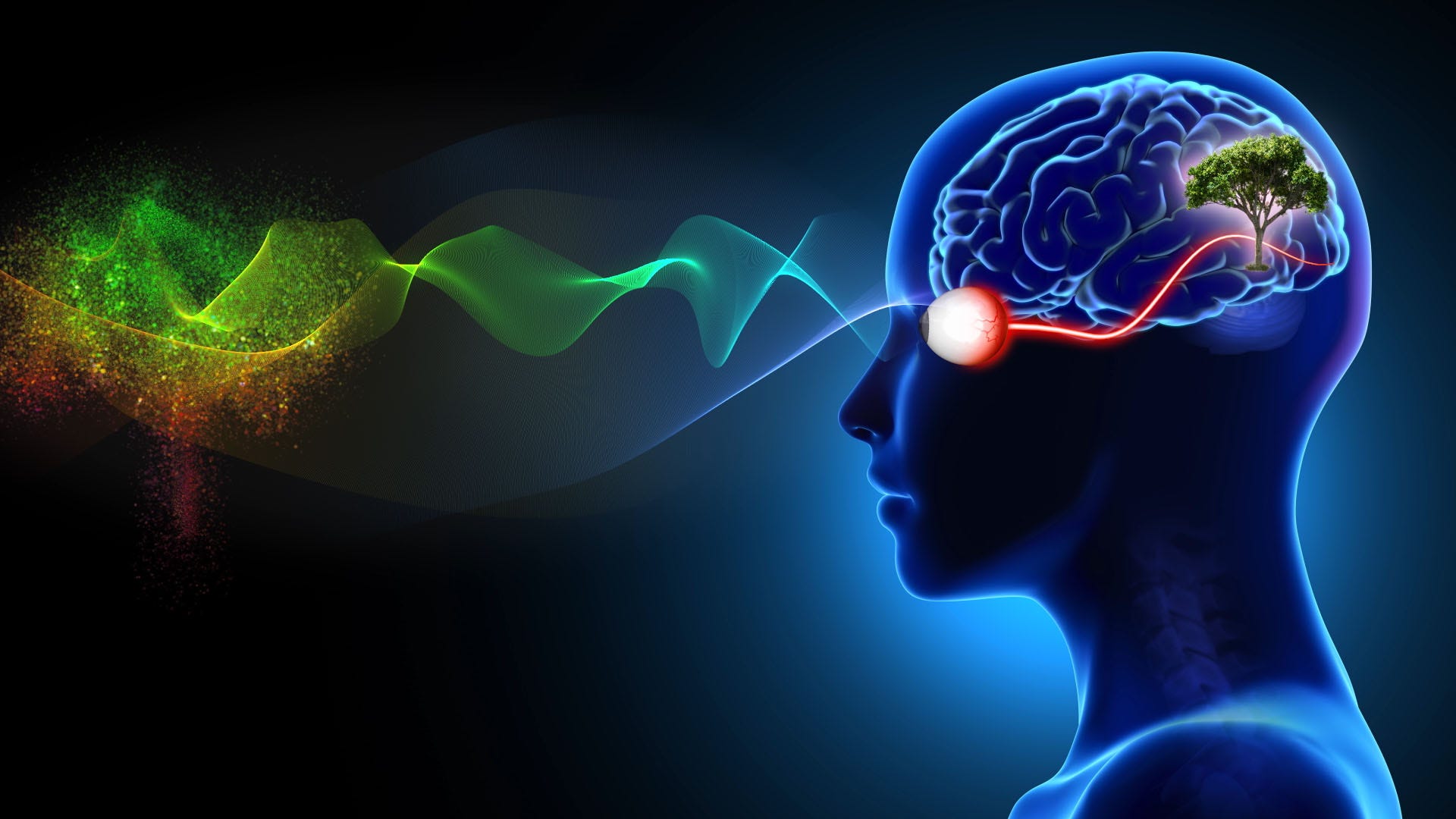
What we call reality is just the way our mind and intelligence interpret the input received from the senses, which is in turn just electrical signals coming to the brain. We obtain information using imperfect senses, such as our eyes and ears, and this imperfect information is processed using our imperfect intelligence, and then further transformed due to the workings of the mind. As a result, what we believe to be reality often has very little resemblance to what reality is. Many people don’t believe in God or the soul, for example, just because they can’t see it. Others believe in all sorts of conspiracy theories that often border on insanity.
Prabhupāda explains that the only way to receive perfect knowledge is through the Vedic literature, which offers us perfect knowledge because it comes directly from Kṛṣṇa. Perfect knowledge can’t be produced by any imperfect being from this universe; it has to be imported from the transcendental realm. This imported transcendental knowledge is then transmitted through the chain of disciplic succession and reaches us without adulteration.
There is another question, however. If our senses and intelligence are imperfect, how can we be sure we are properly understanding this transcendental knowledge, even when we receive it from a proper representative?
The fact is that even though a spiritual teacher can do his best to explain things to us in an understandable way, there is no guarantee that we, by ourselves, will be able to properly understand it. Someone wearing glasses with blue lenses will see everything blue, while someone with red lenses will see everything red, and they may fight over how the world really looks. Similarly, people influenced by passion and ignorance will see everything through their limited perspectives. We can practically see that devotees often misunderstand what they hear, which causes lots of problems. How to solve that?
That’s where the spiritual master, be it a siksa or diksa guru, is supposed to come in. According to the Vedic conception, the spiritual master is not supposed to be just an ecclesiastical figure, but someone with whom we have direct contact. The spiritual master is supposed to observe the disciple and thus detect whether he is understanding or not, and correct him when necessary. Only through this process, it’s possible to be sure that the disciple is properly understanding what he is hearing. It would typically take thousands of hours of such hard work for a spiritual teacher to train a disciple; it’s not just about chanting on his beads.
Of course, that’s difficult to practically implement in current times since our movement is going through a phase of accelerated growth, and even when we include all senior Vaiṣnavas from other spiritual organizations, the number is too small to properly guide all the millions of potential disciples and followers.
This however doesn’t change the fact that having the opportunity of directly associating with our spiritual master (not just hearing, but being corrected by him) can make a huge difference in our spiritual lives. Just like one can’t become a surgeon by just reading books and watching videos, one can’t become a self-realized soul by just reading books. The knowledge we are receiving from books and other passive sources has to be augmented by the input of a qualified spiritual teacher, be it the diksa or siksa-guru, or some other senior Vaiṣnava. We need to go through the process of asking questions and being corrected in our misconceptions. It’s up to us to try to find ways to obtain it.
You can see an example of the relationship with the spiritual master and how it can help us find solutions for complex questions in the story of Mādhava Dāsa:

This is a publication for thoughtful readers who want to go deeper into Kṛṣṇa consciousness. I publish daily, trying to offer high-quality spiritual content, and all posts are available to free subscribers. If you wish, you can support this work with a monthly contribution. When you subscribe, you can choose between a free subscription and a monthly contribution, and you can switch from a free subscriber to a supporter at any time.
You can also receive updates on WhatsApp or Telegram.
If you would like to contribute further, you can find the donation links here.