

« Making Sense of the Vedic Universe, a Higher-Dimensional Reality
Śiśumāra, the celestial dolphin
“This great machine, consisting of the stars and planets, resembles the form of a śiśumāra [dolphin] in the water. It is sometimes considered an incarnation of Kṛṣṇa, Vāsudeva. Great yogīs meditate upon Vāsudeva in this form because it is actually visible.
This form of the śiśumāra has its head downward and its body coiled. On the end of its tail is the planet of Dhruva, on the body of its tail are the planets of the demigods Prajāpati, Agni, Indra, and Dharma, and at the base of its tail are the planets of the demigods Dhātā and Vidhātā. Where the hips might be on the śiśumāra are the seven saintly sages like Vasiṣṭha and Aṅgirā. The coiled body of the Śiśumāra-cakra turns toward its right side, on which the fourteen constellations from Abhijit to Punarvasu are located. On its left side are the fourteen stars from Puṣyā to Uttarāṣāḍhā. Thus its body is balanced because its sides are occupied by an equal number of stars. On the back of the śiśumāra is the group of stars known as Ajavīthī, and on its abdomen is the Ganges that flows in the sky [the Milky Way].
On the right and left sides of where the loins might be on the Śiśumāra-cakra are the stars named Punarvasu and Puṣyā. Ārdrā and Aśleṣā are on its right and left feet, Abhijit and Uttarāṣāḍhā are on its right and left nostrils, Śravaṇā and Pūrvāṣāḍhā are at its right and left eyes, and Dhaniṣṭhā and Mūlā are on its right and left ears. The eight stars from Maghā to Anurādhā, which mark the southern course, are on the ribs of the left of its body, and the eight stars from Mṛgaśīrṣā to Pūrvabhādra, which mark the northern course, are on the ribs on the right side. Śatabhiṣā and Jyeṣṭhā are on the right and left shoulders.
On the upper chin of the śiśumāra is Agasti; on its lower chin, Yamarāja; on its mouth, Mars; on its genitals, Saturn; on the back of its neck, Jupiter; on its chest, the sun; and within the core of its heart, Nārāyaṇa. Within its mind is the moon; on its navel, Venus; and on its breasts, the Aśvinī-kumāras. Within its life air, which is known as prāṇāpāna, is Mercury, on its neck is Rāhu, all over its body are comets, and in its pores are the numerous stars.” (SB 5.23.4-7)
The śiśumāra is an aid for meditation, much like the universal form, described in the Second Canto. A yogi observes the path of stars in the sky, and conceives a celestial dolphin that is head down. The end of the tail is connected with the polestar, and other parts of the body are connected with other prominent stars. The purpose of this process is to understand the presence of the Lord behind the cosmic manifestation and fix one’s mind on Him. Many can’t really conceive the personal form of the Lord, and prefer thus to meditate on something they can directly see.
The śiśumāra is also taken, in a more general sense, as the path of the Milky Way extending through the sky, the millions of stars all the way to the polestar. In the model, the Milky Way is the path of the Ganges flowing in the sky, which forms the abdomen of śiśumāra.
The siśumāra appears in different positions in the sky according to our latitude and the nightly rotation of the sky. It moves following the rotation of the sky around Dhruvaloka, just like a divine dolphin swimming through the sky.
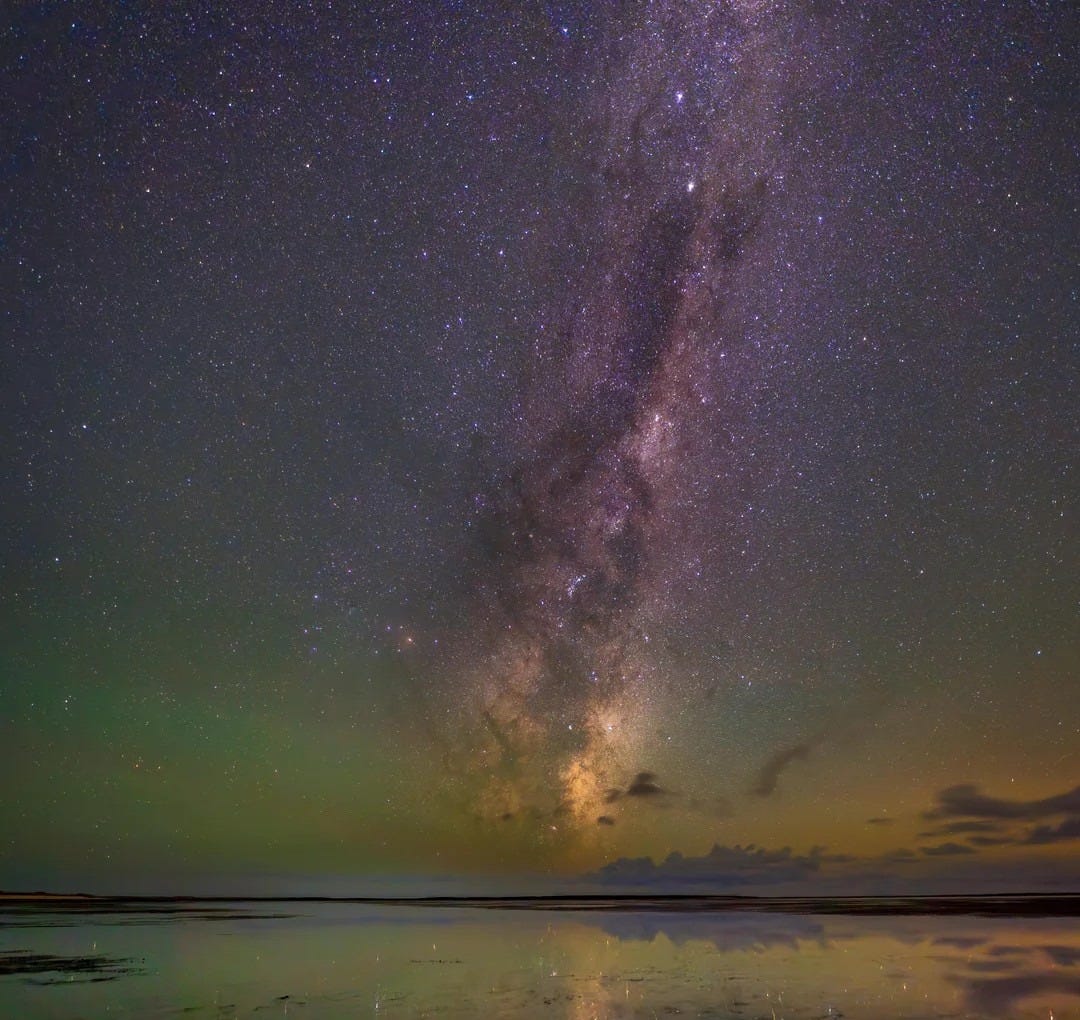
At high northern latitudes, the siśumāra appears more upright, with the head downwards and Dhruvaloka on its tail appearing in the northern sky, acting as the central pivot of the rotation of the whole sky.
If we take several photos of the northern sky and make a time-lapse, we will see the whole sky circling around the northern celestial pivot, where Dhruvaloka is situated, exactly as described in the Śrīmad-Bhāgavatam:
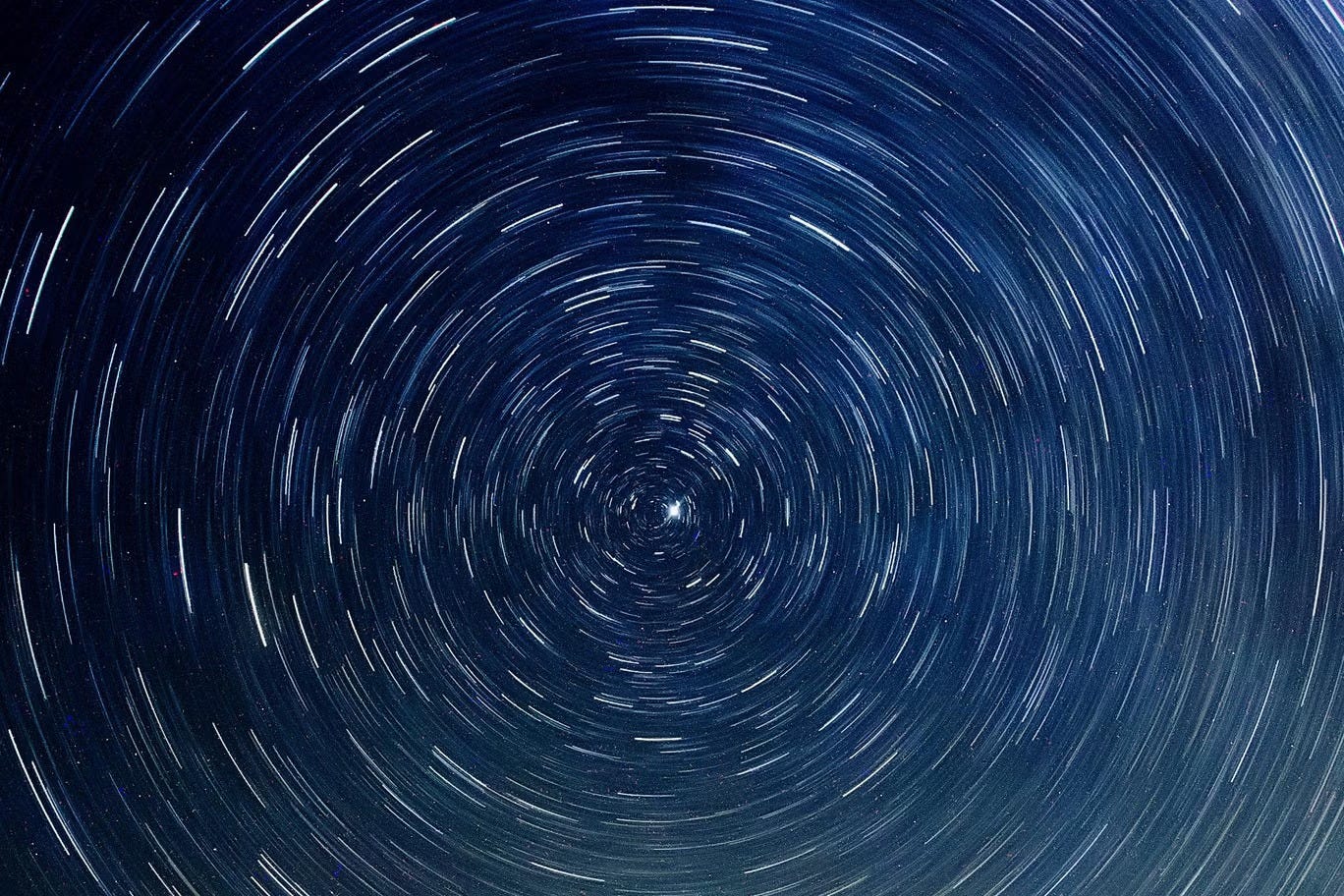
Dhruvaloka itself, however, does not appear to be visible to us, for there is no prominent star there. The closest prominent star is Polaris, which is about ⅔ of a degree from it. It is close enough to serve as a reference point, but if we observe attentively, Polaris also circles the pivot. Its position is also not fixed in the sky: just like other stars, Polaris slowly drifts in position.
This should not, however, be seen as contradictory, for Dhruvaloka is a spiritual planet, and not a physical celestial body that is observable from earth. No one should expect to point a telescope there and see Kṣīrodakaśāyī Viṣnu. Dhruvaloka is thus yet another aspect of the Vedic universe that is not directly observable to us, but that we can ascertain based on its role in the cosmos.
One could also offer that Polaris may be a gross representation of Dhruvaloka, the way it appears in our gross dimension, a visual aid, but not exactly the same high-dimensional object, just in the case of the moon and the sun. This could also be reasonable.
As mentioned, if we stand at higher latitudes, the siśumāra appears upright. As we go south in the globe, however, Dhruvaloka appears lower and lower in the sky, and the siśumāra appears more horizontal. After we cross the equator into the southern hemisphere, Dhruvaloka is not visible. As we go further south, more of the siśumāra itself passes below the horizon.
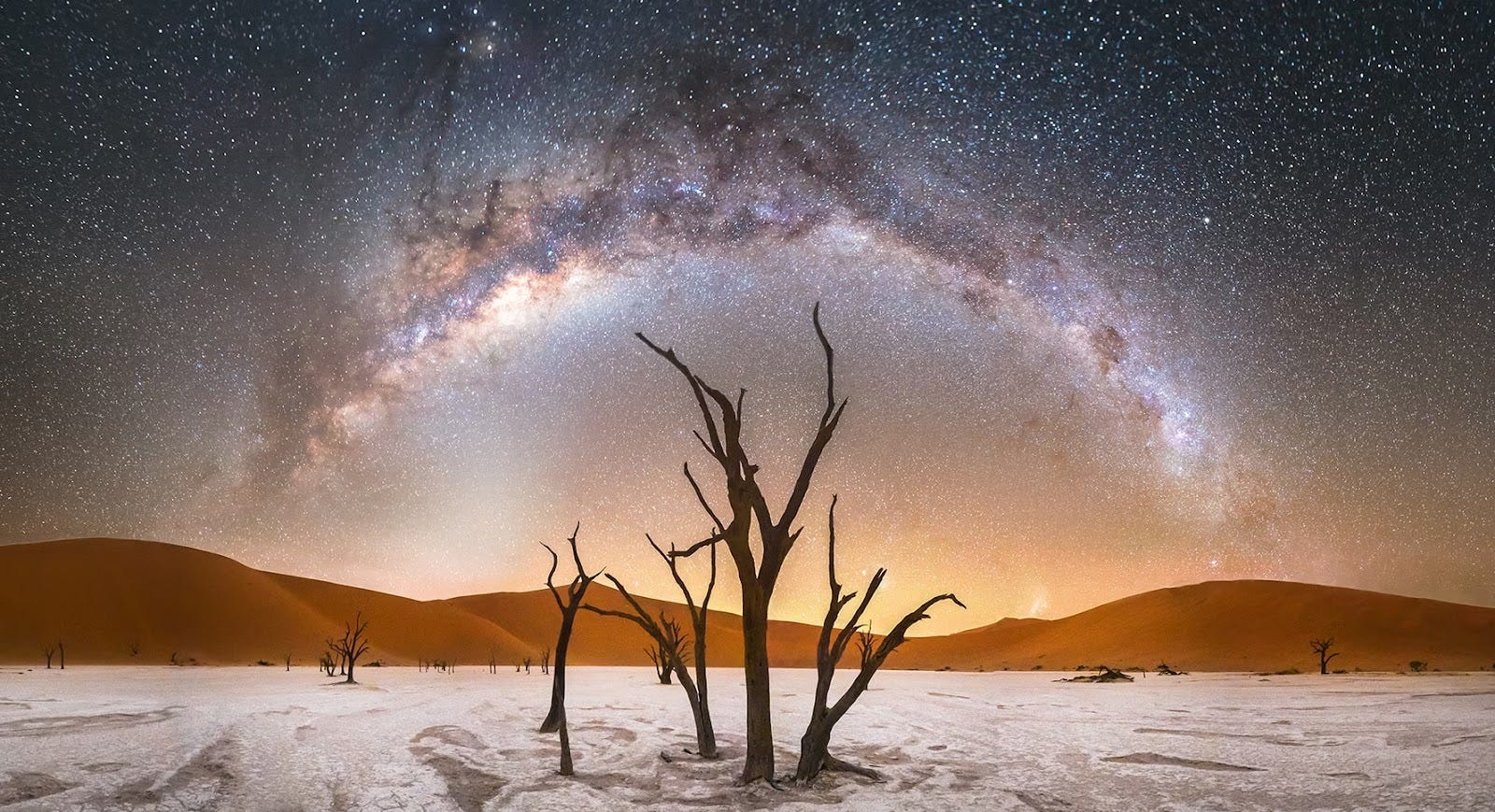
The description of Dhruvaloka as the central pivot of the sky is yet another evidence that the model described in the Śrīmad-Bhāgavatam is of a spherical earth. If the earth were flat, we would see the northern pivot, with Polaris and Dhruvaloka from both the northern and southern hemispheres.
“My dear King, the body of the śiśumāra, as thus described, should be considered the external form of Lord Viṣṇu, the Supreme Personality of Godhead. Morning, noon and evening, one should silently observe the form of the Lord as the Śiśumāra-cakra and worship Him with this mantra: “O Lord who have assumed the form of time! O resting place of all the planets moving in different orbits! O master of all demigods, O Supreme Person, I offer my respectful obeisances unto You and meditate upon You.”
The body of the Supreme Lord, Viṣṇu, which forms the Śiśumāra-cakra, is the resting place of all the demigods and all the stars and planets. One who chants this mantra to worship that Supreme Person three times a day — morning, noon and evening — will surely be freed from all sinful reactions. If one simply offers his obeisances to this form or remembers this form three times a day, all his recent sinful activities will be destroyed.” (SB 5.23.8-9)
These two verses summarize the process of meditation on the śiśumāra, observing the path of stars in the sky as a form of Lord Viṣnu. A yogī following this process worships the Supreme Lord three times a day, meditating on His form as the wheel of time that moves the whole cosmic manifestation.
The śiśumāra-cakra is not a substitute for Viṣṇu; it is seen as Lord Viṣṇu’s external body, as Him present in the cosmic manifestation. It is thus not a form of pantheism, but a process of personal worship that helps the worshipers to gradually advance to a platform of worship of the spiritual form of the Lord. This again emphasizes the main point of this description: to not just analyze the cosmos, but worship the Lord who is the source and maintainer of the whole cosmic apparatus.
This is the missing link in modern science, and the key to properly understanding the cosmos. Without this understanding, the study of the cosmos becomes fruitless, a mere exercise of speculation that just brings us further away from the goal of human life.
The whole modern cosmological model pushes people in the direction of atheism. By properly understanding the theistic model offered in the Śrīmad-Bhāgavatam, we can offer people an alternative. If people can look at the sky and see the hand of the Lord behind its workings, this will be the first step for them to become full-fledged Vaiṣnavas.
Prabhupāda concludes his commentary by giving us a summary of the distances to the higher planetary systems according to the numbers given by Śrīla Viśvanātha Cakravartī Ṭhākura:
Sun to Dhruvaloka (Polestar): 3,800,000 yojanas
Sun to Maharloka: 13,800,000 yojanas (+10,000,000)
Sun to Janaloka: 33,800,000 yojanas (+20,000,000)
Sun to Tapoloka: 113,800,000 yojanas (+80,000,000)
Sun to Satyaloka: 233,800,000 yojanas (+120,000,000)
Sun to beginning of the coverings: 260,000,000 yojanas (+26,200,000)
Downward from the Sun:
Sun to earth: 100,000 yojanas
Sun to the bottom of the lower planetary systems: 170,000 yojanas (+70,000)
Sun to Lord Śeṣa: 200,000 yojanas (+30,000)
Below Lord Śeṣa is the Garbhodaka Ocean, which occupies a little less than half of the universe (the remaining 220,000,000 yojanas).
We can observe that the distance to Dhruvaloka, which in the model is the furthest star that we can directly see with the naked eye, is quite small compared with the total length of the universe. After the polestar, there is the whole planetary system of Maharloka, then Janaloka, Tapoloka, and Satyaloka, which is positioned close to the border of the universe.
The size of the whole universe is supposed to be smaller than believed in modern cosmology, because the Bhāgavatam insists that the stars are not like the sun, and thus emit less light than believed in modern models, but it is still huge, comprising everything we see in the sky. The final, practical size, will depend on the interpretation you give for the yojana, as previously discussed.
Outside of it, there are millions of other universes, the Causal Ocean, Lord Mahā-Viṣnu, the impersonal Brahmājyoti, and then all the other three quarters of creation, comprised of the Vaikuṇṭha planets. We are free to go anywhere in this unlimited creation, as long as we abandon our empiric, speculative approach, and focus instead on the process of elevating our consciousness, as explained in the pages of the Śrīmad-Bhāgavatam.
Read the whole book:
« Making Sense of the Vedic Universe, a Higher-Dimensional Reality
This is a publication for thoughtful readers who want to go deeper into Kṛṣṇa consciousness. I publish daily, trying to offer high-quality spiritual content, and all posts are available to free subscribers. If you wish, you can also choose a paid subscription to support this work.
You can also receive the updates on WhatsApp or Telegram.
If you would like to contribute further, you can find the donation links here.
Hare Krishna
It's all very interesting.
I have yet to study this cosmology in Srimad Bhagwatam. Are you giving any lectures on that. Is there any link. Please share.
Thank you
Hare Krishna