


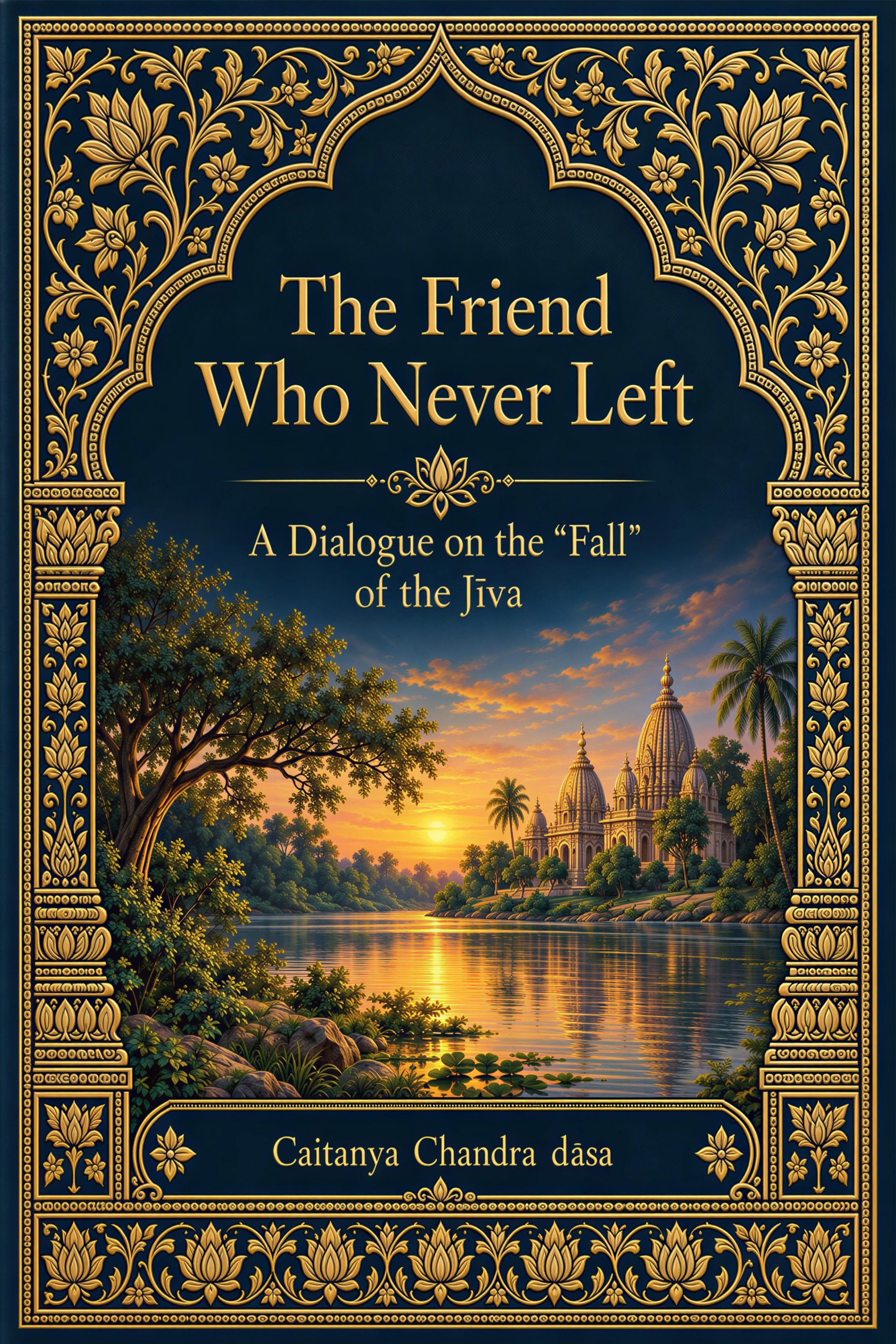
The story follows Mādhava Dāsa, a young devotee whose confidence is shaken after reading a scholarly book that challenges his understanding of the original position of the soul. Confused, he approaches Gaurāṅga Dāsa, an elderly devotee who has been helping him in his spiritual journey. Through a series of conversations, Gaurāṅga helps him to examine different passages from Prabhupāda’s books, other scriptures and the works of the previous ācāryas, not only helping him find the answers but also teaching him how to study the scriptures systematically, reconcile apparent contradictions, and distinguish the conclusions of the ācāryas from assumptions and interpretations.
The “fall” of the jīva, however, is not the main topic in this book. It is used as a background to present two other topics that are essential in the times we live. The first is hermeneutics: how to understand Prabhupāda’s instructions in the context of the works of the previous ācāryas and other scriptures we have access to nowadays. What should we do when contradictions appear? Whom should we follow in such cases? The second topic is the relationship of guru and disciple in our society. Often we may get the impression that the guru is simply a ceremonial figure. The reason is that often disciples have little opportunity to have personal association with their gurus, apart from a few minutes during the initiation ceremony. Diksa or siksa, the reality is that we need to have someone we can learn from and whom we can approach when we face difficulties. In the story, this role is played by Gaurāṅga Dāsa, from whom Mādhava Dāsa learns regularly, and whom he approaches when he faces a crisis. Through a series of meetings over multiple days, Gaurāṅga Dāsa guides him out of it and helps him to grow in his philosophical understanding and spiritual practice.
📚 Do you prefer a printed copy?
➡️ Read the book online:
+ Chapter One: A Disturbing Book
⤵️ Download the ebook:
You will be able to see the PDF of the book here once it is complete. For now, you can read the chapters as they are published.