

« Making Sense of the Vedic Universe, a Higher-Dimensional Reality
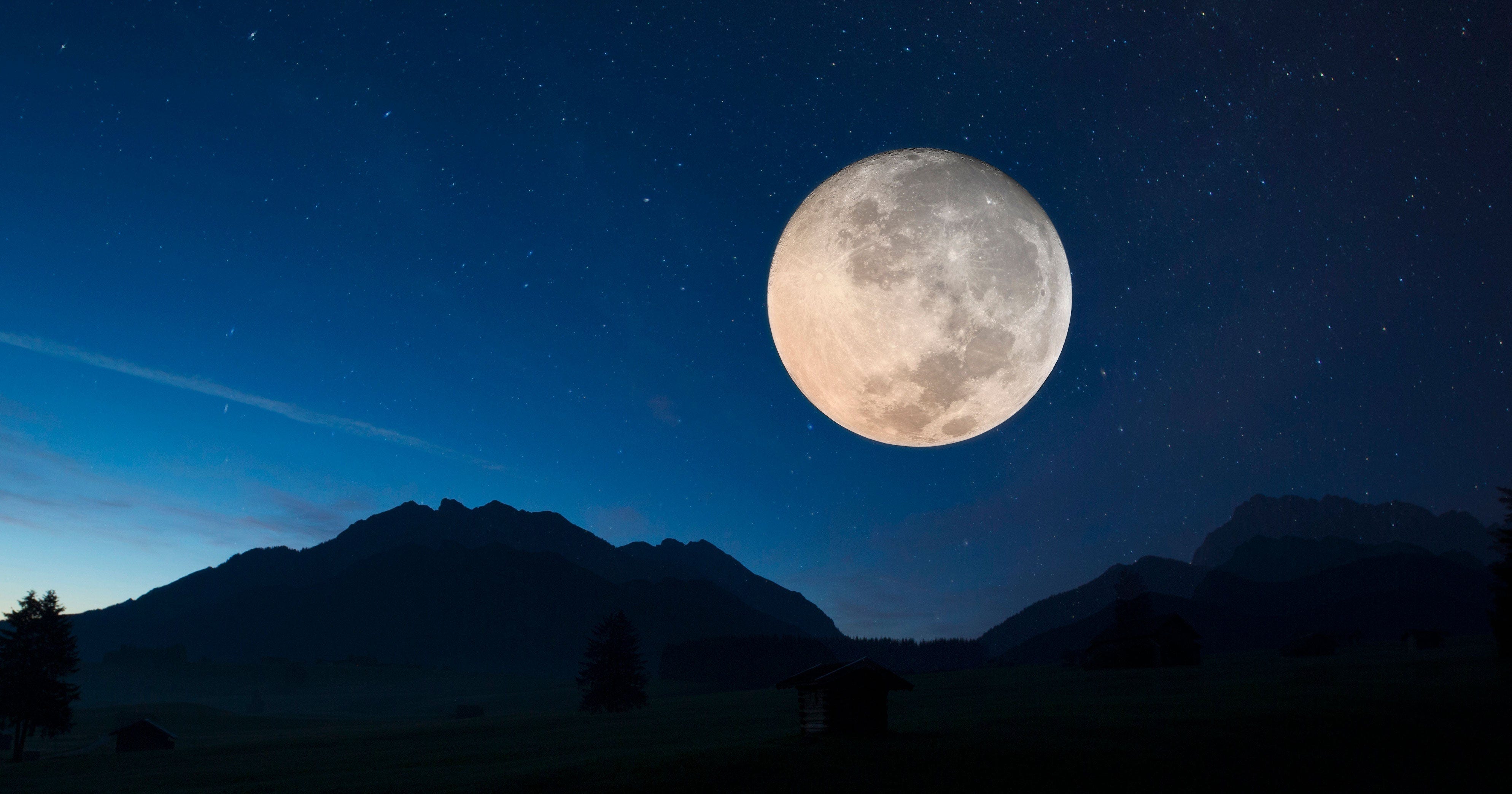
The orbit of the moon
“Above the rays of the sunshine by a distance of 100,000 yojanas [800,000 miles] is the moon, which travels at a speed faster than that of the sun. In two lunar fortnights the moon travels through the equivalent of a saṁvatsara of the sun, in two and a quarter days it passes through a month of the sun, and in one day it passes through a fortnight of the sun.” (SB 5.22.8)
Previously, it was stated that the sun has its orbit in a plane 100,000 yojanas above the plane of Bhū-mandala, and now it is stated that the moon has its orbit in a plane 100,000 yojanas above the sunshine.
The direct meaning is that taking the plane of Bhū-mandala as ground zero, we have the sun 100,000 yojanas above it, and the moon 100,000 yojanas above that, or 200,000 in total. The expression arka-gabhastibhyaḥ upariṣṭāt (above the rays of sunshine) also implies that the moon is more distant than the sun, something that Prabhupāda takes as a fact. Let’s try to unpack this.
The first point is that 100,000 yojanas for the sun and 200,000 yojanas for the moon is not the total distance from our planet, but simply the vertical elevation above the plane of Bhū-mandala. Most of the distance is in the horizontal orbit of the sun, and not in the elevation. Horizontally, the sun is over 10 million yojanas from earth, with its orbit over the ocean of yogurt. In his research, Sadāpūta Prabhu came up with a figure of 93 million miles for the earth-sun distance according to the description of the Śrīmad-Bhāgavatam using an 8.5-mile yojana, which is close to modern estimates.
Back to the moon, the orbit on top of Bhū-mandala is not directly stated, and therefore, we can’t directly calculate the precise distance like in the case of the sun. However, the Bhāgavatam mentions that arka-gabhastibhya upariṣṭāl lakṣa-yojanata: the moon is 100,000 yojanas above the rays of the sunshine, and Śukadeva Goswami also states that it moves faster than the sun. Prabhupāda uses this as a basis to conclude that the moon is further away than the sun. Since both appear to be more or less the same size when observed from our planet, the next conclusion is that the moon is larger than the sun. This point is later directly confirmed by Śukadeva Gosvāmi on SB 5.24.2.
How is that? The point made by the Bhāgavatam is that the moon is a celestial planet, even higher than the sun in the vertical dimension. Yogis who desire to attain the moon have to first elevate themselves to the sun to be purified, and from there move upwards in the direction of the moon.
It’s interesting to note that this same Vedic conclusion appears to have been accepted by all ancient civilizations. In both India and Europe, the weekdays are named after the planets, with Sunday, Monday, Tuesday, Wednesday, Thursday, Friday, and Saturday in English; dies Solis, dies Lunae, dies Martis, dies Mercurii, dies Jovis, dies Veneris, and dies Saturni in Latin; and Ādityavāra, Somavāra, Maṅgalavāra, Budhavāra, Bṛhaspativāra, Śukravāra, and Śanivāra in India. The meaning for the three sets is exactly the same: The day of the sun, the moon, Mars, Mercury, Jupiter, Venus, and Saturn. Each day is named after the planet that governs the first hour after sunrise.
Prabhupāda noted that Sunday (the day of the sun) comes before Monday (the day of the moon). He saw this as not just an accident or cultural whim, but as a reflection of the cosmic order described in the Bhāgavatam, with the sun as the primary regulator of time, and the moon as a higher, faster-moving luminary beyond it. This is an argument he insisted upon in many conversations.
In this way, from the account of the Śrīmad-Bhāgavatam, it is clear that the moon is taken as higher than the sun, behind it in the universal order. Solar eclipses are taken as caused by Rāhu, instead of the moon coming in front of the sun. By the description, it is clear that in the higher dimensional reality of Bhū-mandala, it is so. The question is how we can relate it to our physical reality.
An interesting clue is that the Surya-siddhanta (4.1) offers a different descriptive framework. There, it is mentioned:
sārdhāni ṣaṭsahasrāṇi yojanāni vivasvataḥ
viskambho maṇḍalasyendoḥ sahasrityā catuḥśatam
sphuṭa svabhuktyā guṇitau madhyabhuktyoddhṛtau sphuṭau“The diameter of sun’s disc (ravimandala) is 6,500 yojanas and that of moon’s disc is 480 yojanas.”
This description is similar to modern calculations, giving the idea of the moon being much smaller than the sun and closer to our planet. The Sūrya-siddhānta also gives formulas to calculate the distance. Āryabhaṭa and Bhāskarācārya came up with values very close to modern estimates by interpreting these formulas. Āryabhaṭa gave 237,540 miles, and Bhāskarācārya 238,700 miles. The modern estimate for the mean earth–moon distance is 238,855 miles. In other words, both came within a margin of less than 1% from modern estimates.
This suggests that these two accounts, of the Bhāgavatam and Surya-siddhanta, describe two different dimensional objects. The description of the Śrīmad-Bhāgavatam describes the higher-dimensional reality of Bhū-mandala, with the moon as a celestial planet, the abode of Soma, which is higher than the sun in the hierarchy of the planets. Yogis can reach this celestial moon for a very long life of material enjoyment after becoming purified of all sinful contamination. Rāvaṇa tried to construct a tower to reach this celestial moon, and Triśaṅku tried to reach it without relinquishing his gross body by performing a special sacrifice with the help of Viśvāmitra, but both failed. Based on these accounts, Prabhupāda insisted that modern humans would never be able to reach this celestial moon using spaceships, and all efforts in this direction would be doomed to fail.
The Surya-siddhanta, on the other hand, describes the gross moon that orbits our planet, which is some kind of physical projection of the celestial moon. When we look at the sky, the moon we see is, somehow, simultaneously both; however, when we try to reach the moon using a spacecraft, we reach this gross moon, which appears to be uninhabited.
In other words, the true moon is a celestial planet, but it is represented in our gross reality as the celestial body that is close to our planet. When we consider the multidimensional nature of the Vedic universe, this doesn’t seem too implausible, since there are many other cosmic bodies that are not visible to us, only partially visible, or that appear differently in our dimension. Bhū-mandala is not visible at all, and we can see the sun as just a globe of light, instead of a demigod seated on a cosmic chariot. Similarly, we see the moon as much closer to our planet, and its celestial opulences remain hidden to mere mortals. Vedic sages, however, understood this multidimensional nature of the moon and described both in different scriptures. The Bhāgavatam describes the higher-dimensional body, while the Surya-siddhanta describes the gross manifestation that is visible to us.
Read the whole book:
« Making Sense of the Vedic Universe, a Higher-Dimensional Reality
This is a publication for thoughtful readers who want to go deeper into Kṛṣṇa consciousness. I publish daily, trying to offer high-quality spiritual content, and all posts are available to free subscribers. If you wish, you can also choose a paid subscription to support this work.
You can also receive the updates on WhatsApp or Telegram.
If you would like to contribute further, you can find the donation links here.