

« Making Sense of the Vedic Universe, a Higher-Dimensional Reality
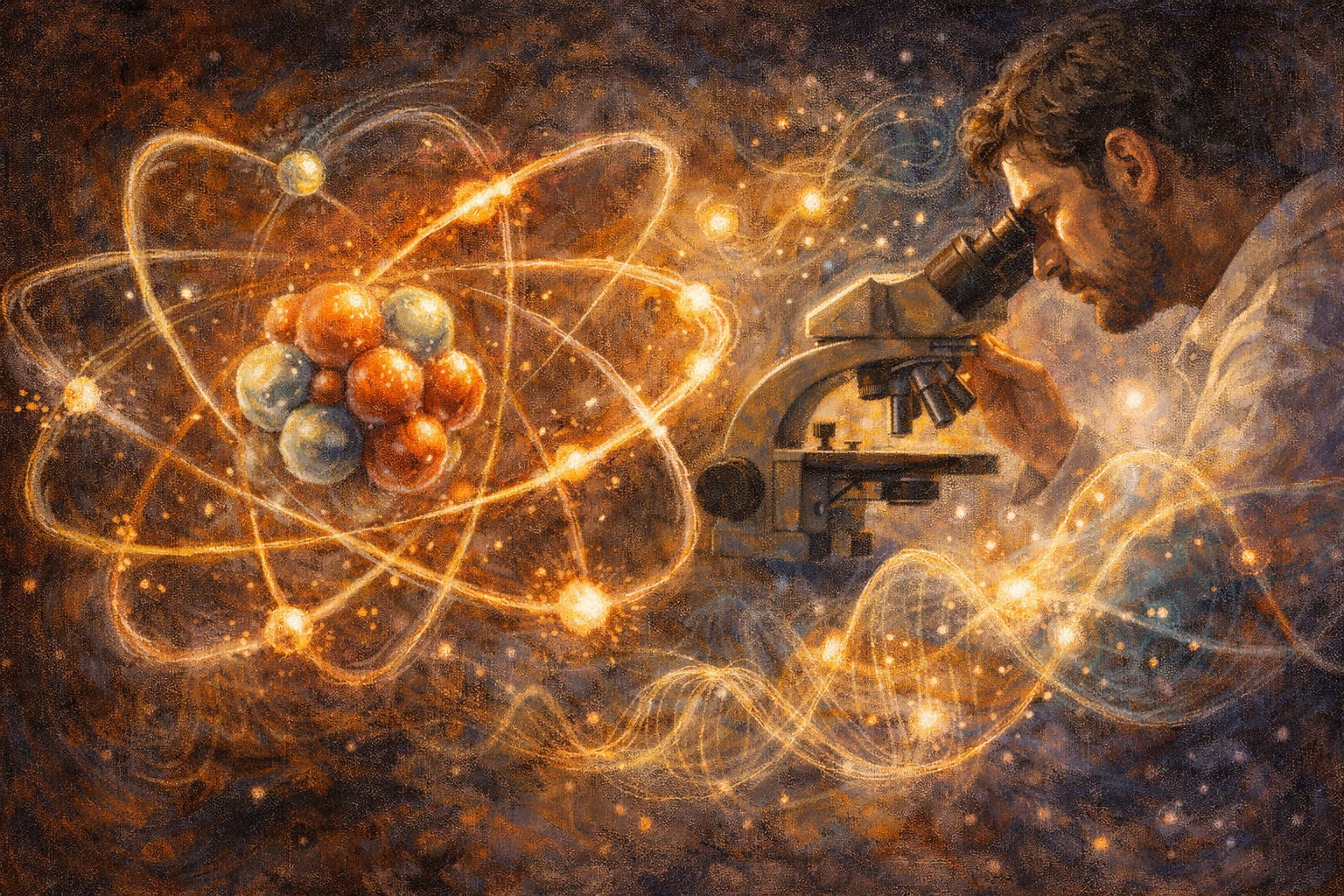
The periodic table in multiple dimensions
One central idea in the model of the Vedic universe that is different from what is believed in modern science is the concept of different dimensions, from gross to subtle, which explains the existence of the different structures and planetary systems described in the Vedas, such as Bhū-mandala, and their connection with our gross reality.
For example, the Śrīmad-Bhāgavatam describes the structure of matter in several passages, but it is always described in terms of the five elements (earth, water, fire, air, and ether) instead of a periodic table, as in modern chemistry. As already mentioned, that is because it’s the only model that makes it possible to describe matter at all levels, not only in our gross reality.
According to the Vedas, reality exists on several different dimensional levels, going from gross (where matter is composed of atoms) to subtle (where matter assumes more refined forms). We live on a gross material level, and the demigods live on different gradations of subtle material levels. Just as we can’t see demigods such as Indra and Surya unless they assume forms visible to us, they can’t see higher beings such as Nārada Muni or the four Kumāras unless they assume forms visible to them. The subtlest material level exists in Satyaloka, where reality is so subtle that there is practically no matter at all. Outside the universe, there is the spiritual level, which is still higher and subtler, inaccessible even to the inhabitants of Satyaloka.
For example, in the Vedas, the moon is described as a celestial planet, higher than the sun in the subtle scale. However, when we look at it using our telescopes, we see only rocks and dust, because the matter that composes that level of reality is too subtle for us to experience.
In each separate level of existence, matter exists in a form that is not recognizable to inhabitants of the previous level. We have thus the gross level, observable to us, where matter is composed of atoms, as studied in chemistry; next, we have the subtle level of the demigods and demons; the still subtler level of the hellish planets, controlled by Yamarāja; and then the astral levels of Maharloka, Janaloka, Tapoloka, and Satyaloka, which offer progressively subtler forms of reality. To advance to each subsequent level, one has to elevate his consciousness accordingly and assume an appropriate body. However, although matter assumes more refined forms as we go upwards, it still conserves the same properties; people still see, touch, hear, etc., even in the highest level of Satyaloka. That’s thus the only reliable way to classify matter over the different parts of the cosmos.
This concept is indirectly supported in modern cosmology in the concept of dark matter. According to recent studies, about 85% to 95% of our universe is composed of dark matter and dark energy (different types of matter not composed of atoms or detectable forms of energy). The Vedas explain it in terms of the subtle forms of matter that compose the abodes of the demigods and structures like Bhū-mandala, while modern science is still trying to figure out what it may be.
The idea of multiple dimensions (as different levels of reality in the same space) is currently discussed only in science fiction, but it may be the next Vedic concept to be acknowledged in scientific circles, just as the concept of multiple universes is.
Read the whole book:
« Making Sense of the Vedic Universe, a Higher-Dimensional Reality
This is a publication for thoughtful readers who want to go deeper into Kṛṣṇa consciousness. I publish daily, trying to offer high-quality spiritual content, and all posts are available to free subscribers. If you wish, you can also choose a paid subscription to support this work.
You can also receive the updates on WhatsApp or Telegram.
If you would like to contribute further, you can find the donation links here.