

« Making Sense of the Vedic Universe, a Higher-Dimensional Reality
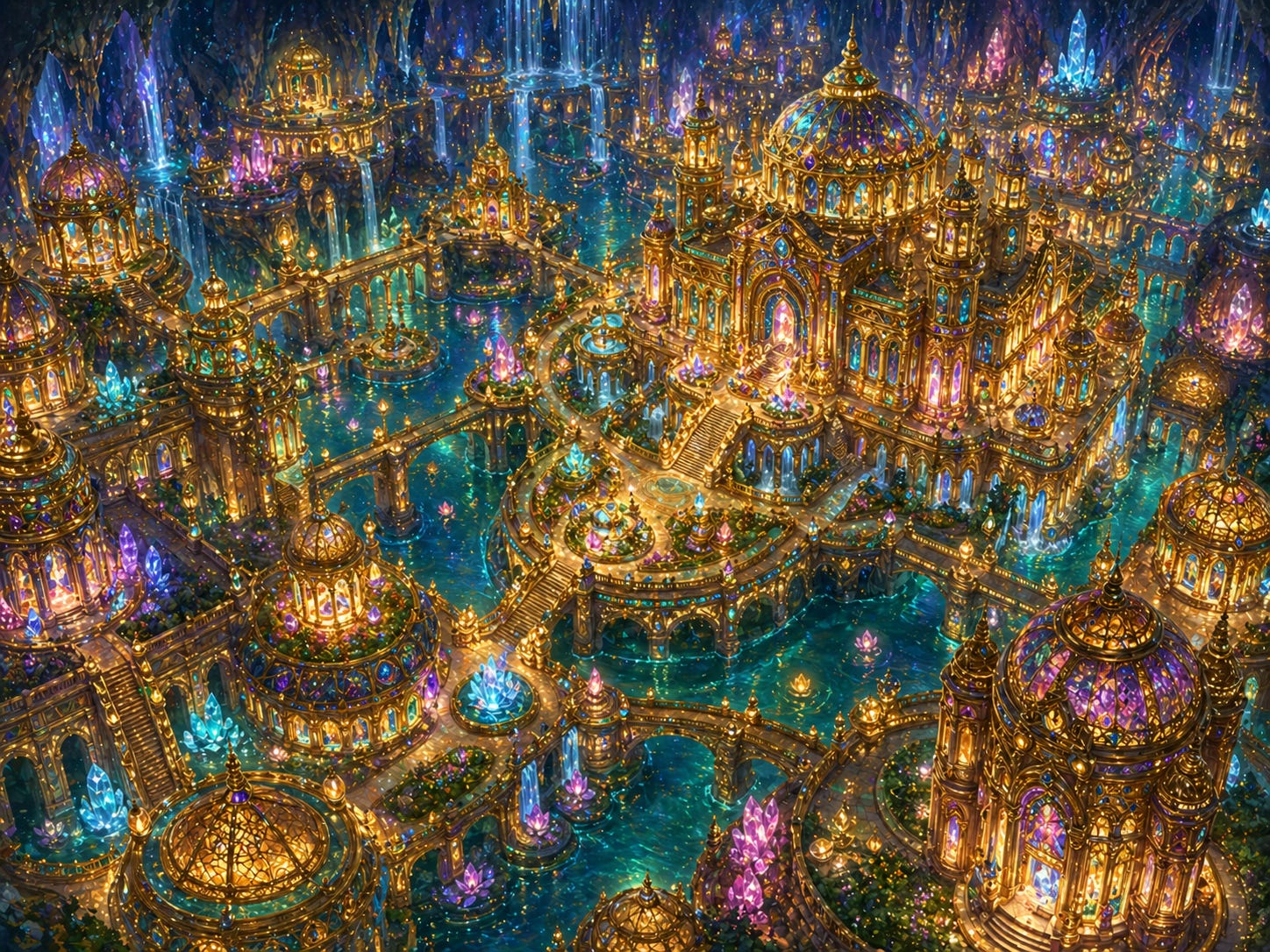
The planetary systems of Mahātala, Rasātala, and Pātāla
“The planetary system below Talātala is known as Mahātala. It is the abode of many-hooded snakes, descendants of Kadrū, who are always very angry. The great snakes who are prominent are Kuhaka, Takṣaka, Kāliya and Suṣeṇa. The snakes in Mahātala are always disturbed by fear of Garuḍa, the carrier of Lord Viṣṇu, but although they are full of anxiety, some of them nevertheless sport with their wives, children, friends and relatives.” (SB 5.24.29)
Different from the previous abodes, which are populated mainly by asuras with a human form, Talātala is a nāga realm, the abode of many powerful serpents, like Takṣaka and Kāliya. The defining characteristic of these serpents is that they are very powerful, having many hoods and extremely strong poison. They are also very angry, which makes them especially dangerous.
They are also defined as mahā-bhogavantaḥ, addicted to all kinds of material enjoyment, just like other asuras. They, however, can’t live in peace, being constantly threatened by Garuḍa, who is always attentive in keeping their population under control, constantly fighting and hunting the snakes. We can see in the description of the Śrīmad-Bhāgavatam that he hunted Kāliya, who ended up taking shelter of the Yamunā, where he met Kṛṣṇa and was finally purified of his anger and poison.
This description helps us to put the plight of Maharaja Parīkṣit into perspective. Takṣaka was not just a winged serpent, but an extremely powerful entity. The power of Takṣaka, combined with the curse of Śṛṅgi, made the situation inescapable.
Another aspect is that, despite living in constant anxiety, these serpents constitute families and consider themselves happy living with their wives, and children, just like all materialists. Sometimes they even forget their fear and travel around the planetary system with their families.
In his purport, Prabhupāda uses this to illustrate the mentality of the asuras in general, remaining addicted to material enjoyment even in the most dangerous conditions.
“Beneath Mahātala is the planetary system known as Rasātala, which is the abode of the demoniac sons of Diti and Danu. They are called Paṇis, Nivāta-kavacas, Kāleyas and Hiraṇya-puravāsīs [those living in Hiraṇya-pura]. They are all enemies of the demigods, and they reside in holes like snakes. From birth they are extremely powerful and cruel, and although they are proud of their strength, they are always defeated by the Sudarśana cakra of the Supreme Personality of Godhead, who rules all the planetary systems. When a female messenger from Indra named Saramā chants a particular curse, the serpentine demons of Mahātala become very afraid of Indra.” (SB 5.24.30)
The demons have two principal branches, descending from Diti and Danu (two wives of Kaśyapa Muni). The history of Diti is described in the Third Canto. She gave birth to Hiranyākṣa and Hiraṇyakaśipu, who became the two patriarchs of the Daityas. There is no specific description for Danu (just a few verses mentioning her descendants, the Dānavas). The case of Diti is extensively described because it was an exceptional occurrence.
In any case, both the Daityas and Dānavas are described as living in different lower planetary systems, just as the Nāgas are. It seems that all the three species have access to all the seven planetary systems. It is just that certain groups are more prominent in specific abodes.
These different types of asuras are all described as sharing the same subtle dimension where demigods and inhabitants of previous yugas live. They interact with both demigods and human beings, and often fight with them. It is described that Arjuna, for example, visited the celestial planets during the 13-year exile of the Pāṇḍavas, and assisted the demigods in fighting with the asuras. It is also described that the Pāṇḍavas fought against Nāgas, Rākṣasas, and other races. In our age, however, interactions between human beings and asuras tend to happen in the astral plane, when one is outside the body, or sometimes in dreams. Demons from these lower planetary systems can also take birth on earth to promote their godless style of civilization and create havoc.
This verse describes Rasātala as being the abode of specific branches of the Daitya and Dānava families, like the Nivāta-kavacas, Kāleyas and Hiraṇya-puravāsīs. Many of them live in Hiraṇya-pura, a city made of gold. The predominant characteristic of the asuras of Rasātala is that they are naturally very powerful, violent, and cruel, and share a hatred for the demigods.
The verse, however, also calls our attention to the discrepancy between their power and condition. They live in holes in the ground, and are constantly in fear. They frequently wage war against the demigods, but are usually defeated by them. Only sometimes can they defeat the demigods in extraordinary circumstances, such as when Indra offended his spiritual master. Above all, they always remain fearful of the Sudarśana-cakra of the Lord. In other words, the characteristics of their existence are hostility, defeat, and insecurity. They are great in pride, but regularly defeated.
All of this illustrates how power divorced from surrender to the Supreme Lord is always very unstable. Sañjaya closes the Gītā by saying, yatra yogeśvaraḥ kṛṣṇo, yatra pārtho dhanur-dharaḥ, tatra śrīr vijayo bhūtir, dhruvā nītir matir mama: “Wherever there is Kṛṣṇa, the master of all mystics, and wherever there is Arjuna, the supreme archer, there will also certainly be opulence, victory, extraordinary power, and morality. That is my opinion”. This indicates how power and victory ultimately follow the devotees of the Lord. Whenever there are pure devotees, Kṛṣṇa is present, accompanied by power, morality, opulence, etc. Without God consciousness, however, all these things will be short lived. The account of the Daityas and Dānavas illustrates that.
“Beneath Rasātala is another planetary system, known as Pātāla or Nāgaloka, where there are many demoniac serpents, the masters of Nāgaloka, such as Śaṅkha, Kulika, Mahāśaṅkha, Śveta, Dhanañjaya, Dhṛtarāṣṭra, Śaṅkhacūḍa, Kambala, Aśvatara and Devadatta. The chief among them is Vāsuki. They are all extremely angry, and they have many, many hoods — some snakes five hoods, some seven, some ten, others a hundred and others a thousand. These hoods are bedecked with valuable gems, and the light emanating from the gems illuminates the entire planetary system of bila-svarga.” (SB 5.24.31)
The last of the seven lower planetary systems is Pātāla, or Nāgaloka. These serpents also have many hoods and are described as very angry, envious, and addicted to sense enjoyment . Their special characteristic is having very brilliant jewels on their foreheads that illuminate not only their own abode, but all the subterranean heavens.
Pātāla is not just a dark underworld, but an opulent place, with aristocratic dynasties, different kingdoms, family traditions, and so on. The nāgas have serpentine forms, mixing snake and human characteristics. They are very powerful and can use their mystic powers to assume human forms when they desire. In the Mahābhārata it is described how Ulūpī, a Nāga princess, fell in love with Arjuna. She assumed the form of a beautiful woman and used her mystic powers to bring him to her palace when he bathed in the Ganges. She begged him to stay for one night and accept her as his wife. After that, she continued to follow Arjuna, helping him in many situations while remaining incognito. Their son, Irāvān, fought on the side of the Pāṇḍavas in the battle of Kurukṣetra.
In other words, Pātāla is very far from being a destitute place. In fact, as Prabhupāda mentions, earth during Kali-yuga is one of the most miserable places of the universe in material terms. Practically everyone else is better than us, including the nāgas and asuras. What makes Pātāla such an undesirable place is the combination of material opulence, sense gratification, aristocratic life and lack of Kṛṣṇa consciousness. This combination makes it very difficult for souls who fall there to ever see the light of the sun again.
Read the whole book:
« Making Sense of the Vedic Universe, a Higher-Dimensional Reality
This is a publication for thoughtful readers who want to go deeper into Kṛṣṇa consciousness. I publish daily, trying to offer high-quality spiritual content, and all posts are available to free subscribers. If you wish, you can also choose a paid subscription to support this work.
You can also receive the updates on WhatsApp or Telegram.
If you would like to contribute further, you can find the donation links here.