



You can receive new articles directly in your inbox. Subscription is free; donations are welcome.
When we study the Śrīmad-Bhāgavatam or even the Bhagavad-gītā, we often find passages that appear to be contradictory at first. This becomes even more pronounced when we study the commentaries of different ācāryas, or when we try to reconcile different passages from Prabhupāda, from different contexts and situations.
The basic process is that we have to accept the ācārya as a perfect source of knowledge, which is extended to the whole disciplic succession, all the way to Kṛṣṇa Himself, who is the original source of knowledge. Kṛṣṇa is perfect, and thus He transmits perfect transcendental knowledge, which is repeated and explained by His pure devotees who form the chain of the paramparā.
There is a fundamental difference between the vision of a conditioned soul and a pure devotee. We read descriptions from the scriptures and try to understand the transcendental reality from these descriptions. To the extent we get it right, we can understand. We are like blind men trying to understand the world based on descriptions from people who can see.
A perfect devotee can directly experience the transcendental reality. He is someone who can directly see and describe it to us. Therefore, we accept him as a perfect source of knowledge.
What happens when two or more descriptions from sources accepted as perfect appear to contradict each other? This is what we call an apparent contradiction. It appears to be a contradiction, but because we understand that the sources are perfect, we understand that they must fit together somehow.
This is where nyāya can help. But first, what is it?
Nyāya is one of the six classical systems of Vedic philosophy (ṣaḍ-darśana). It deals with logic, reasoning, philosophical debate, and the means of obtaining valid knowledge (pramāṇa). When disconnected from Kṛṣṇa, it can easily lead to mental speculation and dry philosophical debate, but when properly used, it becomes a method for understanding the scriptures and finding its ultimate goal.
Nyāya is valuable because it provides tools for evaluating arguments, reconciling apparently contradictory passages, distinguishing valid conclusions from speculation, and understanding how different statements can be reconciled into a coherent conclusion. Following the nyāya process, we examine the context, the meaning of the words, the intention of the author, the conclusion of the book, and their relationship with other passages, instead of merely collecting quotes to support a particular conclusion. This allows us to derive conclusions that may not be directly stated in a single passage but that are a logical progression of the combined evidence.
This method is central to the Vedānta-sūtra, which is called nyāya-prasthāna, the logical foundation of Vedic knowledge. In the Govinda-bhāṣya, Baladeva Vidyabhūṣana gives us many examples of the application of these concepts. His arguments are developed through successive discussions of statements from the scriptures, expressions of doubt, arguments, opposing interpretations, etc., culminating in the established conclusions (siddhānta). In this way, the book teaches us how reasoning can be used to systematically understand the Vedic scriptures. Once we learn this method, we can apply it to everything else.
Let’s work with a simple example.
Imagine you live in the 1940s, and you never saw a car. One passage says that a car has four wheels, and another that it has an engine. Another says that you can sit inside it. Another says that you need a key to use it, and yet another says that some cars are red.
At first, these passages may sound contradictory, and we may concoct different ideas, taking just one of a few of them and discarding the rest. All of these will be obviously incorrect. You could come to very amazing conclusions by following this flawed method.

If we understand that all these different descriptions come from perfect sources of knowledge, from people who can see, then we quickly understand that all of these details must be simultaneously correct. From this, we can start reasoning and try to assemble a clearer mental image of it.
Here is where niāya can help us. Nyāya’s analysis of wholes and parts (avayavin and avayava) is particularly relevant: we are not describing five unrelated objects but different characteristics of one integrated whole.
We have five statements:
1. A car has four wheels.
2. A car has an engine.
3. A person can sit inside a car.
4. A key is needed to use a car.
5. Some cars are red.
What can we infer from them?
First of all, we can understand that a car is a physical object. It is not something subtle or transcendental. It is an instrument composed of tangible matter that people can use.
Next, we can infer that a car cannot be merely a wheel, an engine, a chair, or a key. It must be an object that incorporates these different features.
The next conclusion is that the car must have some form of frame or supporting structure, where these different components are attached. Four wheels, an engine, and a place for a person to sit cannot constitute a functional integrated object without some form of structure or arrangement connecting and supporting these parts.
What is its function? It is described as having an engine. Engines burn fuel to produce movement. Since it uses fuel, it must have some place where the fuel is stored. And where does this movement go? The object has four wheels, which suggests it moves. The movement produced by the engine should be transferred to the wheels by some mechanism, moving them.
At this point, someone could argue that having an engine does not necessarily imply movement, and this is a valid argument. But since a car is described in different passages, we can infer it must have an important function, and since it has an engine, the conclusion of it as a form of transportation.
It is also described that a person can sit inside a car. Maybe more than one person can fit, but since one person is mentioned, we stick for now with the idea of a means of transportation for a single person until more evidence is found.
Since it is described that the person can sit, we can also infer that the object must include some form of seat. This also gives us some idea of the scale of size. A person fits in; it moves; the engine must have enough power to move it.
From the description, we cannot infer if the space inside the car is closed or not. It can be either. Since a person fits inside, we can infer that there may be doors.
Since we are speaking about the 1940s (no drones yet!), a person inside an object that moves implies that there must be some controlling device, like a steering wheel or a driving stick. We can also presume that the person sits facing forward; otherwise, he would not be able to drive it.
The use of a key gives us another important clue: the operation of the car is controllable and intermittent. It doesn’t remain working all the time; the driver controls the operation. He can enter and leave, start and stop it.
The mention of some cars being red gives us more breakthroughs. “Some as red” indicates the car is not a single object but a category. There are many cars, and they can differ in some characteristics while at the same time retaining their identity as cars. Some may be red, others may come in other colors, others may have a slightly different shape, and so on.
With all these inferences, we could conclude that a car may look something like this:
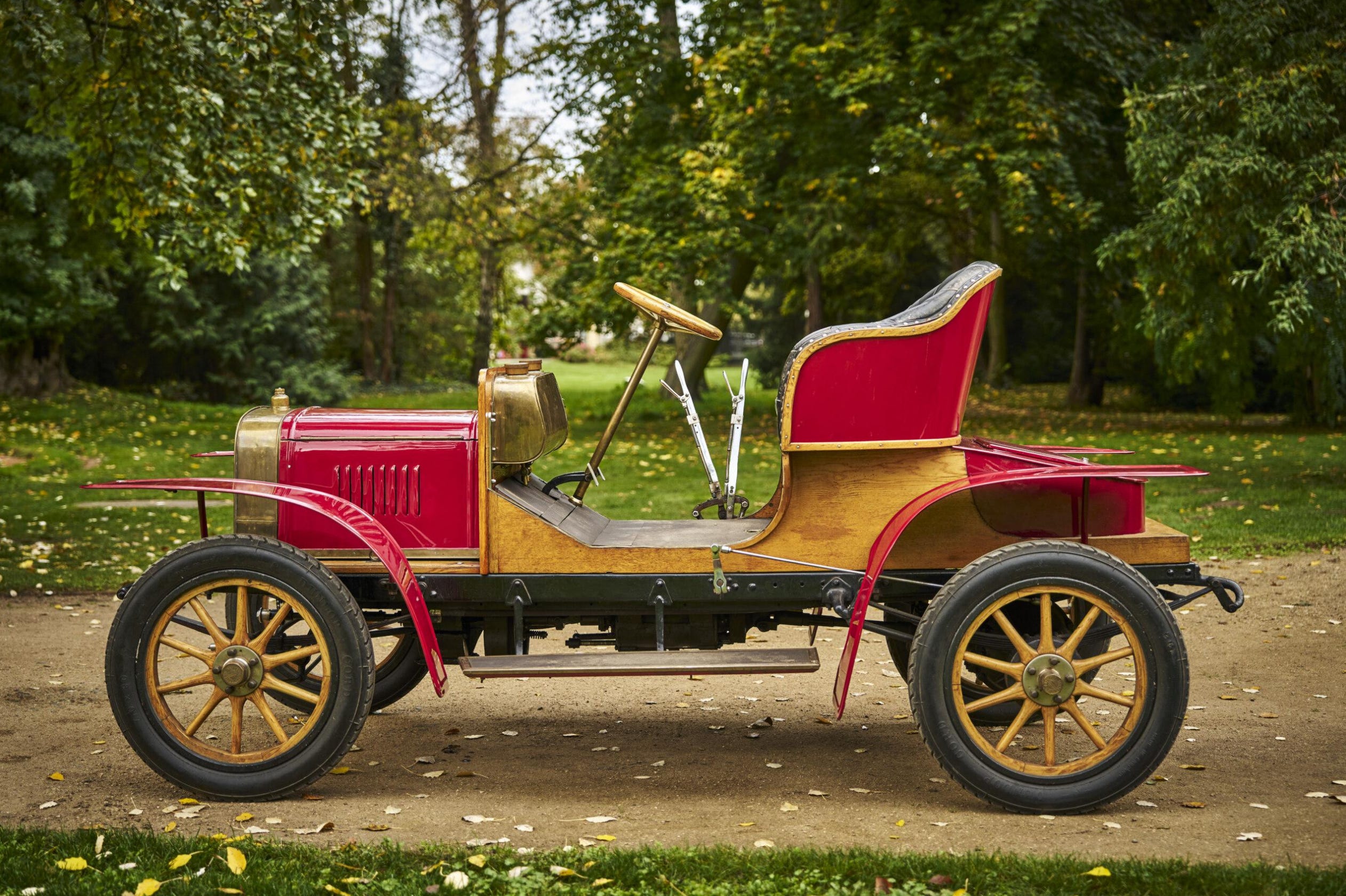
Not so bad considering the limited volume of information, right? This image could be further refined if we could find additional descriptions or, especially, if we could ask questions to a person who can see (a pure devotee). In this case, depending on how precisely we could formulate our questions, we could come to a very clear idea of the different types of cars and their differences and similarities.
In the story of Mādhava Dāsa and Gauranga Dāsa we are publishing, you can see that Gauranga uses this form of reasoning to solve many apparent contradictions in the scriptures, which gradually bring Mādhava to the right conclusions. You can follow his arguments and thus learn more practical applications of niāya as part of the framework for understanding the scriptures.
Here is the first part of the story.
Read more:

This is a publication for thoughtful readers who want to go deeper into Kṛṣṇa consciousness. I publish daily, trying to offer high-quality spiritual content, and all posts are available to free subscribers. If you wish, you can support this work with a monthly contribution. When you subscribe, you can choose between a free subscription and a monthly contribution, and you can switch from a free subscriber to a supporter at any time.
You can also receive updates on WhatsApp or Telegram.
If you would like to contribute further, you can find the donation links here.