

« The Song of God—Volume 1, chapters 1-6
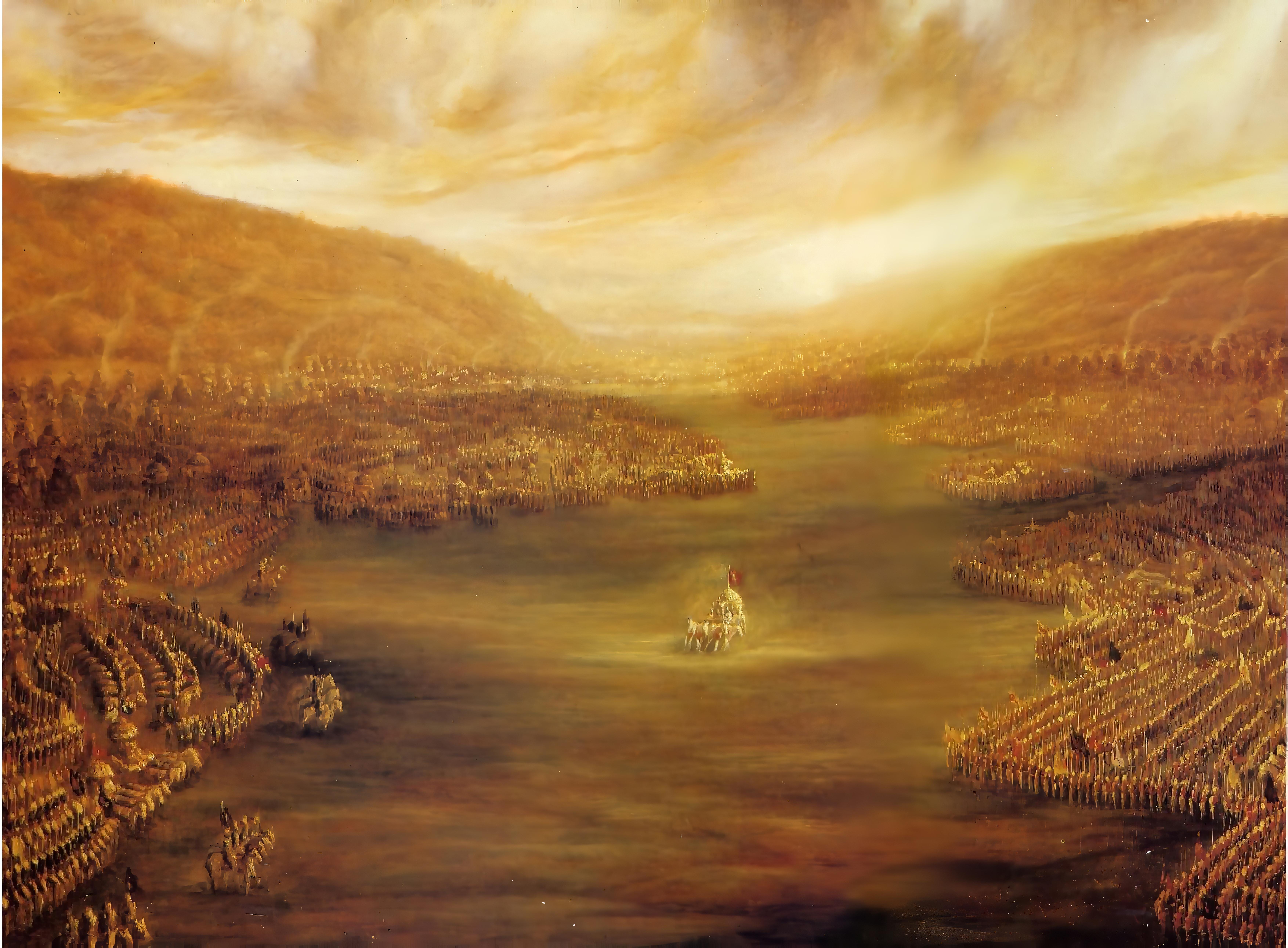
The perfect opportunity (Bg 1.46)
Externally, Arjuna appears to be defeated. He even puts aside his bow. Spiritually, however, this becomes the perfect opportunity. Having reached the limits of his own reasoning, Arjuna is now ready to hear from Kṛṣṇa.
Verse 46: sañjaya uvāca
evam uktvārjunaḥ sankhye, rathopastha upāviśat
visṛjya sa-śaram cāpam, śoka-samvigna-mānasaḥ
Sañjaya said: Arjuna, having thus spoken on the battlefield, cast aside his bow and arrows and sat down on the chariot, his mind overwhelmed with grief.
By the end of the first chapter, Arjuna is completely distressed. He concludes that it would be better to be killed by the enemy without showing resistance than to fight them. Prabhupāda comments, “All these symptoms are due to soft-heartedness resulting from his being a great devotee of the Lord.”
Arjuna was a great devotee, and his hesitancy to fight was rooted in his soft-heartedness. Had he been a ruthless person, he would not have hesitated to fight and recover the kingdom that belonged to him and his brothers. This detachment and magnanimity, combined with his devotion and faith in Kṛṣṇa’s instructions, put him in the perfect position to receive transcendental knowledge.
One obstacle to acting in Kṛṣṇa consciousness is attachment to the results. That’s the platform most of us are on. We act because we anticipate some enjoyable material result, and when such anticipation is not there, we don’t have the will to work at all. Arjuna is already above this platform. He doesn’t desire any material result from the battle. In fact, he is prepared to renounce his claim to the kingdom and retire to the forest to live a life of austerity.
Arjuna cast aside his bow and arrows and sat down on the chariot. This is also significant because previously, Arjuna had made a vow never to put down the Gāṇḍīva bow. This bow was more dear to him than his life. The fact that Arjuna now forgot about this and put his bow aside says a lot about how distressed he was.
His mind was overwhelmed with grief, and he was unsure of what to do next. This is, however, going to be short-lived. His soft-heartedness and his other qualifications attracted the mercy of the Lord, and through His instructions, Kṛṣṇa would destroy his doubts very soon.
All of this happened in the middle of both armies, so everyone could see that Arjuna, the great hero, was pondering whether he would fight or not. The soldiers on the side of the Kauravas were certainly feeling great relief at the prospect of not having to face such a powerful foe, while the soldiers on the side of the Pāṇḍavas were surely apprehensive about the possibility of losing their most capable commander.
Thus, the Bhagavad-gītā starts at the most crucial moment, when everyone is paying full attention, anxious to see what is going to happen next. What would be a better opportunity to speak about self-realization?
Main points in the purport of Śrīla Prabhupāda:
“Sañjaya said: Arjuna, having thus spoken on the battlefield, cast aside his bow and arrows and sat down on the chariot, his mind overwhelmed with grief.”
a) Arjuna sat on the chariot, putting aside his bow and arrows. His soft heart and devotion made him fit to receive the mercy of the Lord.
Next: Summary of the first chapter of the Gītā
Read the entire book:
« The Song of God—Volume 1, chapters 1-6

This is a publication for thoughtful readers who want to go deeper into Kṛṣṇa consciousness. I publish daily, trying to offer high-quality spiritual content, and all posts are available to free subscribers. If you wish, you can also choose a paid subscription to support this work.
You can also receive the updates on WhatsApp or Telegram.
If you would like to contribute further, you can find the donation links here.