

« The Song of God—Volume 1, chapters 1-6
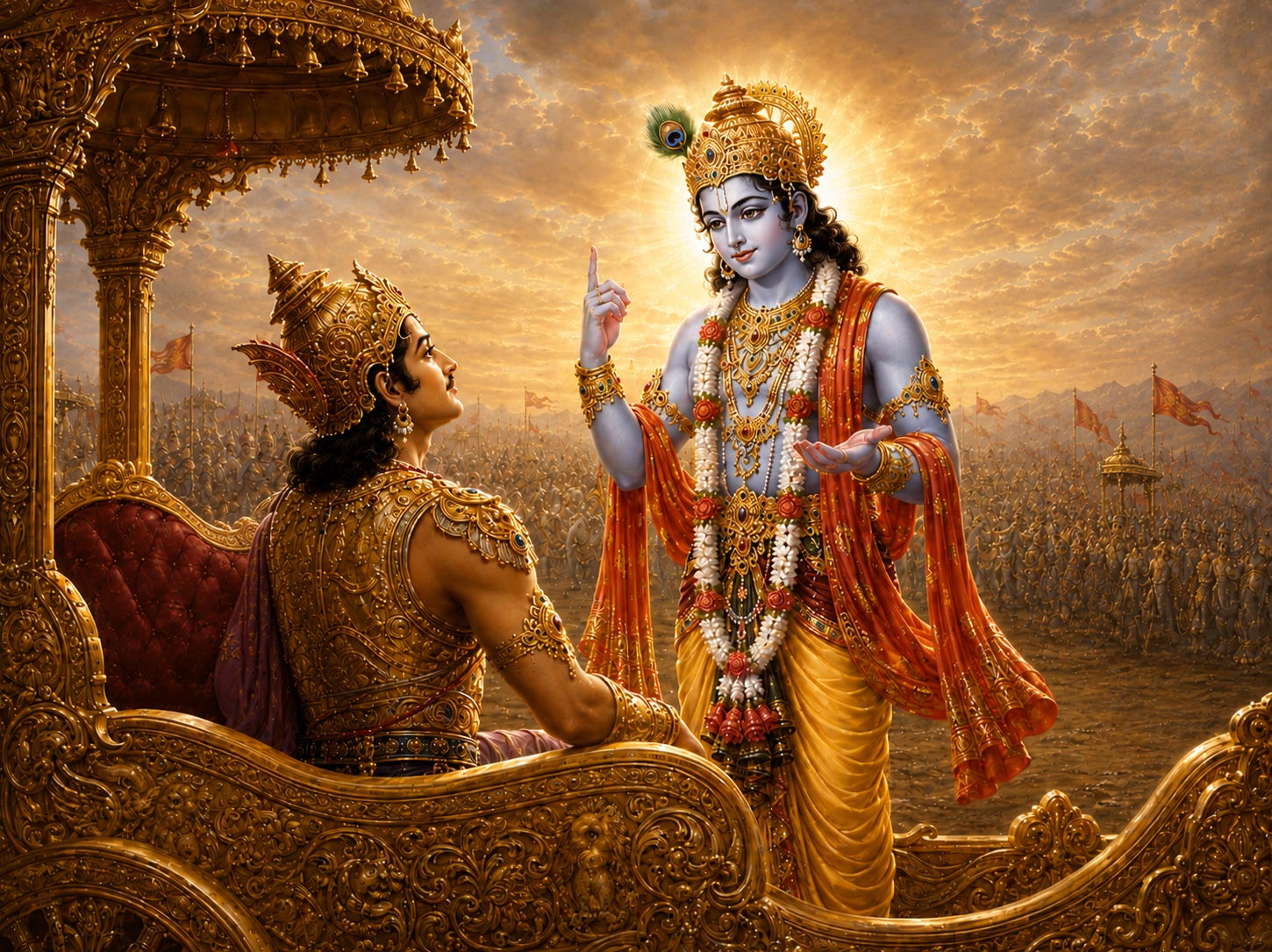
CHAPTER FIVE:
Karma-yoga – Action in Kṛṣṇa Consciousness (karma-sannyāsa-yoga)
At the beginning of the Gītā, Arjuna was inclined to abandon the battlefield and adopt a process of dry renunciation. This was counteracted by Kṛṣṇa in chapters two and three, by His exposition of analytical knowledge, and the process of karma-yoga. In chapter four, however, Kṛṣṇa appears to again glorify knowledge and renunciation, which many are predisposed to interpret as abstaining from activity.
In text 4.41, for example, one could understand that yoga-sannyasta-karmāṇaṃ applies to one who has renounced actions due to connection with the Supreme, instead of one who acts in devotional service. In this way, up to text 4.41, one could interpret the whole chapter as meaning that one should become situated in yoga and stop material activities. However, in text 4.42, Kṛṣṇa unmistakably urges Arjuna to fight with the words ātiṣṭhottiṣṭha bhārata: “O Bhārata, stand and fight,” which brings the discussion back to action in Kṛṣṇa consciousness.
Arjuna then starts the fifth chapter with another honest inquiry: what is better, after all? To renounce work, sannyāsa, or to act in devotional service? Kṛṣṇa answers that both can lead to liberation. Renouncing work is connected with the path of jñāna, which is practiced by sages who have this inclination, but work in devotional service is superior because it purifies the heart without the danger and artificiality of premature renunciation. Kṛṣṇa already identified that Arjuna’s qualification is to act (karmaṇy evādhikāras te), and not to meditate in the forest, and in this chapter Kṛṣṇa will deepen this instruction, concluding His explanation of the path of karma-yoga.
True renunciation does not mean merely stopping all activity, but giving up attachment and aversion while engaging our work in Kṛṣṇa’s service.
Follow the study:
+ CHAPTER FIVE: Karma-yoga – Action in Kṛṣṇa consciousness (Karma-sannyāsa yoga)
Devotional action is better than renunciation of work (5.1 to 5.6)
Niṣkāma-karma-yoga: Remaining free from bondage (5.7 to 5.12)
The liberated soul does not create activities, nor induce others to act (5.13 to 5.16)
Resisting the urges of the senses and attaining liberation (5.22 to 5.26)
Next: Devotional action is better than renunciation of work (5.1 to 5.6)
Read the entire book:
« The Song of God—Volume 1, chapters 1-6

This is a publication for thoughtful readers who want to go deeper into Kṛṣṇa consciousness. I publish daily, trying to offer high-quality spiritual content, and all posts are available to free subscribers. If you wish, you can also choose a paid subscription to support this work.
You can also receive the updates on WhatsApp or Telegram.
If you would like to contribute further, you can find the donation links here.